Champagne has long been associated with celebration, luxury, and ritual, but beneath the glamour lies a complex scientific process that determines how each sip is perceived. From the moment the cork is released to the final burst of bubbles on the palate, physics, chemistry, and human sensory biology shape the experience. Understanding these factors can dramatically elevate how champagne tastes, without changing the bottle itself.
The journey begins long before the glass is filled. Champagne undergoes a second fermentation inside the bottle, trapping carbon dioxide and creating pressure that can exceed $90 per square inch. This pressure forces carbon dioxide to dissolve into the liquid, creating the reservoir of bubbles that later emerge. Once poured, these bubbles become vehicles for aroma compounds, carrying flavor molecules toward the nose, where taste perception truly begins.
The physics behind champagne bubbles
Bubbles are not random or decorative; they follow precise physical rules. Research conducted in France’s Champagne region shows that bubble size, speed, and frequency determine how aromatic compounds are released. Smaller bubbles rise more slowly and burst gently, allowing volatile compounds to disperse evenly, while larger bubbles release aromas more aggressively, sometimes overwhelming subtle notes.
Temperature plays a critical role. When champagne is served too warm, carbon dioxide escapes rapidly, flattening both texture and aroma. When too cold, aroma compounds are suppressed, muting complexity. The ideal serving range allows bubbles to rise steadily, preserving structure while maximizing aromatic expression. This delicate balance explains why professional tastings emphasize temperature control as much as grape selection.
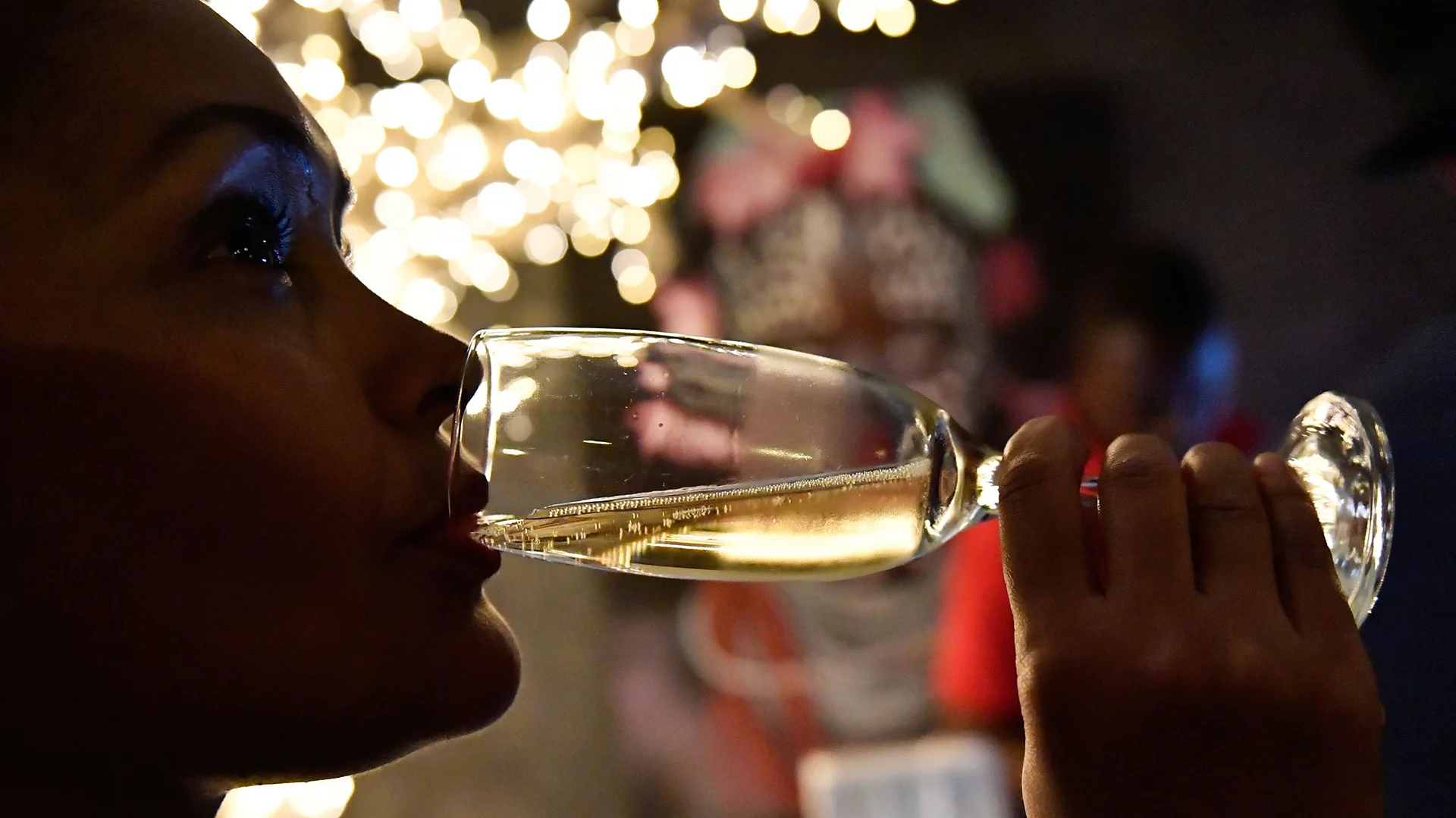
Glass shape also alters bubble behavior. Narrow flutes concentrate rising bubbles into a single stream, enhancing aroma delivery, while wider glasses allow carbon dioxide to dissipate quickly. According to physicists studying effervescence dynamics, the surface area and curvature of the glass directly influence how carbon dioxide nucleates and escapes. More detail on bubble physics can be found through educational resources like https://en.wikipedia.org/wiki/Champagne.
How aroma, sound, and sight affect flavor
Taste is multisensory. Studies in sensory science show that what we see, hear, and smell affects how we interpret flavor. The visual rhythm of bubbles, the sound they make as they burst, and even ambient lighting can influence perceived sweetness, acidity, and freshness. A glass filled with persistent, fine bubbles is often perceived as higher quality, even before tasting.
Sound also matters. When bubbles burst, they emit subtle acoustic frequencies. Smaller bubbles produce higher-pitched sounds, which have been associated with perceptions of crispness and freshness. Larger bubbles generate lower tones, often linked to heavier mouthfeel. These sensory cues subtly guide expectations before the liquid even touches the lips.
Aroma delivery is the final and most critical stage. As bubbles burst at the surface, they create microscopic droplets that evaporate into the air just below the nose. This vapor contains esters, alcohols, and acids that define champagne’s character. Institutions like the University of Reims Champagne-Ardenne have explored how effervescence enhances aroma transport, offering insight into why champagne feels more expressive than still wine https://www.univ-reims.fr.
The role of pouring, glass care, and environment
The act of pouring champagne determines how much carbon dioxide remains in the glass. Pouring slowly down the side of a tilted glass minimizes turbulence, preserving carbonation and aroma. A vertical pour increases agitation, releasing gas prematurely and dulling flavor intensity. Even professional sommeliers adopt pouring techniques similar to beer service to retain structure.
Glass cleanliness is another overlooked factor. Detergent residues act as surfactants, disrupting bubble formation. For this reason, many champagne producers recommend rinsing glasses with hot water only. Some manufacturers even laser-etch nucleation points inside glasses to encourage consistent bubble streams, a technique discussed by glassware specialists at https://www.riedel.com.
Environmental factors further shape perception. Music tempo, background noise, and lighting color all affect how sweetness and acidity are interpreted. Warm lighting and slower music tend to enhance perceived richness, while bright light and fast tempo emphasize sharpness. These effects explain why champagne tastes different at a quiet dinner than at a crowded celebration.
Altitude introduces another variable. At cruising altitude, reduced cabin pressure alters taste sensitivity, making acidic wines taste sharper. This is why champagne served on flights often seems more aggressive. Wine professionals working with airline programs, such as those collaborating with https://www.mastersofwine.org, adjust selections accordingly to maintain balance.
Ultimately, champagne is not just a beverage but a scientific performance involving gas laws, sensory psychology, and human perception. Each decision—from storage to pouring—modifies the final experience. By understanding these mechanisms, drinkers can unlock flavors that were already present in the bottle, waiting to be released.