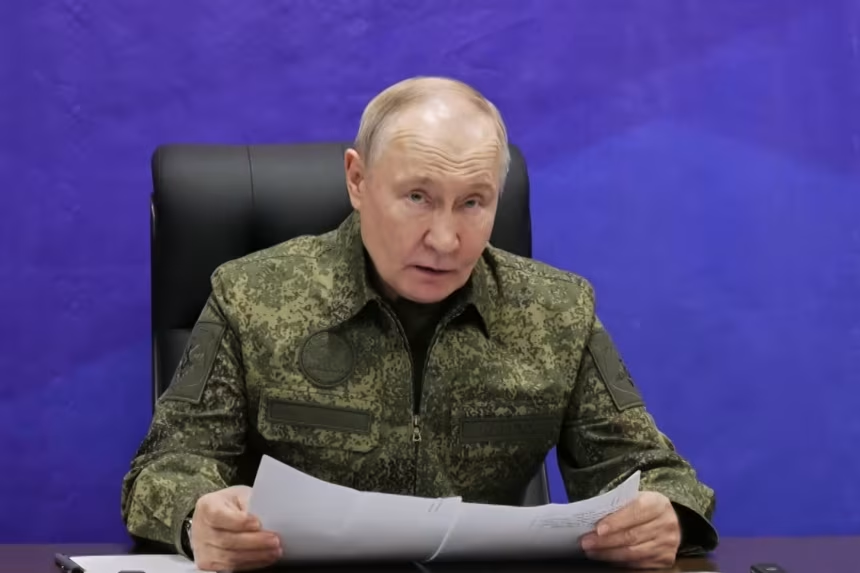
Russian President Vladimir Putin used a carefully staged appearance in military fatigues to declare what he framed as a major battlefield victory. He insisted that Russian forces had secured control of the eastern Ukrainian city of Pokrovsk. The announcement appeared crafted to reinforce the Kremlin’s ongoing narrative that Russia is steadily advancing in Ukraine. This was even as Kyiv stated that fighting continued inside the city and that Moscow’s assertive messaging did not represent the battlefield conditions.
By emphasizing a symbolic triumph, the Kremlin repositioned its communications strategy ahead of sensitive discussions with foreign envoys. It sought to project strength at a moment when geopolitical negotiations carry high stakes. Analysts at institutions like Chatham House have often highlighted how political theater can be used to influence diplomatic agendas. This latest episode underscores how optics remain central to Russia’s wartime messaging.
A Strategic Display of Strength
Putin’s visit to what Russia described as a forward command post came just hours before meetings with key advisers to U.S. President Donald Trump. The timing suggested a calculated move to demonstrate confidence and momentum. This demonstrated especially as American envoys engaged in a rapid diplomatic push aimed at exploring potential avenues for ending the conflict. For Russia, the optics of battlefield dominance play a crucial role in shaping perceptions not only abroad but also within domestic political circles. The leadership seeks to maintain unwavering support for the war effort. The Kremlin’s presentation of events—complete with footage of Russian troops raising a flag in the city center—mirrored past attempts to use symbolic moments to reinforce narratives of territorial progress.
Putin reiterated his demands on Ukraine, insisting on limitations to Kyiv’s military capabilities, territorial concessions, and restrictions on NATO membership. Yet Ukraine has repeatedly stated that any plan jeopardizing its sovereignty remains unacceptable. The differing positions suggest that substantial diplomatic progress remains unlikely. Insights from Council on Foreign Relations have previously noted that leaders often use claims of battlefield gains to strengthen their negotiating positions. This dynamic appears fully present in Russia’s current approach.
The Role of Messaging in Wartime Politics
The Kremlin has long used controlled media appearances to shape interpretations of the war. This is particularly during periods when its actual military performance has been uneven. Putin’s praise for his generals and insistence that Russia is advancing at a pace “guaranteeing completion of all objectives” echoed previous high-profile statements. These statements are designed to signal inevitability. However, the situation on the ground remains fluid. Ukrainian commanders affirm that Russian forces do not fully control Pokrovsk and that urban combat continues in several areas.
This messaging campaign serves more than a domestic purpose. Russia is increasingly attempting to influence Western political calculations, hoping to reduce support for Ukraine by framing continued resistance as futile. If allies begin to believe that Russia’s battlefield victory is unavoidable, the Kremlin hopes it will generate pressure to scale back military aid. Consequently, this would force negotiations on terms more favorable to Moscow. Research published by organizations including Brookings Institution has frequently detailed how disinformation and strategic communication play vital roles in shaping wartime diplomacy. Russia’s latest narrative push aligns with these long-term tactics.
A Narrative Designed to Reshape the Conflict
Despite Putin’s confident assertions, many military analysts maintain that Russia’s path to a definitive victory remains far from assured. While Moscow has achieved incremental gains in eastern Ukraine, these advances have come at significant cost. They have not yielded the rapid breakthroughs suggested by its public statements. Recent assessments from Western experts indicate that Russia’s capacity to seize the remainder of the Donetsk region swiftly is limited. This raises questions about the accuracy of the Kremlin’s portrayal of its operational momentum.
Nevertheless, Russia continues to focus on shaping perceptions rather than relying solely on measurable battlefield success. By projecting strength, the Kremlin hopes to influence not only Ukraine but also the international coalition supporting it. U.S. policy decisions in particular remain central to determining whether the Kremlin’s strategy gains traction. If the perception spreads that negotiations would serve as a more realistic path than continued resistance, Russia could gain leverage without achieving significant territorial breakthroughs.
Geopolitical think tanks like Atlantic Council have noted that conflict outcomes are often dictated as much by political will as by military strength. Russia’s current strategy reflects this understanding. As Putin continues to emphasize claims of success and strategic inevitability, the narrative battle becomes almost as consequential as the military one.