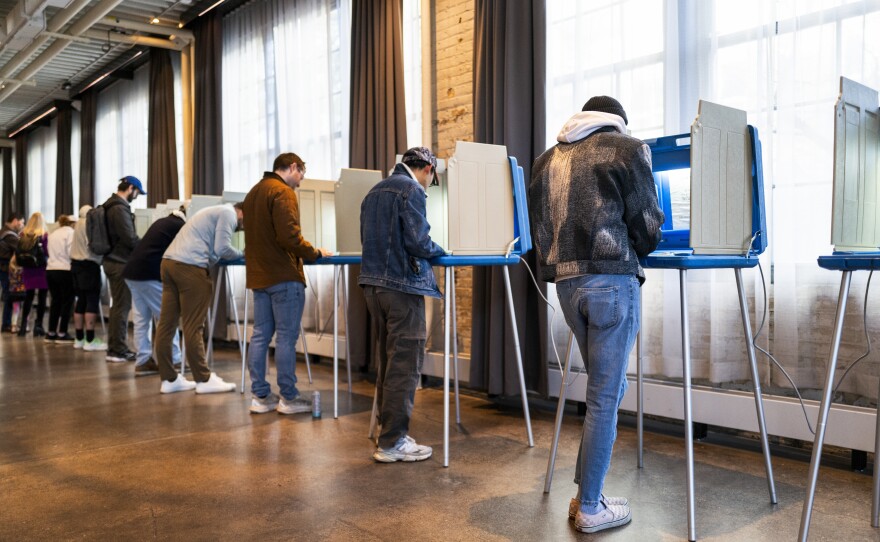
State and local election officials across the United States are increasingly preparing for the possibility of federal interference in the upcoming midterm elections. Uncertainty grows over how the current administration might attempt to influence the voting process. With the president signaling an interest in expanding executive actions related to elections, authorities in multiple states are strengthening coordination with local law enforcement, legal offices, and community leaders. These preparations aim to maintain secure and transparent voting operations. Preparations have intensified as voting administrators consider scenarios that could challenge long-standing norms governing state-controlled election systems.
Officials in Minnesota, Colorado, Washington, and Pennsylvania are echoing a growing concern. They are worried the federal government may test the limits of executive power in ways that could reshape how ballots are cast, counted, or audited. These concerns arise as state administrators continue educating the public about reliable election information sources. They are directing voters to trusted platforms such as https://www.usa.gov/voting and supporting civic transparency initiatives. These are aligned with guidance published on https://www.eac.gov. Strengthening voter awareness has become critical, especially as federal messaging increasingly includes unverified claims and proposals falling outside existing legal authority.
Executive Action and Emergency Powers in Question
Election officials are paying particular attention to plans for new executive orders. These might target mail voting, voting machines, or ballot counting procedures, despite constitutional limits that reserve election administration for the states. Recent discussions among political advisers have raised the possibility of invoking national emergency powers to reshuffle election processes. Many legal experts argue this strategy lacks legitimate constitutional basis. Officials who previously oversaw statewide voting systems emphasize that such an approach would set unprecedented federal precedent. This has prompted many states to evaluate legal safeguards and review guidance available on https://www.law.cornell.edu to ensure proper separation of powers is upheld.
Concerns about executive overreach have prompted state election authorities to craft contingency plans. These plans are necessary in case federal agencies attempt to directly access voting machines, voting records, or outdated ballots. Previous contacts from individuals claiming affiliation with federal authorities have already prompted states like Colorado to reaffirm legal boundaries. They stress that access to election equipment is regulated strictly under state law. Attorneys general in multiple states have reinforced that unauthorized federal inquiries into voting machines could provoke constitutional challenges. This energizes renewed efforts to educate local clerks about their responsibilities and legal protections.
Federal Personnel at Polling Locations and Security Challenges
Another concern among state officials is the possibility of federal personnel being deployed at polling places. Although deploying federal agents to oversee local voting operations is considered illegal, some election administrators feel they must prepare for unlikely but disruptive scenarios. State officials highlight that ambiguous statements from federal spokespeople have caused frustration, leaving local election departments without clear assurances on whether such actions could occur.
Security concerns have also expanded into cybersecurity, as recent reductions in federal election-security programs have created vulnerabilities for smaller counties. Local administrators warn that adversarial nations may see weakened infrastructure as an opportunity to exploit systems during a pivotal election cycle. Without consistent federal support, many states are turning to nonpartisan resources like https://www.cisa.gov for guidance on cyber readiness. Even as confidence in federal cybersecurity collaboration appears to have declined, this lack of coordinated security raises significant concerns. It questions the ability of smaller jurisdictions to respond quickly to potential cyber incidents.
Trusted Sources, Data Demands and Expanding Federal Databases
Election officials also face ongoing challenges associated with disinformation. Identifying trustworthy sources becomes increasingly difficult for voters. The elevation of individuals with a history of promoting election-related conspiracy theories into federal leadership roles has intensified fears. State officials stress the importance of encouraging voters to rely on accurate information from their state election offices and vetted government resources.
The administration’s development of a national citizenship database has further complicated election oversight. While some states have engaged with the database to review voter rolls, others argue that the system raises questions about data privacy, accuracy, and legal compliance. Several states have faced pressure to share large volumes of voter data. This has prompted bipartisan concerns about federal consolidation of election-related information. State leaders emphasize that elections are operated by the states. Expanding federal influence over voter records challenges long-standing principles of decentralized election administration in the United States.
As states approach the midterms, election administrators continue to refine protocols, reinforce legal boundaries, and defend election infrastructure. While the nature of potential federal interference remains uncertain, state officials are determined to preserve the integrity of the voting system through coordination, transparency, and adherence to established constitutional principles.