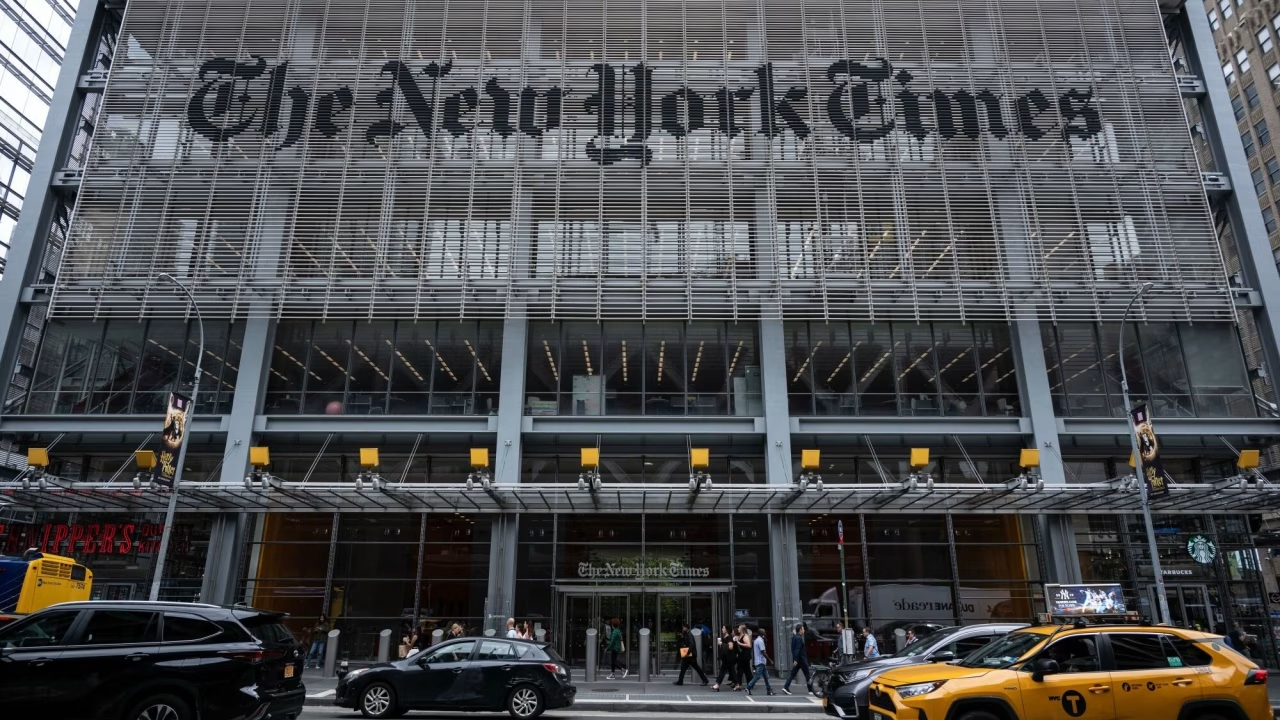
A major legal confrontation is unfolding in Washington as one of the nation’s most influential news organizations files a high-impact lawsuit against the Department of Defense over recently imposed press access restrictions. The complaint, lodged in federal court, directly challenges the legitimacy of the Pentagon’s sweeping policy. This policy compelled veteran reporters to surrender their longstanding credentials rather than accept limitations they say compromise constitutional rights. The lawsuit names both the Defense Department and its top leadership. It accuses the new restrictions of violating fundamental protections for a free press. Legal analysts tracking press freedom cases through platforms such as Justia note that the suit could set a powerful judicial precedent with implications extending far beyond military coverage.
The dispute intensified after the Pentagon implemented a policy overhaul in October that redefined access requirements for journalists covering defense operations. Instead of maintaining established protocols that allowed independent reporters to question senior officials and attend briefings, the new rules created an environment. Access was conditioned on signing a restrictive agreement governing conduct and coverage. Reporters who declined the terms argued that the policy would enable the Defense Department to limit critical reporting. It also would elevate communication partners more sympathetic to the administration. As a result, many veteran journalists left the Pentagon building. They continued their coverage from outside while contesting the legitimacy of the new system.
A Shift Toward Handpicked Influencers Sparks Backlash Across the Media Landscape
Controversy escalated when top Pentagon officials appeared to embrace a new group of invited commentators. They were described internally as the “new press corps,” a collection of political influencers and media personalities who accepted the restrictive guidelines. Coverage of the event on NPR.org highlighted growing concerns among traditional reporters. They view the effort as an unprecedented attempt to reshape the press corps into an ideologically aligned body. This is rather than a group selected for journalistic expertise. The invited influencers, many with limited background in defense reporting, received briefings and orientation sessions. This raised questions about transparency, public accountability, and the integrity of national security communication.
Meanwhile, long-established defense journalists who declined the new policy were characterized by Pentagon officials as having “self-deported.” This prompted criticism from press associations who saw the phrasing as dismissive and hostile. Press advocates argue that excluding experienced reporters reduces the depth of reporting on critical defense developments. This includes military budgeting, global deployments, and strategic policy decisions. Organizations tracking media freedom through PEN America have warned that the episode signals a shifting boundary between government communications and politically filtered messaging. The transformation of press access norms has alarmed newsroom leaders. They see the lawsuit not only as a defense of their own credibility but as an effort to safeguard the ability of all journalists to gather information inside federal institutions.
Media Organizations Mobilize as the Legal Stakes Rise
The legal challenge aims to overturn the policy entirely. It argues that imposing restrictions based on coverage or editorial positions violates First and Fifth Amendment rights. Attorneys involved in the case believe the outcome could influence government press access standards across multiple federal agencies. If the court upholds the Pentagon’s new rules, it could create a precedent. This would allow other departments to impose similar conditions on journalists. This possibility has prompted major newsrooms, some traditionally competing fiercely, to coordinate legal strategy and prepare supporting briefs. Press freedom advocates following developments through resources like Freedom Forum caution that the case carries risks. A favorable ruling could affirm long-standing protections for independent journalism. Conversely, an unfavorable decision could set back public access to information for years.
Several news organizations have already demonstrated solidarity by refusing to sign the Pentagon’s new agreement. They emphasize that journalism cannot function if access is contingent on government approval of content. As the lawsuit proceeds, press associations are tracking its progress closely. Any resolution will shape national expectations for transparency and accountability. Veteran reporters who left the Pentagon in protest continue to cover defense matters. They communicate with sources and monitor developments from outside the secure complex. Their continued work underscores a broader struggle over whether journalists can maintain independence without sacrificing access to vital government institutions. The legal outcome will likely influence how future administrations interact with the press. It will determine whether media organizations can continue to challenge government narratives without jeopardizing their ability to report.
Growing National Debate Over Press Freedom and Government Control
As arguments prepare to move forward in federal court, the case has prompted renewed debate about the balance between national security considerations and press freedom. Commentators argue that genuine security concerns must be weighed against the public’s right to understand military operations, spending, and leadership decisions. Some policy analysts reference open-access legal texts at Congress.gov. They note that Congress may ultimately be compelled to examine the issue if the court’s ruling proves insufficient to resolve the conflict. With dozens of news organizations already signaling their intent to support the lawsuit, the confrontation marks one of the most significant press freedom battles in recent memory.
The outcome will shape not only how journalists interact with the Pentagon but also how the federal government defines transparency. This comes in an era where political influence increasingly shapes public communication. As the lawsuit progresses, pressure will continue to mount on policymakers to justify the restrictions or reconsider them entirely. The growing coalition of media organizations argues that allowing government officials to select which journalists receive access threatens the integrity of the democratic process. For now, all eyes remain on the federal bench as the legal fight moves forward. The broader debate over independent journalism and government control intensifies.