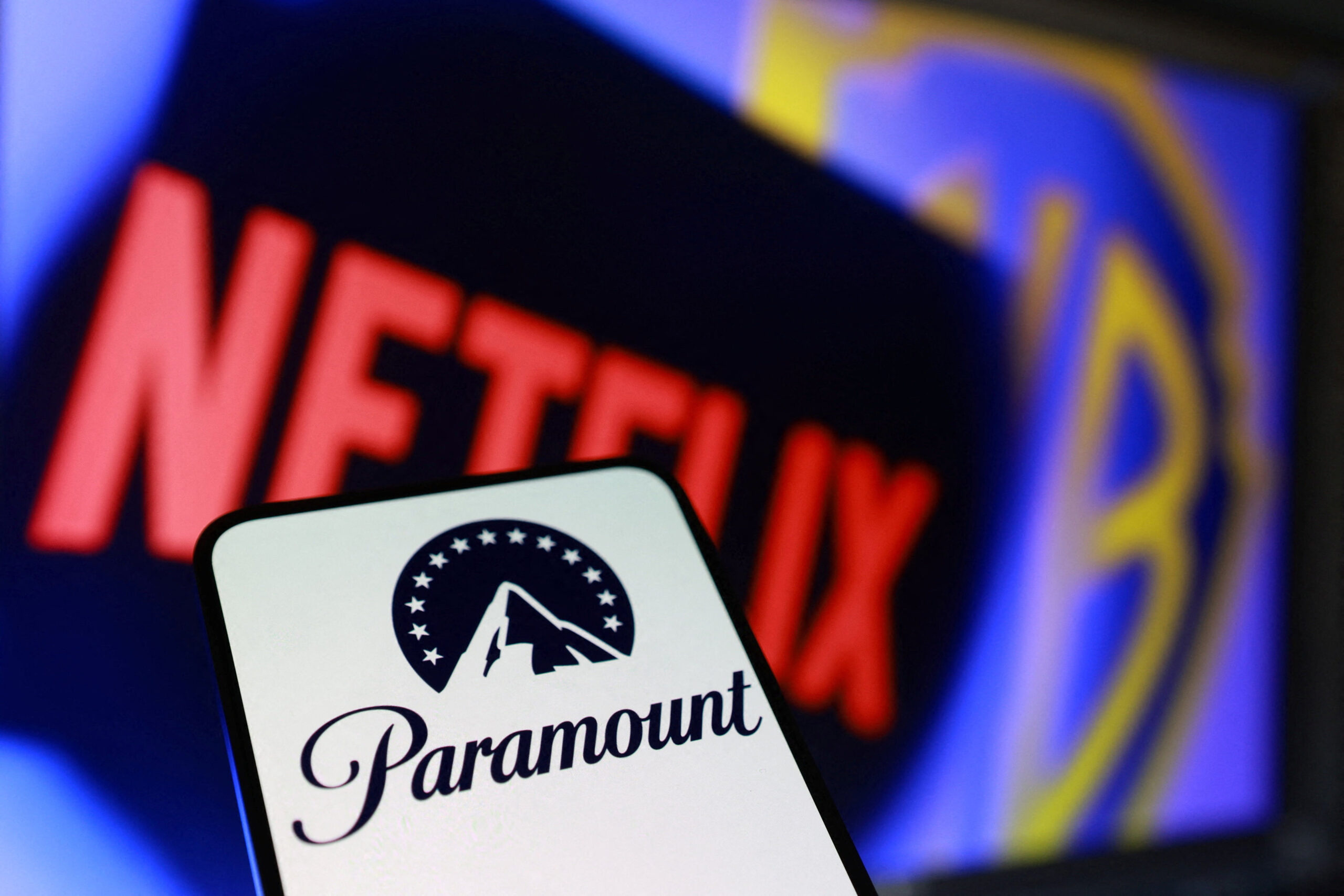
Paramount has emerged as the leading contender in the high-stakes battle for control of Warner Bros. Discovery, after the company’s board determined that a sweetened $108 billion offer surpassed Netflix’s earlier $83 billion agreement. The decision signals a dramatic shift in one of the largest media consolidation efforts in recent years and sets up a prolonged regulatory review in the United States and abroad.
Netflix confirmed it would not attempt to outbid Paramount, stating that matching the revised proposal would no longer be financially attractive. The withdrawal effectively ends weeks of corporate maneuvering that had captivated investors, regulators and political observers alike.
Board Declares Paramount’s $108 Billion Offer Superior
The board of Warner Bros. Discovery concluded that Paramount’s improved bid, which increased the offer price by $1 per share, represented greater value for shareholders than the existing $83 billion agreement negotiated with Netflix. The Netflix deal had focused on acquiring streaming services, film studios and intellectual property, while allowing Warner’s studio operations to remain independent and continue theatrical releases.
Paramount’s proposal, however, covers the entirety of Warner Bros. Discovery’s assets, including cable networks and major news brands such as <a href=”https://www.cnn.com”>CNN</a>. The scale of the transaction would reshape the competitive balance across streaming, broadcast television and cable programming.
Netflix executives had publicly challenged Paramount to increase its offer, signaling confidence in their agreement. But after Paramount revised its bid upward, Netflix opted to step aside rather than escalate the financial stakes. The streaming company emphasized fiscal discipline and long-term shareholder value as guiding principles behind its decision.
Antitrust Scrutiny Intensifies in Washington and Beyond
Despite Paramount’s assertion that it can secure regulatory approval, the proposed merger is expected to face significant antitrust scrutiny. Paramount’s portfolio already includes CBS, Paramount Plus and cable brands such as <a href=”https://www.comedycentral.com”>Comedy Central</a> and <a href=”https://www.nick.com”>Nickelodeon</a>. Combining these holdings with Warner’s entertainment and news assets would create one of the most vertically integrated media conglomerates in the world.
The Federal Communications Commission, led by Chair <a href=”https://www.fcc.gov”>Brendan Carr</a>, will play a central role in reviewing broadcast licensing implications. Lawmakers and state regulators are also expected to examine potential impacts on competition, consumer pricing and media diversity. The California Department of Justice has already indicated that its review will be rigorous, signaling that the transaction is far from guaranteed.
European regulators are likely to conduct parallel investigations, given the global footprint of both companies. Cross-border licensing, streaming distribution rights and advertising markets could all become focal points of regulatory analysis.
Political Undercurrents and Industry Realignment
The transaction unfolds amid a politically charged environment. Paramount CEO David Ellison, backed financially by Oracle co-founder Larry Ellison, has argued that his company’s structure offers a smoother regulatory path. Observers have noted the Ellison family’s connections within political circles, adding another dimension to the approval process.
Industry analysts suggest the proposed merger reflects a broader realignment within legacy media as companies race to scale their streaming operations and defend against digital-native competitors. Warner Bros. Discovery’s diverse catalog of film franchises, scripted series and live programming would significantly bolster Paramount’s content pipeline and global distribution capabilities.
For Netflix, stepping away from the bidding war preserves capital at a time when the streaming sector faces mounting production costs and subscriber competition. While the company had pledged to maintain Warner’s theatrical presence and studio autonomy, the board ultimately prioritized the higher valuation offered by Paramount.
If approved, the $108 billion deal would rank among the largest media mergers in history, reshaping ownership of iconic brands and intensifying debates over media concentration. Regulators in Washington, California and Europe will now determine whether the combination strengthens innovation and competition — or narrows the field in an already consolidated entertainment industry.