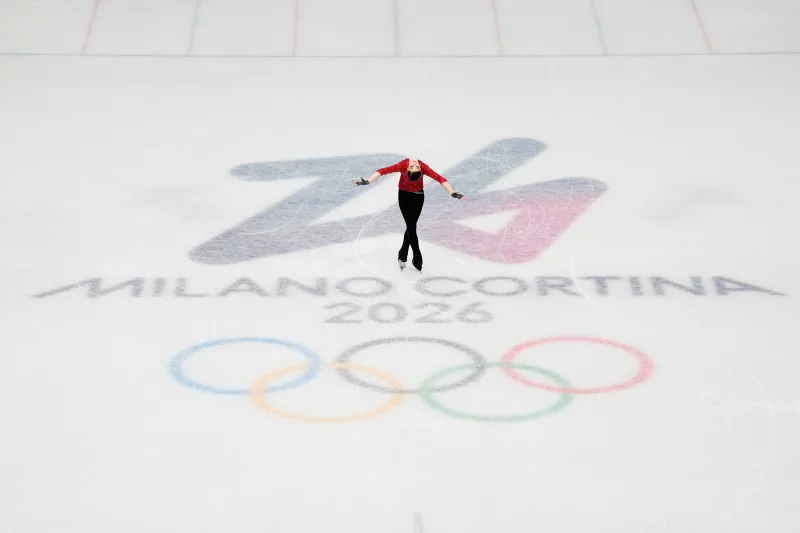
The Olympics are more than a global sporting event; they are a concept shaped by centuries of culture, mythology, and competition. As winter athletes gather on icy tracks and snow-covered slopes in northern Italy, the word itself carries a legacy that stretches back thousands of years. Today, the Games unite nations, but their name reflects a deeper historical and symbolic meaning that continues to resonate with those who reach the Olympic stage.
Ancient roots of the word “Olympics”
The word “Olympics” originates in ancient Greece and is closely tied to both geography and belief. In Greek mythology, Mount Olympus was considered the home of the gods, a divine realm that loomed above human affairs. Nearby Olympia, a sacred sanctuary rather than a city, became the site where athletic contests were held in honor of Zeus. Over time, the competitions adopted the name associated with this revered place, giving rise to what we now call the Olympics.
The first recorded ancient Olympic Games took place in 776 BCE, marking the beginning of a tradition that lasted for nearly a millennium. These early contests bore little resemblance to the polished spectacles of today. Athletes competed without clothing, events were limited primarily to footraces and combat sports, and victors earned honor rather than wealth. There were no gold medals, no podium ceremonies, and no global broadcasts—only prestige within the Greek world.
As political and cultural structures shifted following the fall of the Roman Empire, the Games faded from practice and memory. For centuries, the word “Olympics” survived mainly in texts and legends, waiting for a historical moment that would bring it back into public life.
Revival and ownership of an ancient name
Interest in classical Greece surged during the European Renaissance, when scholars and explorers began rediscovering ancient sites and texts. Olympia was excavated, and historical accounts of athletic festivals inspired new competitions that borrowed the Olympic name. Across Europe, local “Olympick” or “Olympic” games emerged, reflecting admiration for antiquity rather than continuity with it.
Debate continues over how this revival eventually led to the modern Olympic Games. Some credit national initiatives in 19th-century Greece, while others emphasize the role of international advocates who envisioned sport as a bridge between nations. What is clear is that by the end of the 19th century, the Olympics had reemerged as a global event, formalized under governing institutions that sought to protect its symbols and terminology.
Today, organizations such as the International Olympic Committee oversee the Games and assert legal control over Olympic branding. This has sparked ongoing debate about whether a word rooted in ancient language and shared history can truly be owned. Legal challenges involving commercial use of Olympic terms highlight the tension between cultural heritage and modern intellectual property.
What the Olympics represent to those who compete
For athletes, the word “Olympics” carries a meaning far beyond its etymology. It often represents possibility, identity, and belonging on a scale unmatched by other competitions. Many competitors describe hearing the word for the first time as a moment that reframed their ambitions, transforming sport into a pathway toward something larger than personal success.
Reaching the Olympic stage means becoming part of a collective narrative that transcends background, appearance, and circumstance. Athletes compete not only for medals but also for recognition under a shared banner of national pride and mutual respect. Institutions like the U.S. Olympic & Paralympic Committee frame participation as both an athletic achievement and a public role, where individuals symbolize dedication and resilience.
For those who have worn their country’s colors, the Olympics are remembered as a rare moment when personal struggle gives way to collective support. The word itself becomes shorthand for unity, sacrifice, and hope—an ancient name continually redefined by each generation that steps onto the field of play.