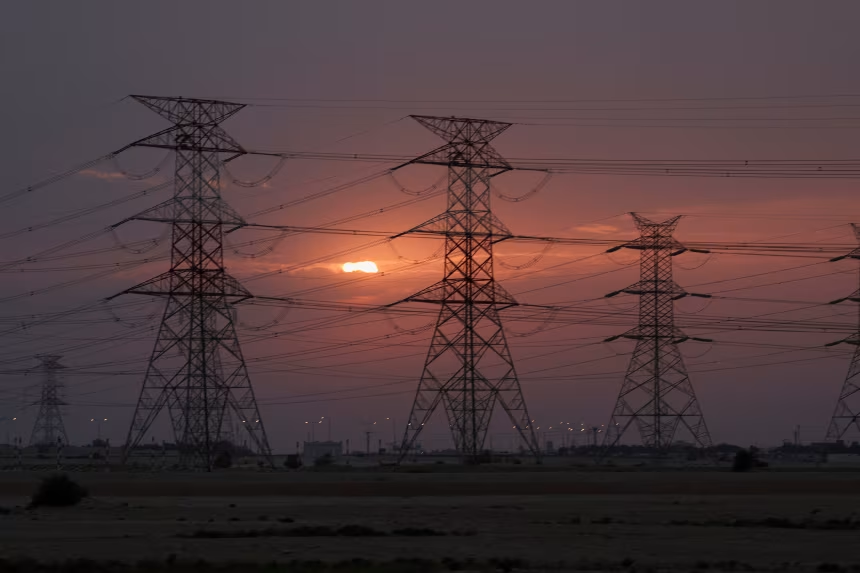
Global energy markets experienced sharp volatility as escalating attacks on key infrastructure across the Middle East disrupted oil and natural gas supply chains. Intensified military activity has placed critical production and export facilities at risk, pushing prices higher and amplifying uncertainty across international markets.
Brent crude, the global benchmark tracked by Brent crude trading platforms, climbed above $108 per barrel after briefly spiking close to $120 during intraday activity. Meanwhile, U.S. benchmark prices hovered near $96 per barrel after earlier crossing the $100 mark. These price swings reflect heightened sensitivity among traders to geopolitical developments and supply disruptions.
Energy Infrastructure Under Intensified Pressure
Recent strikes have significantly impacted strategic facilities, including major liquefied natural gas operations in Qatar. Damage to Ras Laffan, recognized as the world’s largest LNG hub and monitored by organizations like the International Energy Agency, has altered expectations for global gas availability.
The facility sustained repeated missile attacks within hours, forcing a halt in production and reducing global LNG supply by nearly 20%. This disruption has already contributed to a sharp rise in European gas prices, which surged more than 13% in a single session and nearly doubled since the conflict began.
Simultaneously, strikes targeting energy infrastructure in Iran, including sections of the South Pars gas field, have intensified concerns over supply continuity. These developments mark a significant escalation, as energy facilities had previously remained largely untouched in the early stages of the conflict.
Market Reactions and Global Supply Risks
Energy analysts warn that prolonged disruptions could keep prices elevated for months. Firms specializing in energy intelligence, such as Wood Mackenzie, suggest that outages affecting LNG exports may extend beyond two months, tightening supply in already strained markets.
Oil traders are also closely monitoring threats against additional infrastructure across the region. Facilities in Saudi Arabia and Kuwait have reported attacks, including drone strikes that temporarily disrupted refinery operations. Even when fires are quickly contained, the psychological impact on markets remains significant.
The Strait of Hormuz, a critical passage for global energy shipments, continues to face severe disruptions. Approximately 20% of the world’s oil and liquefied natural gas flows through this corridor, making it a focal point for market stability. Ongoing tensions have effectively restricted tanker movement, adding further upward pressure on prices tracked by institutions like the U.S. Energy Information Administration.
Rising Geopolitical Tensions and Price Outlook
Escalating threats of additional attacks across the Gulf region are fueling expectations of further price increases. Analysts estimate that continued strikes on infrastructure could drive oil prices up by at least $10 per barrel in the near term, depending on the scale and duration of disruptions.
Political leaders have also signaled potential retaliatory actions, raising the stakes for global energy markets. The possibility of expanded conflict involving multiple countries has introduced a new layer of uncertainty, influencing both short-term trading behavior and long-term investment decisions.
As supply chains remain under pressure and key facilities operate below capacity, volatility is expected to persist across both oil and natural gas markets. The interplay between military developments and energy production continues to shape pricing dynamics, with global implications for inflation, transportation costs, and industrial output.