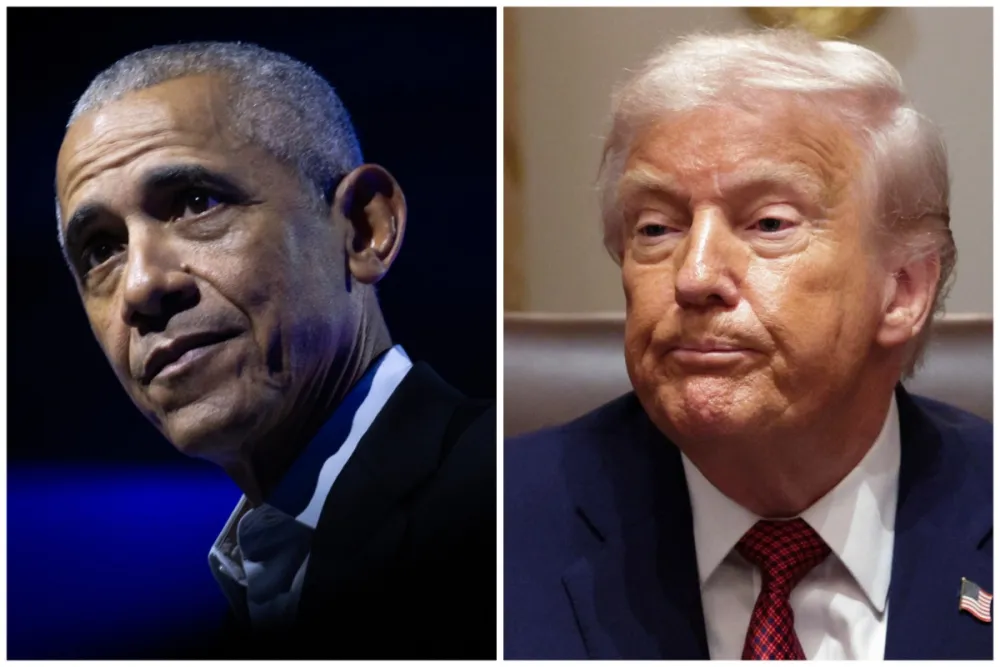
Former President Barack Obama has publicly condemned a racist AI-generated video shared from the social media account of former President Donald Trump, calling the incident troubling and indicative of a broader erosion of political norms in the United States. The remarks came during a widely viewed online interview, where Obama reflected on the cultural and political implications of the controversy and the public reaction that followed.
The controversy began after a video circulated online depicting Obama and former First Lady Michelle Obama in a racist manner using manipulated imagery. The clip sparked widespread backlash across political and social spheres, especially given its timing near the start of Black History Month. Although the video was later removed, the incident has continued to fuel debate about misinformation, artificial intelligence misuse, and political accountability.
Obama warns about declining political decorum
During the interview, Obama said many Americans view the episode as emblematic of declining standards in public discourse. He noted that behavior once considered unacceptable in national politics now appears more normalized, particularly in online spaces dominated by viral content and algorithm-driven engagement. According to Obama, the spread of offensive or inflammatory content contributes to what he described as a distraction from substantive policy discussions.
He emphasized that the issue extends beyond a single incident, framing it as part of a broader cultural shift in which political leaders and influencers face fewer consequences for inflammatory rhetoric. Observers tracking digital misinformation trends have similarly warned that AI-generated media is increasingly blurring the line between satire, propaganda, and hate speech, creating new challenges for platforms and policymakers alike.
For readers seeking context on how AI manipulation is shaping online discourse, additional background can be found through resources like the Brookings Institution’s analysis on emerging technologies and misinformation (https://www.brookings.edu) and ongoing coverage of AI policy developments from MIT Technology Review (https://www.technologyreview.com).
White House response fuels backlash
The White House response to the video has also drawn scrutiny. Officials initially downplayed the controversy, with spokespeople dismissing criticism and suggesting that outrage was exaggerated. Later, the administration attributed the post to a staff error, stating that it had been shared unintentionally. Despite this explanation, critics argue that the lack of a formal apology has intensified public frustration and deepened partisan divides.
Political analysts note that controversies involving digital content are increasingly difficult to contain once they gain traction online. Even after removal, screenshots and reposts continue circulating across platforms, amplifying public reaction. This dynamic has become a defining feature of modern political communication, where viral moments can shape narratives long after the original content disappears.
Research from organizations like the Pew Research Center (https://www.pewresearch.org) highlights how social media amplification influences public opinion and political polarization, underscoring why incidents involving offensive digital media often have lasting repercussions beyond their initial release.
Broader concerns about civil liberties and public trust
Beyond addressing the video itself, Obama also used the interview to discuss wider issues, including immigration enforcement tactics and public protests. He described recent federal operations as alarming to many Americans, raising concerns about civil liberties and the use of aggressive enforcement strategies. According to Obama, such developments contribute to growing anxiety about whether the country is living up to its foundational values.
He also referenced recent incidents involving deaths connected to immigration enforcement, calling them tragedies that demand serious investigation. Obama warned that inconsistent or incomplete official explanations risk undermining public trust, particularly at a time when confidence in institutions is already under strain.
Experts in governance and democracy have echoed similar concerns. Reports from the Council on Foreign Relations (https://www.cfr.org) emphasize that public trust in institutions often declines when controversies intersect with misinformation and partisan conflict, creating a feedback loop that further polarizes political discourse.
As debates over artificial intelligence, online accountability, and political rhetoric continue, the controversy surrounding the video underscores the growing intersection between technology and governance. With AI tools becoming more accessible and influential, incidents like this may play an increasingly prominent role in shaping political narratives and public expectations around leadership and responsibility in the digital age.