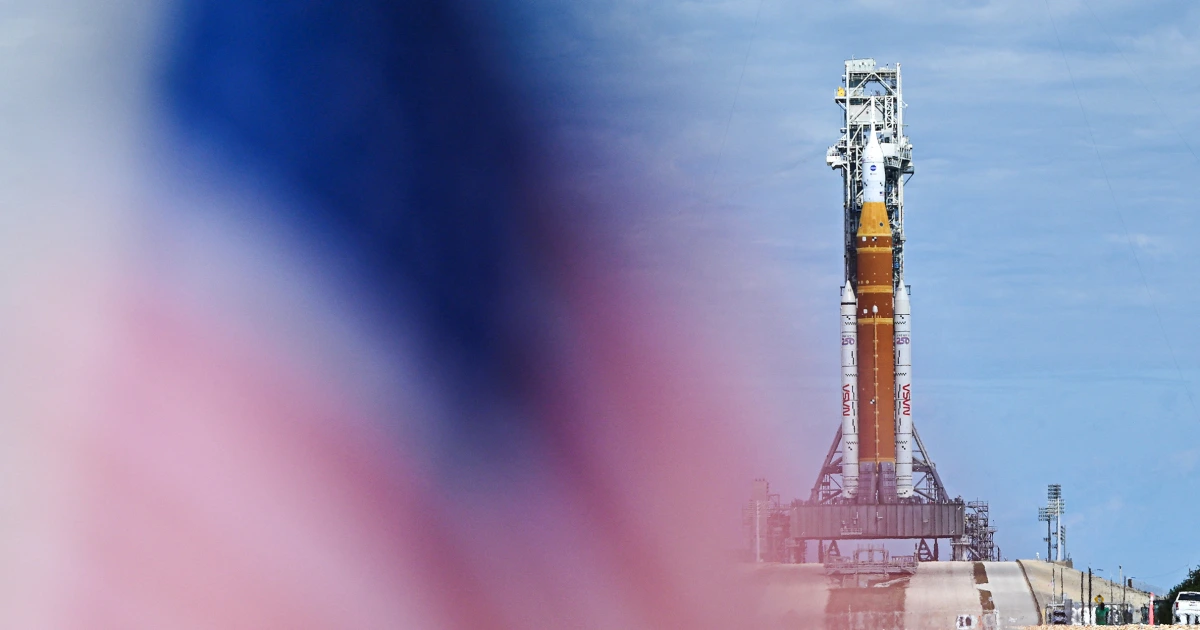
NASA has officially postponed the launch of its highly anticipated Artemis II mission, pushing the timeline back by at least one month after technical complications emerged during critical pre-launch testing. The delay represents a major adjustment to the United States’ ambitious plan to return humans to the Moon for the first time in more than five decades and underscores the complexity of preparing crewed deep-space missions.
Artemis II is designed to send four astronauts on a ten-day journey around the Moon, marking the first crewed lunar mission since the Apollo era. The flight is intended to validate the performance of the Orion spacecraft, the Space Launch System (SLS) rocket, and multiple safety and life-support systems that will be required for future lunar landings and long-term exploration. More details about the mission architecture and objectives can be found on NASA’s official Artemis program page at https://www.nasa.gov/artemis.
Technical Challenges Discovered During Critical Testing
The delay was triggered by issues discovered during a wet dress rehearsal, a full-scale simulation of the launch countdown that includes fueling the rocket and testing all major systems under real conditions. Roughly one hour into the procedure at Kennedy Space Center in Florida, sensors detected a hydrogen leak as super-cooled liquid hydrogen was being pumped into the massive SLS rocket.
Hydrogen is a highly efficient rocket propellant, but its extremely small molecular size allows it to escape through even microscopic gaps, making leak detection and containment especially challenging. Despite initial troubleshooting, engineers encountered additional leaks while pressurizing the tank, prompting mission managers to halt the test and initiate a detailed investigation.
Beyond fueling concerns, engineers also identified complications involving the Orion crew capsule. A valve designed to regulate cabin pressure required extended attention, and closing procedures for the hatch took longer than expected. Additional issues included camera malfunctions caused by cold temperatures and intermittent audio dropouts in communication systems, which are vital for real-time coordination during launch operations.
NASA officials emphasized that all systems must function flawlessly before astronauts are cleared for flight. According to NASA’s human spaceflight safety protocols, outlined at https://www.nasa.gov/safety, any anomaly—no matter how minor—must be fully understood and resolved.
Preparing for a New Launch Window in March
With repairs and evaluations underway, NASA has identified early March as the next possible launch opportunity, with tentative windows beginning March 6 and extending through multiple dates in the following week. Engineers will conduct another full wet dress rehearsal before certifying the spacecraft and rocket for flight.
The Artemis II crew includes NASA astronauts Reid Wiseman, Victor Glover, and Christina Koch, alongside Canadian Space Agency astronaut Jeremy Hansen. Their participation reflects the international collaboration behind the Artemis program, which aims to establish sustainable lunar exploration and expand humanity’s reach deeper into the solar system. Information about Canada’s role in Artemis can be explored at https://www.asc-csa.gc.ca/eng/astronomy/artemis.asp.
The crew remains in Houston, Texas, continuing mission training and readiness exercises. They are scheduled to re-enter quarantine roughly two weeks before the next launch attempt and will travel to Florida six days prior to liftoff.
Artemis II and the Road to Sustainable Lunar Exploration
Artemis II is a cornerstone mission designed to validate spacecraft maneuverability, life-support reliability, navigation systems, and crew performance in deep space. The mission will travel farther from Earth than any human flight in history, surpassing the distance achieved during Apollo missions.
This flight will directly support the goals of Artemis III, which is expected to return astronauts to the lunar surface. NASA’s long-term strategy includes building a sustainable human presence on and around the Moon, establishing lunar infrastructure, and using those lessons to prepare for eventual missions to Mars. Broader details on NASA’s Moon-to-Mars roadmap can be found at https://www.nasa.gov/moon-to-mars.
Although the delay presents scheduling challenges, agency leaders stress that mission safety and reliability take precedence over speed. Every test anomaly provides valuable data that strengthens the mission’s success and protects astronaut lives. By addressing these issues thoroughly, NASA reinforces its commitment to executing one of the most complex and ambitious exploration programs in modern history.