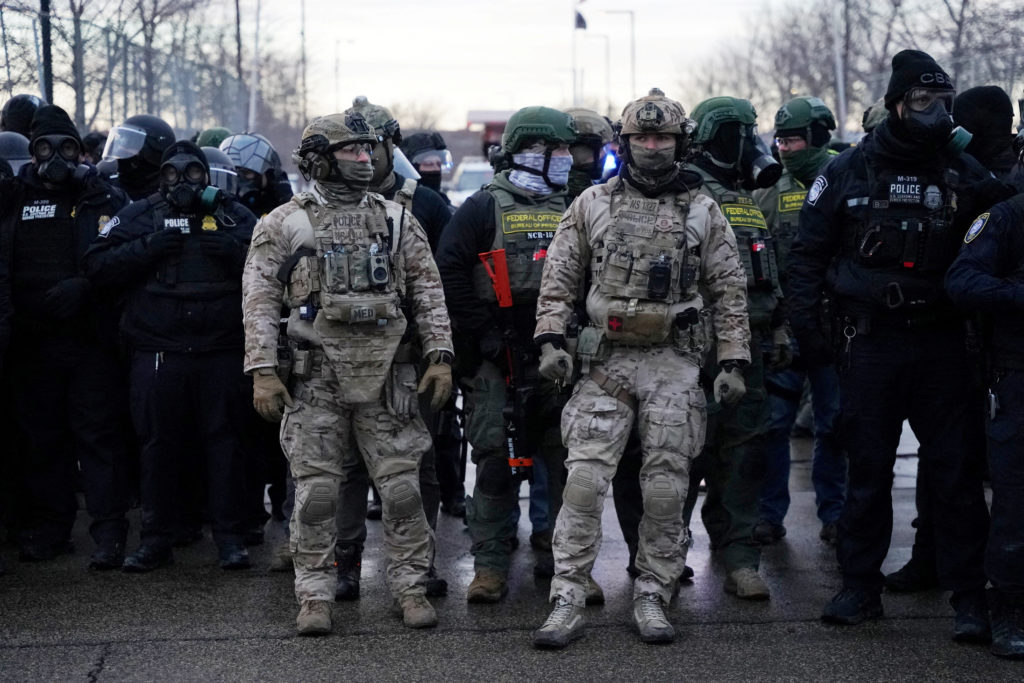
The Pentagon has placed approximately 1,500 active-duty U.S. Army soldiers on standby in Alaska for a potential deployment to Minnesota, marking a significant escalation in the federal government’s handling of ongoing protests and civil unrest in the Midwest. This preparedness measure comes as the Trump administration has signaled its willingness to invoke the Insurrection Act to restore order in Minneapolis following widespread demonstrations tied to immigration enforcement actions and civil rights concerns.
The troops—drawn from the Army’s 11th Airborne Division, a unit specialized in cold-weather operations—remain on alert in Alaska and could be mobilized rapidly should conditions worsen or upon presidential directive. While the Pentagon has not disclosed an official deployment order, defense officials emphasize that readiness is prudent given the political and public safety context unfolding in Minnesota.
Federal Forces and Legal Ramifications
The possible mobilization of active-duty forces to a domestic city represents a rare and controversial application of military power within U.S. borders. Typically, the Insurrection Act of 1807 is invoked only in extreme circumstances when local authorities cannot maintain public order and when state governments request federal intervention. President Trump has publicly threatened to utilize the law in response to the unrest tied to anti-ICE protests in Minneapolis, although he later indicated he might not need to implement it immediately.
Legal experts and civil liberties advocates have cautioned against the invocation of the Insurrection Act, warning that it could blur the lines between civilian law enforcement and military authority. For more context on the historical use and implications of such laws, readers can see explanatory material at Wikipedia’s overview of domestic military deployments and broader legal analyses at Lawfare’s constitutional law resources. The Department of Defense has reiterated that active-duty soldiers cannot engage in domestic law enforcement without explicit legal authorization, such as through the Insurrection Act or an act of Congress.
Local Leadership and State Response
Minnesota’s state government has responded to the rising federal presence with a parallel mobilization of the Minnesota National Guard, which will operate under state authority to support public safety, protect residents, and safeguard infrastructure if protests escalate. Minnesota Governor Timothy Walz and Minneapolis Mayor Jacob Frey have both expressed concern over federal troop intervention, emphasizing the importance of de-escalation and local control.
Governor Walz has urged calm and dialogue while maintaining readiness to protect Minnesotans, highlighting the dual role of state and federal forces in times of crisis. His office underscores that the National Guard’s mission is to support peaceful protest and local law enforcement, rather than suppress constitutional rights. For ongoing updates from Minnesota state authorities, the official Minnesota government portal and the City of Minneapolis information hub provide resources on public safety measures and community alerts.
Unrest Continues as Protests Persist
The backdrop to these military preparations includes continued anti-ICE protests in Minneapolis, where demonstrators have gathered over allegations of excessive force and controversial enforcement tactics by federal immigration agents. Even as temperatures have plunged, crowds remain active in the streets, reflecting deep-rooted tensions over immigration policy and federal intervention.
The situation remains fluid, with both local and national leaders navigating a complex mix of public safety concerns, constitutional questions, and civil liberties protections. As troops remain on standby and federal rhetoric evolves, Americans are watching closely how the balance between security and civil freedom will be maintained in the days ahead.