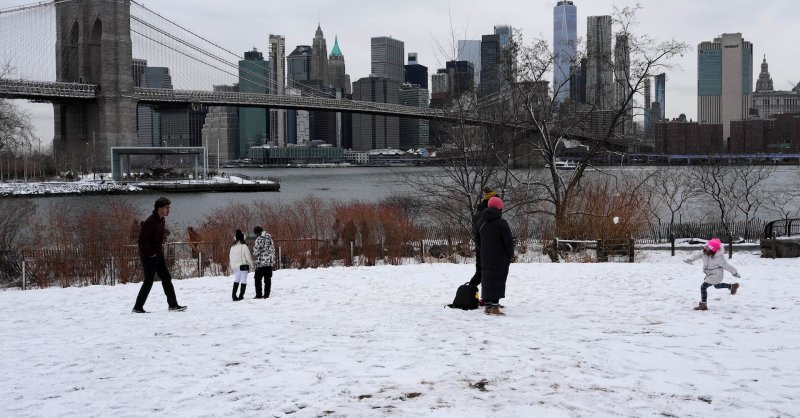
A powerful winter storm sweeping across the northeastern United States is bringing transportation to a near standstill, grounding thousands of flights, halting rail services, and triggering widespread travel bans. Heavy snowfall, powerful winds, and whiteout conditions are impacting millions of residents from Washington, D.C. to Boston, prompting emergency measures and widespread disruptions across air, road, and rail networks.
Officials warn that the scale of the storm is creating some of the most dangerous winter travel conditions seen in recent years. Blizzard warnings remain in effect across multiple states as emergency crews struggle to maintain essential services while urging residents to stay indoors. Real-time weather alerts and preparedness resources published by https://www.weather.gov and federal emergency guidance available through https://www.ready.gov are helping residents track evolving conditions and safety recommendations.
Thousands of Flights Canceled Across Major Hubs
Air travel has been among the hardest hit sectors, with widespread cancellations crippling major airport hubs. By midday Monday, more than 5,600 flights in or out of the United States had been canceled, with hundreds more delayed as airlines scrambled to manage rapidly deteriorating conditions. Airports serving New York City and Boston recorded the highest number of cancellations, creating cascading disruptions across domestic and international routes.
The storm follows earlier disruptions over the weekend, pushing total cancellations into the thousands across multiple days. Airlines are adjusting operations hour by hour, with carriers issuing travel waivers allowing passengers to rebook without penalty. Updated flight policies and traveler rights information are frequently published on airline portals and summarized through aviation resources like https://www.transportation.gov, where federal regulators provide guidance on refunds and rebooking rules.
Airlines are also adjusting staffing and ground operations as de-icing delays and limited runway visibility create additional bottlenecks. With hundreds of aircraft stranded across major hubs, recovery timelines may extend beyond the storm’s immediate impact, especially if subsequent winter systems follow closely behind.
Road Closures and Transit Shutdowns Spread
Beyond airports, state and local authorities have imposed sweeping travel restrictions across several Northeastern states. Blizzard warnings prompted bans on non-emergency driving in heavily affected regions, including major metropolitan corridors where authorities warned that road conditions were becoming nearly impossible for safe travel.
Public transit systems are also scaling back operations. Several urban transit agencies have reduced bus and subway services, particularly along above-ground routes vulnerable to high winds and heavy snow accumulation. Regional commuter rail lines are suspending operations temporarily as crews attempt to clear tracks and assess infrastructure safety.
Emergency alerts issued across major cities emphasize the importance of minimizing travel during the storm. Transportation agencies are coordinating with municipal governments to prioritize snow removal along critical corridors, including hospital routes and emergency response pathways. Infrastructure monitoring tools and state-by-state travel updates are being consolidated through platforms like https://www.usa.gov, which aggregates real-time public safety information.
Rail Services Suspended Amid Safety Concerns
Long-distance rail travel across the Northeast has also been severely disrupted as operators suspend service to protect passengers and infrastructure. Several major intercity routes have been temporarily halted, particularly along heavily trafficked corridors connecting major metropolitan areas.
Rail operators are prioritizing safety by limiting exposure to hazardous conditions, including frozen switches, reduced visibility, and ice accumulation on tracks. Impacted travelers are being offered flexible rebooking options or refunds as services remain suspended through the peak of the storm.
Transportation experts warn that the ripple effects of the storm could extend well beyond its immediate duration. As snow removal and infrastructure inspections continue, staggered resumptions of service are expected across rail and transit networks. The broader economic impact could include delayed freight shipments, commuter disruptions, and increased travel demand once normal operations resume.
Authorities continue urging residents to remain cautious as cleanup efforts begin, warning that post-storm hazards such as black ice and power outages could prolong disruptions. With additional winter weather still possible, emergency management agencies are encouraging households to monitor forecasts and maintain preparedness measures as the region navigates the peak of the winter season.