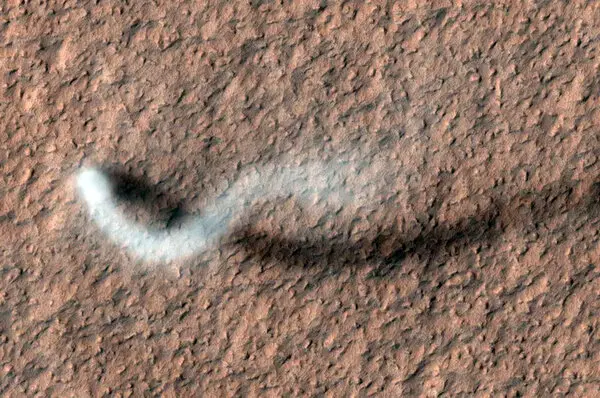
Scientists have confirmed that Mars produces tiny electrical discharges inside its swirling dust devils, a discovery made possible by the microphone installed on the Perseverance rover. The finding offers the first clear evidence that the Red Planet hosts a form of mini-lightning, generated by charged dust particles that collide and separate under turbulent conditions. This new understanding expands ongoing research into extreme weather on Mars and provides critical insights into environmental risks for future robotic and human explorers, particularly as space agencies plan ambitious missions supported by technologies such as those explained on the NASA Mars Exploration Program at https://mars.nasa.gov.
Electrical Sparks Detected by Perseverance
The revelation emerged unexpectedly while scientists reviewed audio recordings of dust devils captured by Perseverance, the car-sized rover exploring Jezero Crater since early 2021. The microphone picked up the familiar sounds of rushing wind and granular dust, but it also recorded distinct, sharp snapping events consistent with short electrical arcs only a few centimeters long. These acoustic signatures resembled strong static-electricity sparks, creating a pattern of interference followed by a miniature shockwave. Researchers analyzing the data compared the characteristics of these signals to laboratory tests performed on Earth, ultimately confirming that the rover captured genuine electrostatic discharges produced by airborne dust on Mars.
The detection supports long-standing hypotheses that Martian dust storms are highly electrified, especially during periods of strong atmospheric turbulence. Similar processes occur on Earth in volcanic ash clouds, where friction between particles creates significant electric charge buildup. This mechanism is also supported by models and experiments conducted by planetary scientists and complements previous observations featured in resources such as the European Space Agency’s Mars facts page at https://www.esa.int/Science_Exploration/Mars.
Why Dust Devils on Mars Create Mini-Lightning
The electrical activity arises from a process known as triboelectric charging, in which dust particles collide, rub, and separate, accumulating opposite charges. When these charges grow large enough, they discharge suddenly in the form of tiny sparks. Mars, with its thin atmosphere and abundant dust, provides ideal conditions for this phenomenon. Over two Martian years of monitoring, the rover detected more than 50 electrical discharge events. The sparks often occurred at the edges of dust storms or within rapidly developing dust devils that form during sunny and unstable periods of the Martian day.
Although most of these sparks are extremely small and difficult to spot visually, they reveal an active and dynamic atmosphere that behaves differently from Earth’s. Scientists are increasingly interested in studying Martian atmospheric electricity because strong electrical fields may influence dust lifting, storm formation, and the movement of fine particles across the surface. These insights also support broader climate studies such as those explained by the National Weather Service climate information at https://www.weather.gov/climate.
Implications for Astronaut Safety and Future Missions
Understanding electrical discharges is essential for planning long-term Mars exploration. Hardware used in missions must withstand potential electrical hazards, especially during global dust storms that can blanket the surface for weeks. Lightning-like discharges could interfere with electronics, damage sensors, or disrupt communications, raising concerns about how future crewed missions will be protected. Such considerations are increasingly relevant as international programs focus on safer interplanetary travel, including initiatives discussed by the International Space Station Program at https://www.nasa.gov/mission_pages/station.
One historical incident—where a lander ceased operations mere seconds after touching down—has prompted questions about whether an electrical discharge might have caused a sudden systems failure. While this remains unconfirmed, the new findings from Perseverance suggest that atmospheric electricity on Mars is a real and measurable phenomenon that cannot be overlooked.
Researchers will continue analyzing Perseverance’s audio data and atmospheric measurements to determine how widespread these electrical events are and whether larger-scale discharges, potentially visible to astronauts, could occur under more extreme dust conditions. This knowledge will shape the engineering and safety protocols for future Mars surface missions.