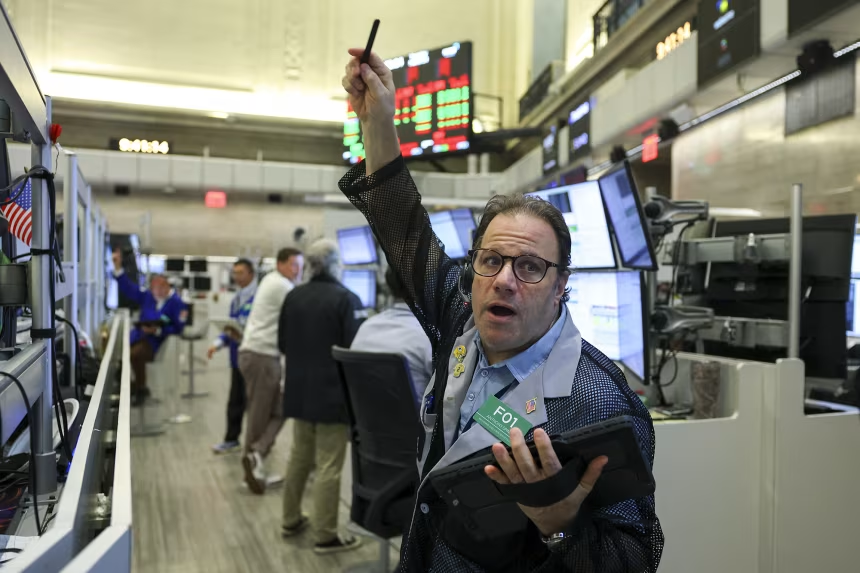
Markets tumble as uncertainty spreads
Global financial markets have entered a period of sharp turbulence, with stocks, bonds and traditional safe-haven assets all declining simultaneously. The ongoing conflict in the Middle East, combined with surging energy prices, has created a rare environment where investors are struggling to find stability across asset classes.
Major U.S. indices have posted significant losses over recent weeks. The Dow Jones Industrial Average dropped more than 400 points in a single session, while the S&P 500 and Nasdaq also recorded steep declines. Analysts tracking S&P 500 performance note that the index has slipped more than 7% from its recent peak, reflecting growing anxiety about inflation and geopolitical risk.
Typically, when equities fall, investors turn to bonds or gold to preserve value. However, this time both have failed to provide meaningful protection. Government bond prices have declined as yields climbed, signaling that investors are selling even traditionally stable assets. At the same time, gold — often considered a reliable hedge — has dropped sharply, highlighting how unusual the current environment has become.
This synchronized downturn across asset classes underscores how deeply uncertainty has penetrated financial markets, leaving portfolios exposed on multiple fronts.
Oil prices drive volatility across assets
At the center of the market’s instability lies the surge in oil prices, which has been fueled by disruptions in key global supply routes. The Strait of Hormuz, a critical passage for energy shipments, remains under strain, pushing crude prices significantly higher.
Brent crude has climbed above $100 per barrel, while U.S. crude has followed a similar trajectory. According to data from U.S. Energy Information Administration, rising oil prices are closely linked to broader inflation pressures, which in turn affect central bank policies and borrowing costs worldwide.
Higher energy costs ripple through the economy, increasing transportation and production expenses for businesses. This dynamic contributes to persistent inflation, forcing central banks to maintain elevated interest rates for longer periods. As a result, assets that do not generate income, such as gold, become less attractive compared to interest-bearing alternatives.
The bond market has reacted accordingly. Investors have been offloading government securities, pushing yields upward. Insights from U.S. Treasury data show that rising yields are making fixed-income investments more volatile, further reducing their appeal as a safe haven.
This chain reaction — from oil markets to inflation expectations and interest rates — continues to amplify volatility across financial systems.
Safe havens fail to offer protection
One of the most striking aspects of the current market downturn is the failure of traditional safe-haven assets to shield investors. Gold prices have fallen nearly 17% over the past month, marking one of the steepest declines in recent years. At the same time, bond markets have experienced sustained selling pressure.
This unusual pattern reflects a shift in investor behavior. Instead of rotating between asset classes, many participants are reducing exposure altogether, moving into cash or short-term instruments. Market observers following Federal Reserve policy signals suggest that uncertainty about future rate decisions is adding another layer of hesitation.
Volatility indicators across equities and fixed income markets remain elevated, signaling that investor confidence is fragile. The lack of clear direction regarding the duration of the conflict and its economic consequences continues to weigh heavily on sentiment.
As long as geopolitical tensions persist and energy markets remain unstable, financial markets are likely to experience continued swings, with few reliable shelters for capital preservation.