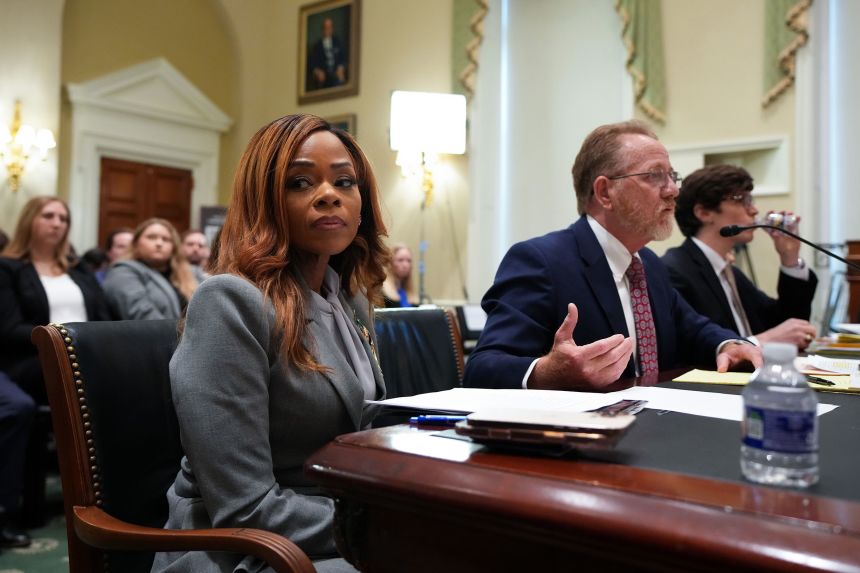
Former U.S. Representative Tom Malinowski has formally conceded defeat to progressive challenger Analilia Mejia in the closely contested Democratic special primary election to fill New Jersey’s 11th Congressional District seat, a race that has drawn national attention due to its broader political implications. The contest was triggered after Mikie Sherrill vacated her seat following her election as governor, prompting a special election that quickly became a test of Democratic strategy ahead of the 2026 midterm cycle.
Malinowski issued a statement acknowledging Mejia’s narrow but decisive lead, congratulating her on a hard-fought campaign and pledging his support for the upcoming general election in April. The outcome marks a significant victory for progressive forces within the party, highlighting a growing appetite among Democratic voters for candidates advocating bold economic reforms, expanded labor protections, and a more confrontational stance against former President Donald Trump’s second-term policies.
The race unfolded against the backdrop of national political recalibration, as Democrats seek to regain momentum after losing control of the White House and Senate in 2024. Special elections like this one have become critical proving grounds, offering insight into shifting voter priorities and turnout dynamics. More details on congressional election processes and legislative procedures can be found on the official U.S. House website at https://www.house.gov, which provides comprehensive resources on electoral mechanics and governance.
A Primary That Reflected Deep Party Divisions
The Democratic primary became a focal point for ideological debate, pitting Malinowski’s centrist credentials and legislative experience against Mejia’s progressive vision and grassroots organizing strength. Malinowski, who previously represented a neighboring district and built a reputation for bipartisan engagement, received high-profile endorsements from party leaders, including New Jersey Senator Andy Kim. Supporters argued that Malinowski’s institutional knowledge and familiarity with Capitol Hill, as detailed through public records available on https://www.congress.gov, positioned him as a pragmatic choice for a district requiring immediate representation.
However, Mejia’s campaign resonated strongly with voters seeking transformative change. As director of the New Jersey Working Families Alliance, she mobilized a coalition of labor unions, community organizations, and progressive activists. Her endorsements from national figures such as Senators Bernie Sanders and Elizabeth Warren, along with Representative Alexandria Ocasio-Cortez, amplified her message and drew substantial grassroots fundraising support. The Working Families movement, which promotes economic justice and labor rights, has played an increasingly influential role in shaping Democratic primaries, as outlined on https://workingfamilies.org.
The contest remained extremely close through election night, with mail-in ballots ultimately tipping the scale in Mejia’s favor. Analysts noted that her victory underscores the growing organizational power of progressive networks and the effectiveness of door-to-door mobilization in suburban and urban districts alike.
Strategic Implications for the 2026 Midterm Cycle
Mejia’s nomination now sets up a general election matchup against Randolph Township Mayor Joe Hathaway, the sole Republican contender. The April election is being closely watched as one of the earliest indicators of voter sentiment heading into the 2026 midterms. Democratic strategists view the race as an opportunity to consolidate support among younger voters, working-class families, and minority communities, while Republicans aim to capitalize on economic uncertainty and voter concerns about public safety and immigration policy.
New Jersey’s evolving political landscape has become a bellwether for broader national trends, particularly in suburban regions that have swung between parties in recent election cycles. State-level electoral data and demographic trends published by the New Jersey government at https://www.nj.gov illustrate how shifting population patterns and economic pressures are reshaping voter coalitions across the state.
For Mejia, the general election will be an opportunity to expand her coalition beyond the progressive base and appeal to moderate and independent voters. Her campaign has already signaled plans to emphasize affordability, healthcare access, and workforce development, while maintaining a firm stance on civil rights and democratic accountability.
The Broader Impact on Democratic Strategy
The outcome of this primary highlights an ongoing realignment within the Democratic Party, as progressive candidates increasingly challenge establishment figures in competitive districts. While Malinowski’s experience and national security background appealed to traditional Democratic voters, Mejia’s victory suggests that enthusiasm, authenticity, and grassroots organization can outweigh institutional support.
Political observers believe this trend could shape candidate recruitment and messaging strategies nationwide, especially in districts where turnout volatility can determine outcomes. The race also reinforces the importance of special elections as testing grounds for new policy platforms and campaign techniques, offering valuable insights for both parties as they prepare for the next electoral cycle.
As the April general election approaches, national attention will remain fixed on New Jersey’s 11th District. The contest is expected to draw substantial fundraising, advertising, and voter outreach efforts from both parties, making it one of the most closely watched House races of early 2026. With momentum on her side, Analilia Mejia now stands at the center of a broader political narrative, one that could influence Democratic strategy well beyond the borders of New Jersey.