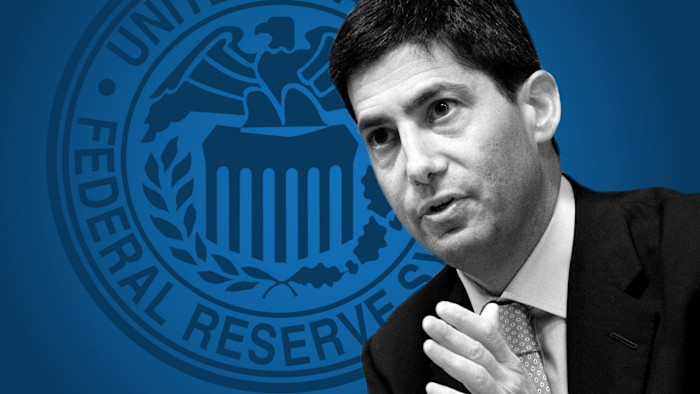
President Donald Trump has selected Kevin Warsh to serve as the next Chair of the Federal Reserve, signaling a decisive shift in the administration’s approach to monetary policy and interest rates. The nomination comes as Trump intensifies pressure for looser financial conditions, arguing that significantly lower borrowing costs are essential to support economic growth, manage federal debt measured in trillions of dollars, and counter global economic uncertainty.
Warsh, a former Federal Reserve governor with deep experience in global finance, steps into the spotlight at a moment when inflation remains elevated above long-term targets and the central bank’s independence is under sustained political scrutiny. His nomination sets the stage for a consequential debate over how far monetary policy should bend in response to presidential priorities.
Kevin Warsh’s Background and Influence on Monetary Policy
Kevin Warsh served on the Board of Governors of the Federal Reserve from 2006 to 2011, a period marked by the global financial crisis and extraordinary central bank intervention. During that time, he played a key role in maintaining dialogue between policymakers and major financial institutions, drawing on his prior experience at Morgan Stanley and in government economic advisory roles.
Currently affiliated with the Hoover Institution at Stanford University, Warsh has consistently emphasized price stability and long-term economic credibility. In past speeches delivered at the International Monetary Fund, he argued that prolonged low interest rates can distort markets, fuel excessive government spending, and weaken public trust in central banking institutions.
This record places Warsh in a complex position. While the administration expects a more accommodative stance on rates, his prior warnings about inflation and fiscal discipline suggest he may resist extreme policy shifts, particularly if price pressures remain persistent across consumer goods, housing, and energy markets priced in dollars.
A Divided Federal Reserve and Growing Political Pressure
If confirmed, Warsh would lead a Federal Open Market Committee composed of governors and regional bank presidents who are increasingly split on the future path of interest rates. Recent rate adjustments totaling more than one percentage point have not ended internal disagreement, as some policymakers prioritize employment protection while others focus on containing inflation that erodes purchasing power.
The nomination also follows a broader effort by the administration to reshape the Fed’s leadership. Trump has openly criticized the current chair for not cutting rates aggressively enough and has moved to fill vacancies with officials aligned with his economic vision. These actions have reignited debate over whether the Fed can remain insulated from short-term political objectives.
Legal and institutional safeguards exist to preserve central bank autonomy, supported by precedent and reinforced by rulings from the U.S. Supreme Court. However, sustained public pressure from the White House has altered expectations around how independent the next chair can realistically be when navigating decisions that affect trillions of dollars in capital flows.
Fed Independence, Inflation Risks, and the Road Ahead
At the core of Warsh’s confirmation process will be the issue of Federal Reserve independence. The central bank’s mandate requires it to balance maximum employment with price stability, often demanding unpopular decisions such as higher interest rates to prevent inflation from becoming entrenched.
Warsh has previously argued that the Fed’s legitimacy depends on strict adherence to its statutory responsibilities and warned that mission creep undermines public confidence. He has linked years of easy money to ballooning federal deficits, now measured in the trillions of dollars, and to structural imbalances that could limit long-term growth.
As global markets watch closely, institutions such as the U.S. Department of the Treasury and international investors will assess whether a Warsh-led Fed prioritizes political alignment or economic fundamentals. The outcome will shape borrowing costs, currency stability, and investor confidence not only in the United States but across the global financial system.
Whether Kevin Warsh ultimately bridges the gap between presidential demands and institutional restraint will define the next chapter of U.S. monetary policy. His leadership could either reinforce the Federal Reserve’s role as an independent guardian of economic stability or mark a turning point toward a more politicized approach to interest rate decisions.