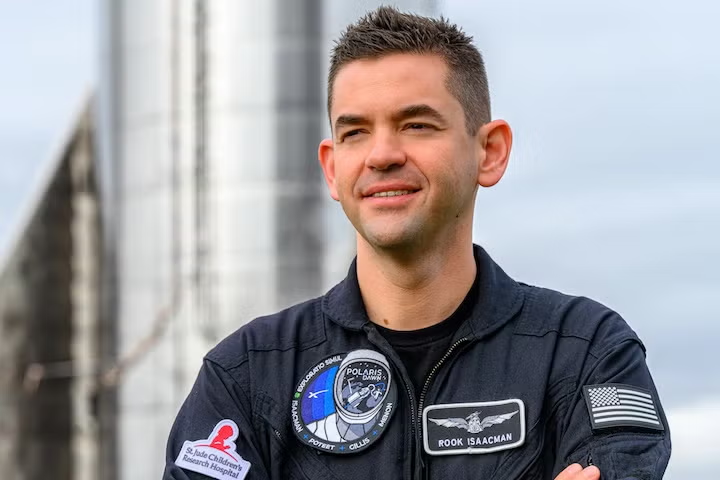
Jared Isaacman, a billionaire entrepreneur and private astronaut, has been confirmed by the U.S. Senate as the new administrator of NASA, marking a significant moment for the agency as it navigates leadership instability, fiscal uncertainty, and evolving priorities in space exploration. At 42 years old, Isaacman enters the role without prior federal government experience, but with a high-profile background in commercial spaceflight and private-sector innovation that reflects the changing structure of the global space economy.
The Senate approved Isaacman’s nomination by a 67–30 vote, signaling bipartisan support despite sharp political divisions surrounding space policy, government spending, and the expanding role of private companies. His appointment follows a turbulent nomination process that included an earlier withdrawal and subsequent renomination by President Donald Trump during his second term.
A private astronaut at the helm of a public agency
Isaacman is widely known for commanding two privately funded space missions conducted in partnership with SpaceX, including a 2024 mission that made him the first civilian to perform a spacewalk. These missions placed him at the center of the growing commercial space sector, where companies increasingly collaborate with NASA on launch services, crew transport, and technological development. According to NASA’s own overview of its commercial partnerships, private operators now play a central role in maintaining U.S. human access to space following the retirement of the Space Shuttle program in 2011.
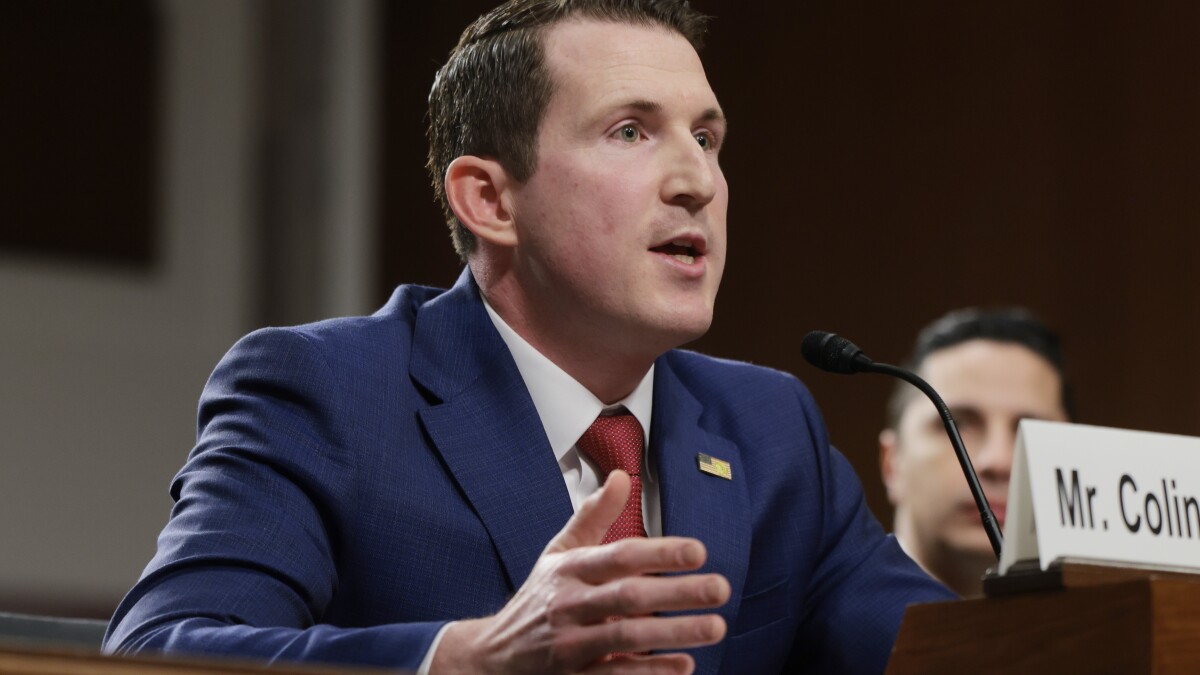
Despite questions raised during Senate hearings about his close professional ties to Elon Musk and SpaceX, Isaacman repeatedly stated that his relationship mirrors NASA’s own reliance on commercial providers. He emphasized that SpaceX remains the only U.S.-based option currently capable of transporting astronauts to orbit, a reality acknowledged by the agency itself on its official website at https://www.nasa.gov.
Strategic direction: Moon missions, Mars ambitions, and fiscal pressure
Isaacman assumes leadership at a moment when NASA’s strategic direction is under scrutiny. The agency is heavily invested in the Artemis program, which aims to return astronauts to the Moon for the first time since the early 1970s. Artemis is designed not only as a symbolic return but as a foundation for long-term lunar operations and future deep-space missions. Detailed objectives of the program are outlined through NASA’s Artemis initiative at https://www.nasa.gov/artemis.
At the same time, the Trump administration has shown increased interest in accelerating Mars exploration, a goal that carries higher technological risks and long-term financial implications. Isaacman has publicly expressed support for pursuing both lunar and Martian missions, arguing that NASA’s existing budget structure could accommodate parallel objectives if resources are managed efficiently.
That position faces immediate challenges. The administration’s proposed 2026 federal budget includes a 24% reduction in overall NASA funding, a cut that would amount to several billion dollars and could reduce the agency’s workforce by roughly one-third. Analysts note that such reductions could terminate more than 40 science and research programs, reshaping NASA’s mission portfolio. Budgetary frameworks and federal spending projections affecting space agencies can be reviewed through the Office of Management and Budget at https://www.whitehouse.gov/omb.
Political scrutiny and the future of U.S. space leadership
Isaacman’s earlier nomination was withdrawn amid scrutiny of his past political donations, which public records show were made to candidates and political committees from both major parties, with a heavier emphasis on Democratic causes in recent years. Isaacman has described himself as “relatively apolitical” and a “right-leaning moderate,” arguing that his views align more closely with innovation-driven policy than partisan ideology.
Following his confirmation, Isaacman inherits an agency under pressure from international competition, particularly from China’s rapidly advancing space program. Maintaining U.S. leadership in space exploration, satellite technology, and scientific research remains a core concern for policymakers, especially as geopolitical tensions increasingly extend beyond Earth’s atmosphere. Broader discussions on global space competition are tracked by institutions such as the U.S. Chamber of Commerce at https://www.uschamber.com.
Isaacman’s tenure will likely be defined by how effectively he balances fiscal constraints, political oversight, and the expanding role of commercial partners while preserving NASA’s scientific mission and international standing.