International troops in Gaza have become a central pillar in diplomatic efforts to preserve the fragile ceasefire between Israel and Hamas. Regional and global actors debate how security, governance, and reconstruction should unfold in the coming years. The discussion is no longer theoretical: decisions made now will determine whether the truce evolves into a durable political process. In contrast, it could collapse under unresolved security tensions. The proposal envisions a multinational presence that would stabilize Gaza while larger political questions remain contested. Therefore, it places unprecedented responsibility on external actors to manage a deeply complex conflict environment.
The Strategic Role of an International Force in Gaza
The idea of deploying international troops in Gaza is closely tied to the concept of preventing renewed hostilities while avoiding a full reoccupation of the territory. Supporters argue that a multinational stabilization force could act as a buffer between Israeli forces and armed factions. They could monitor ceasefire compliance and create space for humanitarian operations. This approach aligns with existing peacekeeping frameworks discussed within international institutions such as the United Nations. The UN’s peace operations mandate and historical precedents can be reviewed through its official peacekeeping resources at https://peacekeeping.un.org.
For the United States and its regional partners, the presence of international troops is also viewed as a mechanism to reduce the likelihood of unilateral military actions that could derail negotiations. Diplomatic planning has increasingly emphasized coordination with regional powers, particularly Qatar and Egypt. These countries have taken on mediator roles. Their broader diplomatic engagement in regional security can be contextualized through the Qatari Ministry of Foreign Affairs at https://www.mofa.gov.qa, which outlines Doha’s role in mediation and conflict resolution.
However, the proposed force faces immediate challenges as many potential contributing countries are reluctant to send troops with a mandate that includes forcibly disarming Hamas. They fear prolonged entanglement and domestic political backlash. As a result, the mission’s scope remains contested, raising questions about whether a lightly armed peacekeeping presence would be sufficient to deter violations. Alternatively, it could merely freeze the conflict without addressing its underlying drivers.
Disarmament, Sequencing, and Regional Resistance
Disarmament sits at the heart of the debate over international troops in Gaza, yet it is also the most divisive issue among stakeholders. While some policymakers argue that the removal of weapons is essential for long-term stability, others insist that disarmament cannot precede political guarantees and territorial arrangements. This disagreement has led to intense discussions about sequencing. Should Hamas disarm before Israeli troop withdrawal, or should both steps occur in parallel?
Regional actors have been explicit in their positions. Several Muslim-majority countries have indicated that they would only support a peacekeeping mission focused on monitoring and civilian protection, not enforcement. This perspective reflects broader norms in international peace operations, where mandates often avoid direct confrontation with non-state armed groups unless explicitly authorized. Analytical frameworks on peacekeeping mandates and enforcement limitations are frequently examined by policy institutions such as the International Crisis Group at https://www.crisisgroup.org, which provides in-depth assessments of conflict dynamics and intervention risks.
Israel, meanwhile, has expressed skepticism about the effectiveness of international troops in neutralizing armed groups. They argue that external forces may lack both the intelligence capabilities and political will to confront militants directly. This skepticism complicates negotiations, as Israel has tied its own military withdrawal to assurances that Gaza will not rearm. The result is a diplomatic stalemate where the international force is widely discussed but not yet clearly defined in operational terms.
Humanitarian Pressure and the Cost of Delay
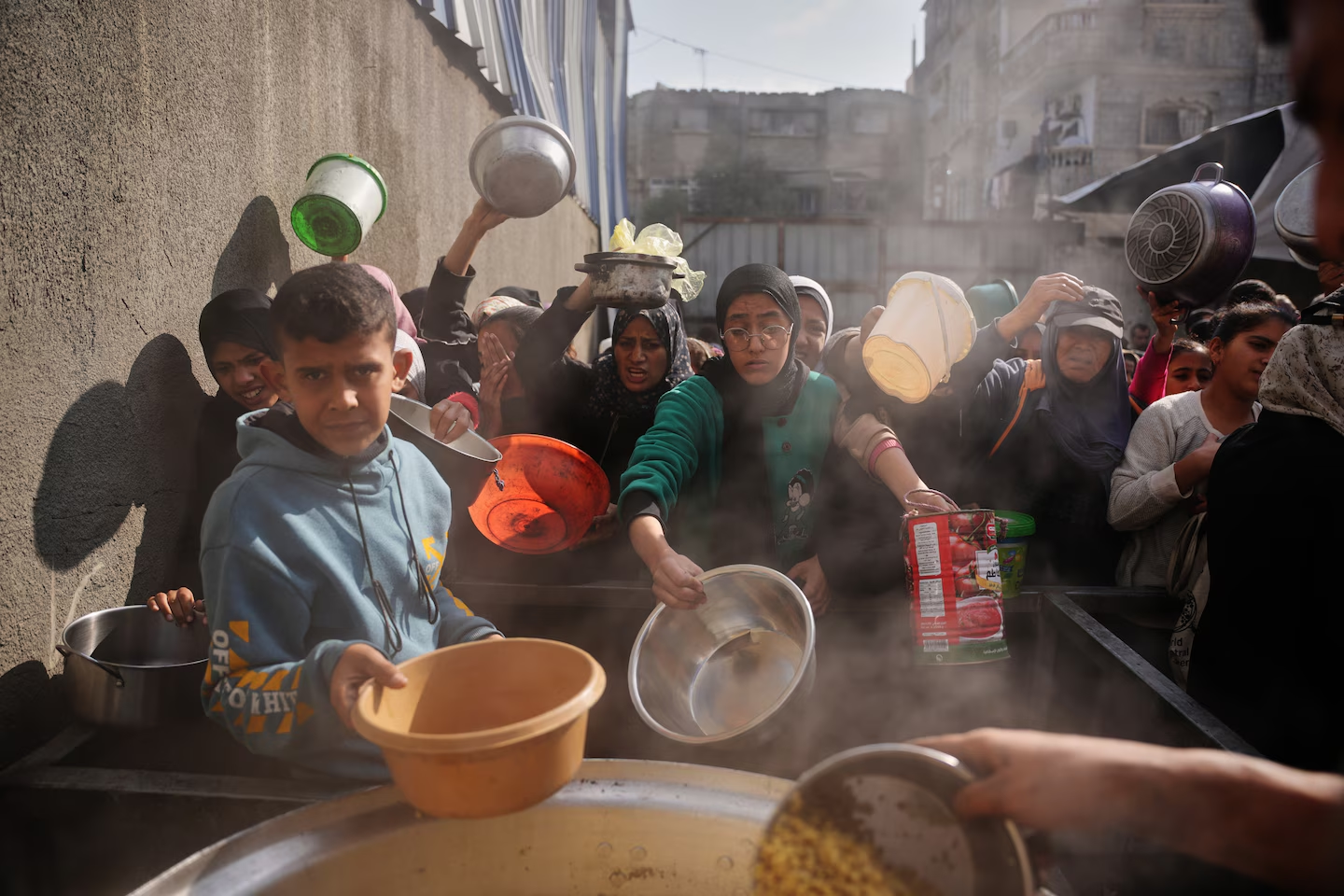
As debates over international troops in Gaza continue, humanitarian conditions on the ground are exerting growing pressure on negotiators. Prolonged displacement, limited access to food and medicine, and damaged infrastructure have created an environment where even minor ceasefire violations carry disproportionate consequences for civilians. Aid organizations warn that without a credible security framework, relief operations remain vulnerable to disruption.
International humanitarian agencies have repeatedly stressed that stability is a prerequisite for large-scale reconstruction and economic recovery. Coordination challenges of delivering aid in active or unstable conflict zones are outlined by organizations such as the International Committee of the Red Cross at https://www.icrc.org, which emphasizes the need for secure access and respect for humanitarian corridors. Without an international presence to help enforce ceasefire terms, these conditions are unlikely to improve meaningfully.
At the same time, the economic dimensions of stabilization cannot be ignored. Rebuilding Gaza will require billions of dollars in international assistance, long-term investment, and governance structures capable of managing funds transparently. Donor confidence is closely linked to security guarantees. Consequently, the deployment of international troops is not just a military or political question, but an economic one as well. The World Bank’s work on post-conflict reconstruction, available at https://www.worldbank.org, highlights how security arrangements directly influence the success of recovery programs in conflict-affected regions.
Ultimately, the discussion around international troops in Gaza reflects a broader shift in how conflicts are managed in the modern geopolitical landscape. Rather than decisive military victories, the focus has moved toward containment, stabilization, and incremental political progress. Whether this approach can succeed in Gaza will depend on the willingness of global and regional actors to commit resources. They must clarify mandates, and accept the long-term responsibilities that such a deployment entails.