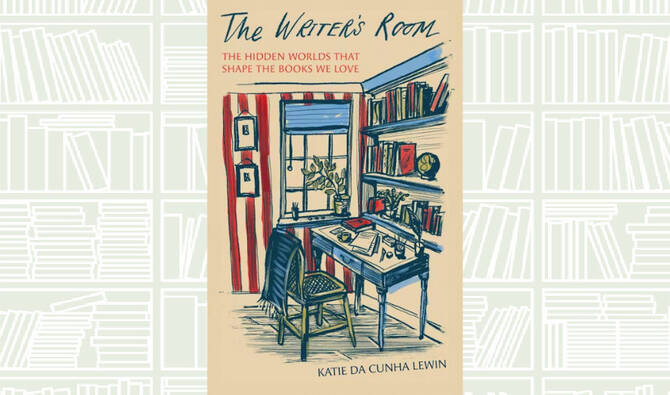
A new literary study is reigniting debate about the mystique of creative spaces and whether the rooms where authors write truly shape the books that define generations. The Writer’s Room: The Hidden Worlds That Shape the Books We Love, published by <a href=”https://press.princeton.edu/” target=”_blank”>Princeton University Press</a>, examines why readers remain captivated by the physical environments of writers long after the final page has been turned.
From preserved historic homes to reconstructed desks behind museum glass, the book argues that society continues to romanticize the idea that literary brilliance is somehow embedded in furniture, walls, or windows. Instead, it suggests that the mythology surrounding these spaces often obscures the reality of disciplined labor, financial instability, and ordinary routines that define the writing life.
The Clifton House and the Living Legacy of Lucille Clifton
In Baltimore stands The Clifton House, the former residence of poet <a href=”https://www.poetryfoundation.org/poets/lucille-clifton” target=”_blank”>Lucille Clifton</a>, a National Book Award winner whose work reshaped contemporary American poetry. The three-story home, imposing from the street and steeped in history, once housed Clifton and her husband Fred beginning in 1967. After foreclosure in 1980, the property might have faded into obscurity. Instead, it has been revived as a cultural center hosting workshops, readings, and artistic gatherings.
Visitors often describe an almost reverential atmosphere inside the home, particularly in the bedroom corner where Clifton reportedly wrote in the mornings. Yet the book challenges the assumption that physical proximity to such spaces grants creative insight. The preserved room may inspire reflection, but it does not transfer talent. The enduring presence people claim to feel inside literary homes may say more about collective imagination than about supernatural influence.
By examining locations like Clifton’s Baltimore residence, the study explores how literary tourism has become a cultural phenomenon. Readers increasingly seek tangible connections to authors, reinforcing the perception that creativity is spatially anchored.
Virginia Woolf’s Monk’s House and the Illusion of Access
The author’s exploration begins with a pilgrimage to Monk’s House in Sussex, the summer residence of <a href=”https://www.bl.uk/people/virginia-woolf” target=”_blank”>Virginia Woolf</a>. Managed today by heritage conservation groups, the property draws visitors eager to glimpse the desk where Woolf crafted some of the twentieth century’s most influential novels.
Yet what many encounter is distance rather than intimacy. Desks sit behind protective glass. Personal artifacts are carefully curated. The reality of preservation prevents physical closeness. This paradox—traveling across continents only to confront barriers—reveals a deeper truth about literary spaces. Access to a room does not equate to access to a mind.
The book argues that such pilgrimages reveal more about readers than about writers. Fans often hope that observing a desk, a chair, or a window overlooking a garden will unlock insight into the creative process. Instead, they confront the fact that writing is frequently quiet, repetitive, and structured by routine rather than bursts of visible inspiration.
Debunking the Myth of the Perfect Writing Space
Across its chapters, The Writer’s Room dismantles the idea that there is a universal formula for literary production. Some authors required isolation. Others wrote amid domestic chaos. Some cultivated carefully curated studies to reinforce their public persona. Others drafted masterpieces at kitchen tables or between shifts at unrelated jobs.
Historic homes such as the <a href=”https://louisamayalcott.org/” target=”_blank”>Louisa May Alcott Orchard House</a> in Massachusetts or the <a href=”https://www.zoranealehurston.com/” target=”_blank”>Zora Neale Hurston House</a> in Florida continue to attract visitors seeking proximity to greatness. These preserved properties reinforce the narrative that space and genius are intertwined. Yet the book emphasizes that many writers lost their homes to foreclosure, redevelopment, or neglect. Countless literary rooms have vanished entirely, replaced by modern construction projects valued in the millions of dollars.
The cultural fixation on the writer’s room, the book contends, may stem from a desire to simplify creativity into something observable and replicable. If genius can be traced to a desk arrangement or a secluded garden shed, then perhaps it can be imitated. But the author ultimately argues that writing remains an act of sustained effort rather than environmental magic.
By reframing literary rooms as contexts rather than catalysts, The Writer’s Room invites readers to reconsider what truly shapes the books they cherish. The walls may hold memories, and the preserved desks may inspire awe, but the essential ingredient has always been the same: the solitary act of putting words on a page.