A prolonged deep freeze across large portions of the United States has transformed sections of the Chesapeake Bay into a rare winter playground, triggering a resurgence in Chesapeake Bay ice boating and drawing both veteran sailors and first-time spectators to Maryland’s Eastern Shore.
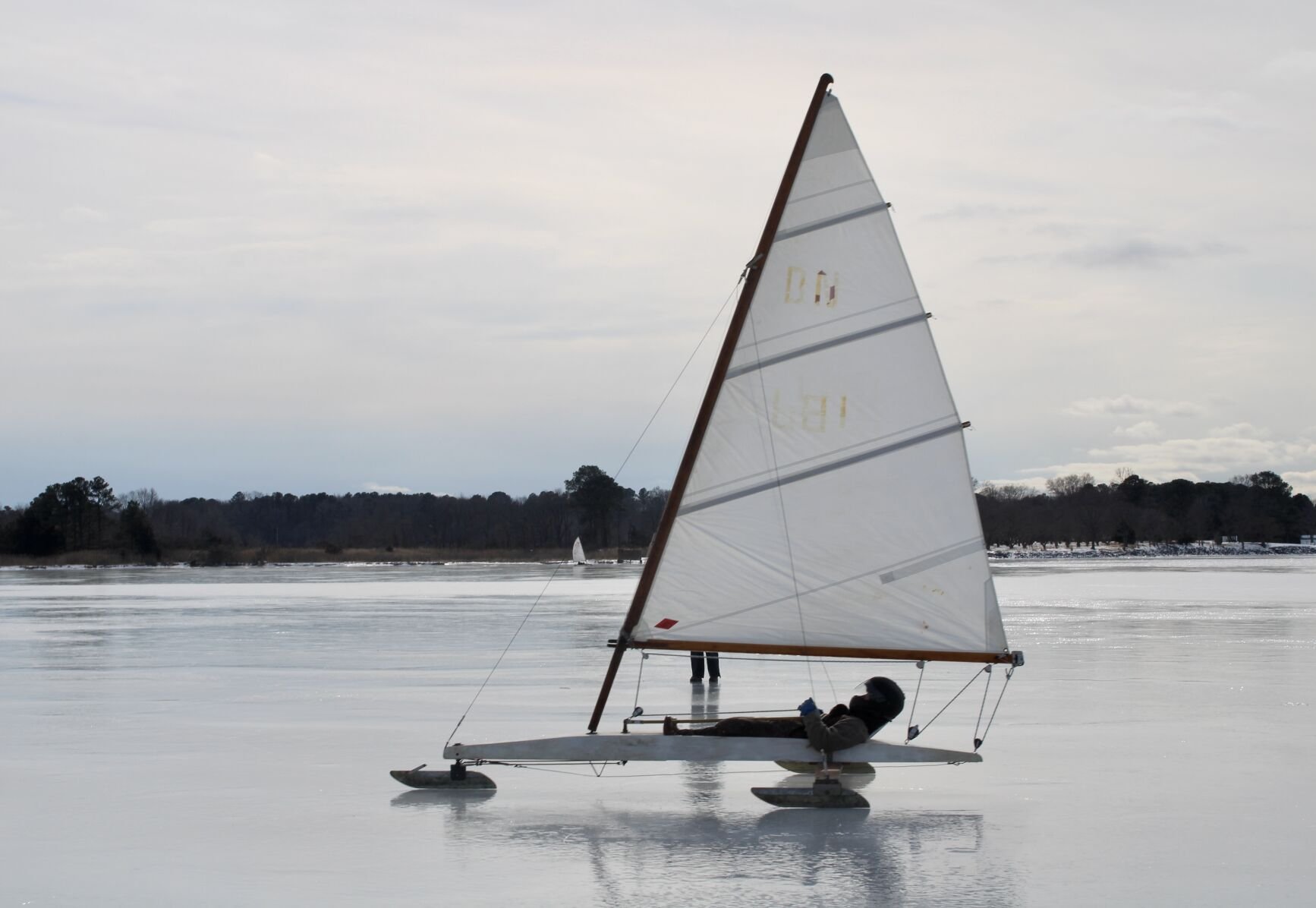
At Claiborne Cove, narrow steel runners slice across solid ice as wind fills crisp white sails. Among those taking advantage of the unusual conditions is 61-year-old Michael Keene, who grips the polished wooden tiller of his 12-foot ice boat before pushing off and vaulting into the cockpit. Within moments, his craft accelerates toward open stretches of frozen bay, reaching nearly 30 mph — roughly three times faster than a traditional sailboat traveling in similar wind conditions on open water.
Unlike conventional sailing, ice boats glide on blades that create minimal friction, allowing dramatic speed even when winds remain light. Pilots lie low in narrow cockpits, steering with subtle adjustments while wind power propels them across a mirror-like surface. The sensation resembles a hybrid between sailing and winter racing sports, combining strategy, balance and rapid acceleration.
Unusually Strong Freeze Creates Rare Conditions
The recent wave of sub-freezing temperatures created some of the most favorable ice boating conditions seen in decades. Sections of brackish water along the Chesapeake Bay, which do not often freeze solid, formed thick, stable ice sheets capable of supporting both sailors and spectators.
Local enthusiasts pulled ice boats from storage sheds and garages, assembling them along the cove as word spread quickly through sailing communities. On peak days, as many as 100 onlookers gathered along the shoreline to witness the spectacle.
For many observers, the experience was entirely new. Rahul Wankhede, who works at a hotel in the region, said he had never seen anything like it. The smooth, glass-like surface combined with sleek wooden hulls and tall masts created an unexpected winter scene in a region better known for crabbing and summer sailing.
The phenomenon has drawn attention beyond Maryland, as sailors from across the country track freeze patterns to determine where safe ice may form. Ice boating communities frequently monitor winter forecasts and local water conditions, often coordinating through sailing organizations and regional clubs.
Regattas Return After Years of Dormancy
The strong freeze has also revitalized competitive ice boating events that had been dormant for years due to inconsistent winter conditions. In Red Bank, New Jersey, the North Shrewsbury Ice Boat & Yacht Club hosted a regatta for 30-foot-plus ice yachts for the first time since 2003, marking a significant milestone for the sport.
Meanwhile, in Wisconsin, Green Lake hosted the North American Championship for DN-class ice boats — a popular design that originated from a 1930s contest organized by the Detroit News. The DN class remains one of the most widely sailed ice boat categories in the world, known for its lightweight structure and competitive racing format. This year’s championship drew international competitors, with the overall winner traveling from Poland, underscoring the sport’s global appeal.
Organizations such as US Sailing, accessible at https://www.ussailing.org, have long recognized ice boating as a specialized extension of wind-powered racing. Broader winter sport governance and recreational data are also tracked through institutions like https://www.ussport.gov and weather pattern analysis from https://www.noaa.gov, which monitors freeze conditions that directly impact the viability of ice sailing. Regional environmental factors affecting the Chesapeake Bay are documented by the Chesapeake Bay Foundation at https://www.cbf.org, particularly regarding water salinity and climate variability.
Thrill and Caution on the Ice
Despite its elegance, ice boating requires careful attention to safety. Ice thickness must be sufficient to support both equipment and riders, and participants routinely inspect surfaces for cracks or weak spots. Wind shifts can dramatically affect speed, and inexperienced riders are often advised to begin under supervision.
For first-time participant Feng, the anticipation brought both excitement and hesitation. Before stepping onto the frozen cove, she admitted concern about whether the ice would hold and how fast the boat might travel. Once underway, however, the experience shifted from anxiety to exhilaration. The cockpit accommodates only one rider, requiring creative positioning for guests who sit atop structural planks while gripping tension wires for balance.
The recent surge in Chesapeake Bay ice boating highlights how extreme weather events can temporarily reshape recreational landscapes. While freezing temperatures have disrupted travel and strained infrastructure in many parts of the country, for a niche community of winter sailors they have delivered rare and near-perfect racing conditions.
Whether such conditions will persist remains uncertain, as long-term climate trends suggest milder winters in many coastal regions. For now, however, Maryland’s frozen shoreline has provided a fleeting revival of a sport that blends craftsmanship, meteorology and speed into one of winter’s most visually striking spectacles.