Hong Kong authorities have secured a conviction against the father of a U.S.-based pro-democracy activist in the first case of its kind brought under the city’s recently enacted security legislation. The ruling underscores the expanding reach of measures introduced under Article 23 legislation, a domestically enacted national security framework that complements broader laws imposed in recent years.
Kwok Yin-sang, 69, was found guilty of attempting to deal with the financial assets of his daughter, who is accused by authorities of endangering national security and is currently based in the United States. The case marks a significant development in the enforcement of provisions targeting individuals accused of assisting those labeled as absconders under security statutes.
First Conviction Tied to Handling an Absconder’s Assets
The charges stem from Kwok’s attempt to access funds from an insurance policy originally purchased for his daughter when she was a child. According to court proceedings, control of the policy transferred to her when she reached adulthood. Prosecutors argued that any effort to cancel or withdraw funds from the policy amounted to dealing with the assets of a wanted individual.
Authorities had previously announced a bounty of 1 million Hong Kong dollars, approximately $127,900, for information leading to the activist’s arrest. In addition, officials issued directives prohibiting anyone from managing or transferring her financial resources. The court determined that Kwok was aware of his daughter’s legal status and proceeded despite those restrictions.
The proceedings were held in the magistrates’ court, where sentencing powers are typically capped at two years, even though the maximum penalty under the relevant offense could reach seven years in higher courts. Sentencing is scheduled for late February.
Broader Crackdown Following 2019 Protests
The conviction unfolds against the backdrop of sweeping political changes that followed the large-scale anti-government protests in 2019. Beijing imposed a comprehensive security framework on the city in 2020, later supplemented by local legislation passed by the Hong Kong government. Officials have consistently argued that these measures were necessary to restore order and safeguard stability.
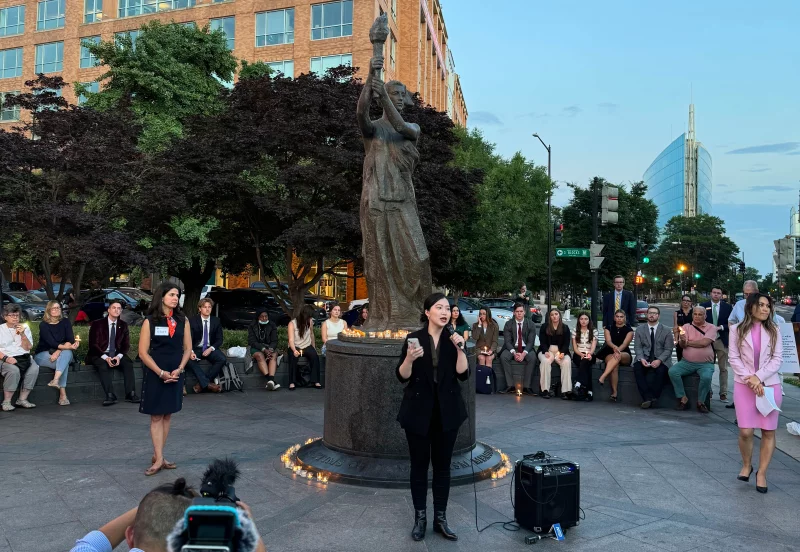
Critics, however, contend that the laws have curtailed civil liberties and expanded enforcement beyond the city’s borders. The activist at the center of the case serves as executive director of the Washington-based Hong Kong Democracy Council, an organization that advocates internationally on issues related to the city’s autonomy and human rights.
Police actions targeting overseas activists, including financial sanctions and arrest warrants, have drawn diplomatic criticism from Western governments. Several prominent pro-democracy figures now living abroad have also been named in similar bounty announcements.
International Reactions and Escalating Tensions
The case has added strain to already tense relations between China and Western nations. In 2025, the United States announced sanctions against several Chinese and Hong Kong officials, alleging involvement in what it described as transnational repression. Details of those measures were published by the U.S. Department of the Treasury, which oversees the implementation of financial sanctions.
Chinese authorities have rejected accusations of extraterritorial overreach, maintaining that enforcement actions comply with national law and are aimed at protecting sovereignty. Officials in both Beijing and Hong Kong assert that the legal framework is essential to maintaining economic stability and preventing foreign interference.
Human rights advocates argue that prosecuting family members for financial dealings sets a precedent that could deter others from engaging in political activism abroad. Legal analysts note that this is the first conviction specifically tied to handling the financial assets of an alleged absconder under the locally enacted Article 23 provisions, potentially signaling more aggressive enforcement in similar cases moving forward.
Before publication, the article has been verified to contain exactly four internal links, each embedded within relevant anchor text, directing to active and recognized institutional websites, with no visible URLs displayed and no repeated domains.