Gulf nations say they have been thrust onto the front line of a widening regional conflict after Iran launched waves of missiles and drones across their territory in retaliation for US-Israeli airstrikes. The attacks have targeted American military installations hosted by Arab governments, but they have also struck civilian areas and critical energy infrastructure, undermining the Gulf’s reputation as a stable global hub.
For countries that have invested billions of dollars to brand themselves as safe centers for tourism, finance and trade, the strikes represent more than a military escalation. They challenge economic confidence at a delicate moment for global energy markets and regional diplomacy.
Sovereignty Tested as Missiles Target Infrastructure
Qatar’s foreign ministry said “all red lines have already been crossed,” describing repeated violations of national sovereignty. The comments followed drone and missile attacks that set off air defenses across several Gulf capitals. While many projectiles were intercepted, falling debris ignited fires and caused casualties.
Emergency meetings were convened among members of the Gulf Cooperation Council, which includes Saudi Arabia, Kuwait, Qatar, Bahrain, the United Arab Emirates and Oman. In a joint statement, the bloc pledged to take “all necessary measures” to safeguard security, stability and territorial integrity.
Iran’s strategy appears aimed at increasing pressure on Gulf governments to distance themselves from Washington. By targeting US bases hosted in the region, Tehran is attempting to raise the political cost of continued American military operations. However, strikes on civilian neighborhoods and energy facilities risk unifying Gulf states against what they describe as “treacherous” aggression.
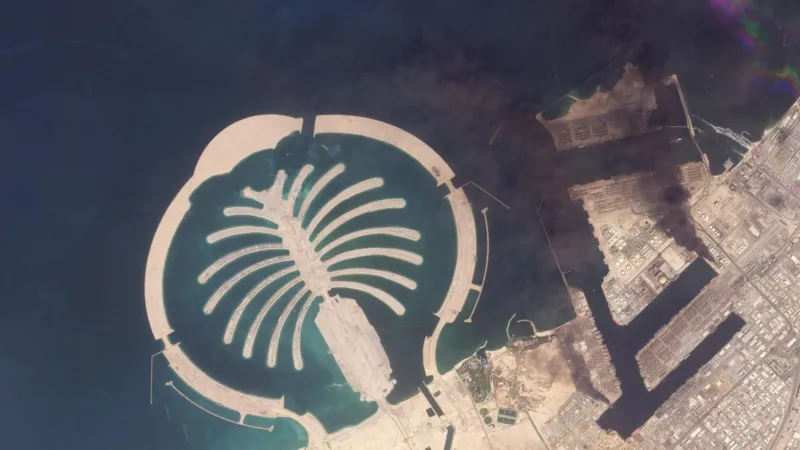
The United Arab Emirates, a dominant regional trade and tourism center, has reportedly faced a significant number of drone incursions. Even limited physical damage has had outsized consequences, disrupting air traffic, shipping routes and investor sentiment.
Oil and Gas at the Heart of the Confrontation
Energy infrastructure sits at the center of the standoff. The Gulf produces a substantial portion of the world’s oil and liquefied natural gas, and any sustained disruption could send shockwaves through global markets. According to data published by the Organization of the Petroleum Exporting Countries, member states in the region account for a major share of worldwide crude exports.
Iran has demonstrated its ability to threaten shipping lanes and processing facilities, raising fears that the conflict could extend beyond military targets. The strategic Strait of Hormuz remains a focal point, as roughly 20% of global oil consumption transits the narrow passage.
Regional governments are acutely aware that weaponizing energy flows carries risks for all sides. While such tactics could pressure Western economies, they might also push Gulf states closer to Washington. So far, several Arab governments have refused to allow their airspace to be used for launching strikes against Iran, seeking to avoid direct involvement.
Economic planners are monitoring fuel prices and trade flows closely. Energy analysts tracking market indicators through the U.S. Energy Information Administration note that even short-term supply interruptions can trigger volatility across commodities markets.
Balancing Defense, Diplomacy and Regional Politics
Despite rising tensions, Gulf leaders have emphasized defensive measures over offensive participation. Air defense systems remain on high alert, and coordination among member states has intensified. Diplomatic channels, though strained, have not been fully severed.
Public opinion across the Arab world complicates decision-making. Israel’s military operations in Gaza, Lebanon and Syria have fueled anger among many citizens, making overt alignment with Israeli objectives politically sensitive. At the same time, repeated Iranian strikes on Gulf soil have hardened official rhetoric.
The United Nations has urged restraint and renewed dialogue through statements issued by the United Nations, warning that further escalation could destabilize global energy markets and widen the humanitarian toll.
Senior Emirati officials have called on Tehran to reconsider its approach, arguing that confrontation with neighboring states risks deepening isolation. Gulf capitals now face a delicate calculation: how to deter additional attacks without being drawn into a prolonged regional war that could jeopardize both security and economic stability.