A shifting balance of power unsettles long-standing alliances
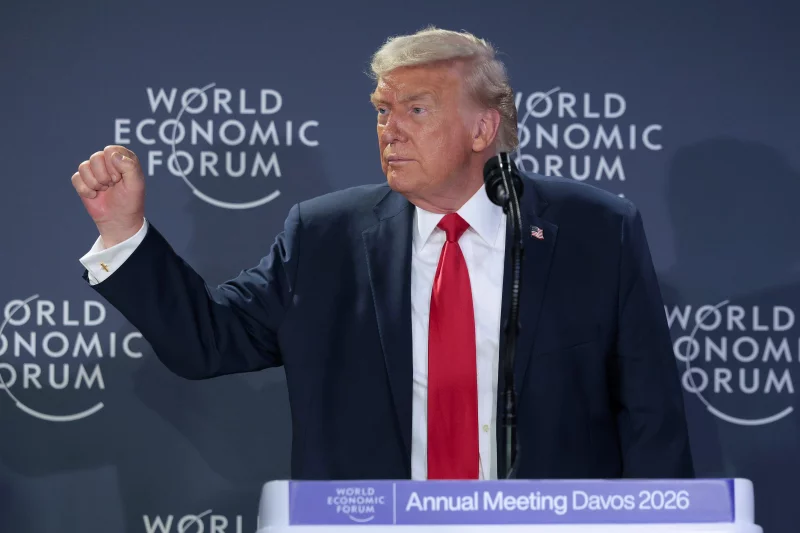
The annual gathering of political and economic leaders in Davos unfolded amid unusually high levels of diplomatic anxiety, as U.S. allies openly questioned whether the postwar international framework can still rely on American leadership. Statements from Washington in recent weeks had already fueled volatility in global markets and strained relations across Europe and North America, amplifying fears that traditional alliances may be entering a period of structural instability rather than temporary disruption.
Behind closed doors and on public stages, delegates pointed to a growing pattern of unpredictability that complicates long-term planning for governments, central banks, and multinational corporations. The concern was not confined to defense matters alone but extended into trade, monetary coordination, and the credibility of multilateral institutions designed to stabilize economic shocks. Organizations such as the World Economic Forum became focal points for these debates as leaders weighed whether existing global governance mechanisms remain fit for purpose in a rapidly polarizing geopolitical climate.
Economic pressure and security tensions converge
Several leaders emphasized that economic integration is increasingly being used as a geopolitical lever, blurring the line between market competition and strategic coercion. Tariff threats, financial restrictions, and control over critical supply chains have introduced new vulnerabilities for mid-sized economies that historically depended on predictable rules-based trade. These pressures have forced governments to reassess their exposure to external shocks and rethink assumptions about collective economic security.
The unease extended to the architecture underpinning global financial stability. Policymakers privately acknowledged that institutions like the International Monetary Fund face mounting challenges as political fragmentation complicates coordinated responses to currency instability, sovereign debt stress, and cross-border capital flows measured in the trillions of dollars. As trust erodes, the cost of maintaining economic resilience continues to rise, especially for countries without reserve-currency privileges.
Security guarantees and institutional credibility under scrutiny
Defense and security discussions at Davos revealed similar fault lines. Allies expressed concern that ambiguous signaling weakens deterrence and emboldens revisionist actors willing to test international boundaries. While officials reaffirmed commitments to collective defense, questions persisted about how those promises translate into action during crises that unfold far from traditional theaters.
These anxieties were particularly visible within the NATO alliance, where unity depends as much on perceived reliability as on military capability. Diplomats warned that uncertainty alone can be destabilizing, even in the absence of immediate conflict. Parallel debates emerged around the role of the United Nations, with some leaders arguing that its legitimacy is increasingly strained by geopolitical rivalries that block consensus and delay decisive action.
As the Davos meetings concluded, no single declaration resolved these concerns. Instead, what lingered was a shared recognition that the global order is under measurable strain, and that allies may need to prepare for a future where leadership is more diffuse, coordination more difficult, and institutional authority less assured than at any point in recent decades.