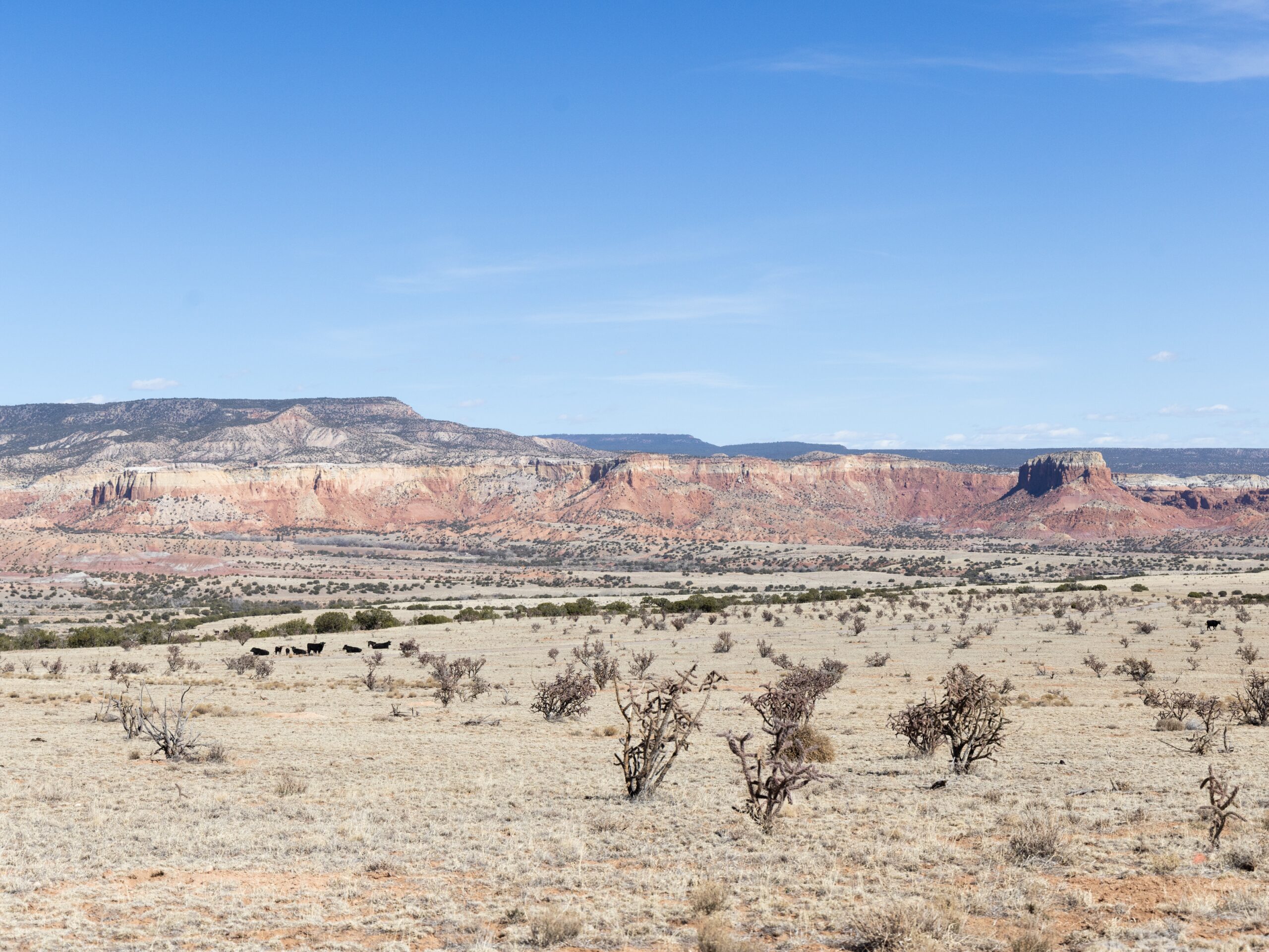
The dramatic desert landscape of northern New Mexico—defined by towering cliffs, wind-sculpted mesas and vibrant mineral colors—has long been associated with the artistic legacy of Georgia O’Keeffe. For decades, the region around the small community of Abiquiú became widely known as “O’Keeffe Country,” a reference to the painter whose work transformed the area’s mountains, bones and flowers into internationally celebrated works of modern art.
Today, however, that identity is evolving. Local Indigenous communities, historians and cultural leaders are working to broaden the narrative surrounding the land that inspired O’Keeffe’s paintings. At the same time, conservation organizations and regional institutions are advancing a new plan designed to permanently protect thousands of acres of the fragile high desert landscape.
The shift reflects a growing recognition that the area’s cultural significance stretches far beyond the life of a single artist and includes centuries of Indigenous presence and environmental stewardship.
Indigenous Perspectives Reshape the Story of Northern New Mexico
For generations, the cliffs and mesas surrounding Abiquiú have served as both artistic inspiration and sacred geography. Members of nearby Pueblo communities say that while O’Keeffe’s work helped introduce the landscape to global audiences, the region’s deeper cultural history has often been overlooked.
Artists and scholars connected to the Santa Clara Pueblo and other Tewa communities have begun to highlight their longstanding relationship with the land. Exhibitions and cultural programs now explore how Indigenous perspectives intersect with O’Keeffe’s artistic vision.
At the Georgia O’Keeffe Museum in Santa Fe, curators recently organized an exhibition featuring contemporary Tewa artists responding to the landscape that O’Keeffe famously painted. Their work emphasizes the land’s spiritual meaning and its importance within Pueblo traditions.
These new interpretations challenge the simplified narrative that framed the region primarily through the painter’s work. Instead, museums and cultural institutions are encouraging visitors to explore a more layered history of northern New Mexico.
Information about the museum’s exhibitions and educational programs can be found through the institution’s official website at https://www.okeeffemuseum.org.
A Landscape That Inspired One of America’s Most Famous Artists
Although the story of the region is expanding, the connection between O’Keeffe and the desert remains central to its identity. The artist first encountered the landscape in the 1930s after traveling from New York, where she had already begun establishing herself as a pioneering modernist painter.
O’Keeffe eventually purchased a home at Ghost Ranch, an expansive property surrounded by striking rock formations and colorful desert terrain. The location became a major source of inspiration for her paintings of bones, flowers and abstract landforms.
She later settled in the nearby village of Abiquiú, where she maintained a studio and continued producing work that drew directly from the surrounding landscape.
Among her most famous subjects was the flat-topped mountain known as Cerro Pedernal. The distinctive formation appears repeatedly in her paintings and became one of the most recognizable symbols in her body of work.
Today, visitors continue to travel from around the world to explore the same landscape that inspired her art. Tours of O’Keeffe’s home and studio are organized through regional cultural institutions, with details available at https://www.okeeffehomeandstudio.org.
Conservation Efforts Aim to Preserve the Desert Landscape
While cultural discussions about the region continue to evolve, conservation groups are also taking steps to ensure that the landscape itself remains protected for future generations.
Organizations such as the New Mexico Land Conservancy are working alongside local partners to preserve open spaces and prevent development from altering the fragile ecosystem of the high desert.
These efforts involve partnerships with educational institutions, conservation nonprofits and landowners across northern New Mexico. By establishing conservation easements and long-term land management plans, these initiatives aim to safeguard the geological features and ecological diversity that define the region.
Additional information about these preservation programs can be accessed through the organization’s website at https://www.nmlandconservancy.org.
Ghost Ranch itself has also become a center for environmental education and cultural dialogue. The historic property now functions as a retreat and learning center that hosts workshops, art programs and outdoor activities designed to deepen visitors’ understanding of the land.
Programs and events at the ranch are listed on its official website at https://www.ghostranch.org.
As northern New Mexico continues to welcome visitors drawn by O’Keeffe’s art, local leaders emphasize that the story of the land is expanding rather than replacing the artist’s legacy. The new approach highlights the landscape as a shared cultural space—one shaped by centuries of Indigenous heritage, artistic interpretation and ongoing conservation efforts.