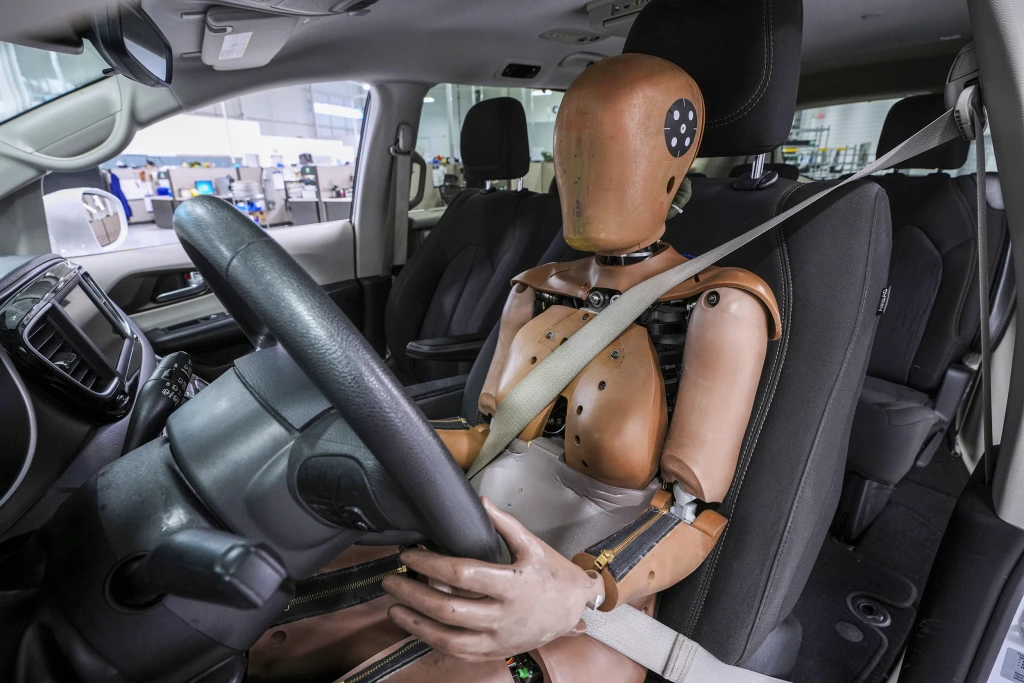
The introduction of a new crash test dummy designed to more accurately represent women marks a significant step toward improving vehicle safety across the United States. The Department of Transportation announced that the model will be evaluated for use in the government’s five-star crash test ratings. This evaluation will occur once the final regulatory rule is approved. This development comes amid ongoing concerns about the disparity in injury and fatality rates between men and women in vehicle collisions. This issue has increasingly captured the attention of engineers, policymakers, and consumer safety advocates.
Addressing a Longstanding Gender Gap in Automotive Safety
For decades, vehicle safety testing in the U.S. has relied on a model created in 1978. This model represents a 5-foot-9, 171-pound man and has remained largely unchanged for nearly five decades. While a smaller female dummy has been used in limited scenarios, it is rarely placed in the driver’s seat. This is despite women representing a substantial portion of licensed drivers nationwide. This testing gap contributes to notable risk disparities. Women are 73% more likely to be injured in head-on collisions and 17% more likely to die in vehicle crashes.
The new female dummy incorporates structural differences found in the average woman, including variations in hip spacing, chest shape, neck flexibility, and bone structure. It is outfitted with more than 150 sensors capable of measuring pressure, acceleration, and trauma points. Thus, it provides a more accurate representation of how real-world crashes may affect women. This level of precision aligns with modern automotive engineering tools similar to those used in advanced simulations offered by institutions such as the National Highway Traffic Safety Administration (NHTSA) (https://www.nhtsa.gov). It also aligns with the broader research data frameworks found on Data.gov (https://www.data.gov).
Industry Response and Legislative Momentum
Some American automakers have expressed concerns about the introduction of the model. They question whether it may overestimate injury risks or influence the perceived value of safety technologies. These include seat belts, crumple zones, and airbag deployment systems. Despite this skepticism, bipartisan support for updates to crash test standards continues to grow. Lawmakers across parties agree that outdated models fail to reflect the diversity of today’s drivers. Furthermore, they do not adequately account for gender-specific biomechanics.
Current legislative initiatives, including the She Drives Act, emphasize the need for updated crash test tools and advanced testing devices. Supporters argue that making these requirements permanent will help reduce injuries, strengthen safety protocols, and ultimately save thousands of lives nationwide. Legislative updates and regulatory progress can be monitored through platforms like Congress.gov (https://www.congress.gov). This site provides ongoing access to bill developments, voting records, and proposed safety measures.
Preparing the Automotive Industry for Compliance and Implementation
The Department of Transportation confirmed that manufacturers will soon be able to access the full specifications needed to produce and test the new female model. This will allow automakers to begin integrating the updated dummy into crash simulations, compliance testing, and research projects. These projects aim at improving occupant protection technologies. As automotive engineering continues to evolve—with electric vehicles, autonomous driving systems, and emerging smart-sensor integration—having more accurate physical crash models becomes increasingly important.
Manufacturers seeking to implement the new dummy will also be able to align their research with technical resources, safety guidelines, and compliance materials. These are available through the U.S. Department of Transportation (https://www.transportation.gov) and complementary automotive research hubs such as the Federal Motor Vehicle Safety Standards portal (https://www.ecfr.gov/current/title-49/subtitle-B/chapter-V/part-571).
By incorporating detailed biomechanical measurements, gender-specific attributes, and updated safety indicators, the new model represents a foundational shift in the way vehicle crashworthiness is evaluated. Its introduction signals a broader national effort to ensure that safety measures reflect the diversity of real drivers on American roads. Furthermore, it ensures that emerging automotive technologies are built with a more inclusive understanding of human physiology.