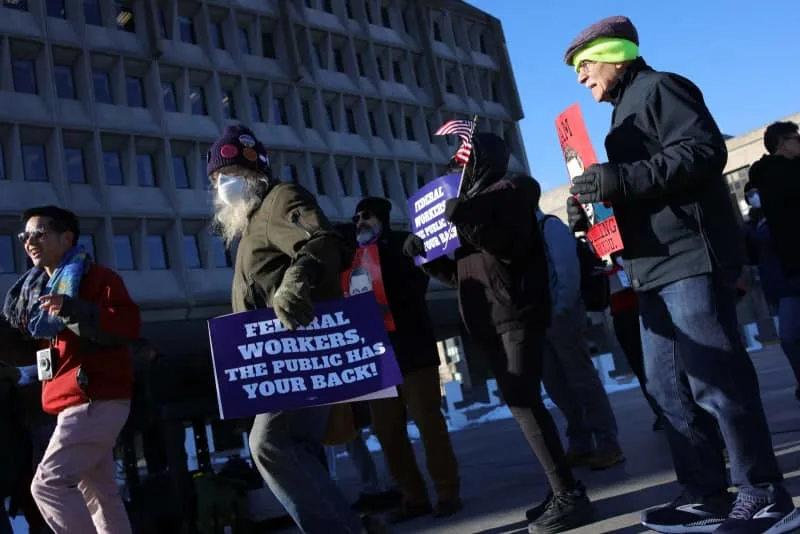
The scale of change within the U.S. federal workforce has accelerated sharply since President Donald Trump returned to the White House, marking one of the most significant personnel shifts in modern government history. By the end of 2025, approximately 317,000 federal employees are projected to have exited government service, according to workforce data compiled by the Office of Personnel Management, fundamentally altering the structure, morale, and operational capacity of multiple agencies across the federal system.
For decades, federal employment was widely regarded as a stable career path, offering predictable benefits, job security, and a defined mission of public service. That perception has been disrupted by a sustained period of firings, voluntary departures, early retirements, and buyout programs, many of which unfolded amid shifting administrative directives and heightened uncertainty inside agencies.
Employees who once navigated clear professional expectations now describe a workplace environment shaped by abrupt policy mandates, changing performance metrics, and new reporting requirements. Some workers chose to leave after concluding that long-term stability was no longer guaranteed, while others were dismissed outright as part of broader administrative actions that affected both long-serving staff and newer hires.
Workplace Conditions and Policy Shifts Drive Departures
Inside federal agencies, employees have reported rapid changes in internal expectations that altered daily operations and workplace culture. New reporting rules, revised communication standards, and evolving oversight mechanisms became regular features of agency life, contributing to declining morale and internal confusion.
At agencies tasked with public-facing responsibilities such as healthcare delivery, regulatory oversight, and workforce development, employees described growing uncertainty around which professional practices remained acceptable. This was particularly evident in departments serving veterans, where professionals had long focused on connecting clients with mental health services, housing assistance, and medical care through established systems like the Department of Veterans Affairs.
As staff numbers declined, remaining employees faced heavier workloads and reduced institutional knowledge, further straining agency performance. The cumulative effect of these departures extended beyond internal operations, raising questions about the federal government’s capacity to deliver consistent services across regions and populations.
Federal hiring platforms such as USAJobs continue to list open positions, but former employees frequently report hesitation about returning, citing concerns about job security, agency autonomy, and future policy reversals.
Firings, Legal Challenges, and Economic Consequences
Not all exits from government service were voluntary. In several cases, employees were placed on administrative leave or dismissed shortly after executive orders restructured specific offices, including those focused on workforce outreach and professional development. Some of these terminations have since become the subject of legal challenges, with plaintiffs alleging discriminatory practices tied to job functions or perceived affiliations.
Former federal employees navigating the private job market have encountered additional challenges, including reduced compensation and the loss of benefits once provided through government employment. In households where federal salaries once served as the primary source of income, families have had to make difficult financial decisions related to healthcare, childcare, and long-term planning.
Court rulings addressing mass dismissals have produced mixed outcomes, with some judges finding procedural violations while declining to order reinstatement. These decisions have left many former employees in professional limbo, seeking stability in a labor market already facing broader economic pressures.
Agencies such as the Department of Commerce have seen notable turnover among probationary employees, particularly those hired in the years immediately preceding the administration change. While some individuals have since secured new employment, many report earning significantly less than their previous federal salaries and lacking comparable benefits.
Long-Term Impact on Public Service and Governance
Supporters of the workforce reduction argue that the administration’s actions have improved efficiency and reduced waste, pointing to modernization initiatives and backlogs addressed within select agencies. Officials have emphasized infrastructure reforms and administrative streamlining as evidence of progress.
Critics, however, warn that the loss of experienced personnel risks undermining institutional memory and weakening the government’s ability to serve the public interest. Organizations focused on public service effectiveness caution that rebuilding expertise and trust within federal agencies could take years, particularly if departures continue at current levels.
Despite these challenges, many former employees retain a strong connection to public service. Some have transitioned successfully into private practice or consulting roles, applying skills developed during their government careers. Others continue to monitor federal job listings through platforms managed by the Office of Personnel Management, holding out hope that conditions may eventually allow for a return to public employment.
The transformation of the federal workforce under Trump reflects more than a numerical decline. It represents a fundamental shift in how government service is experienced, valued, and sustained, with long-term implications for governance, service delivery, and the relationship between federal institutions and the citizens they serve.