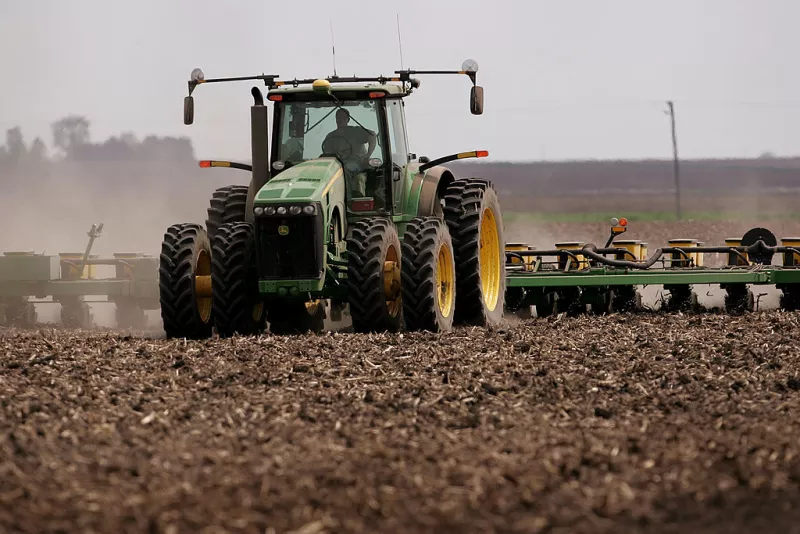
Federal farm relief measures announced for U.S. agriculture are intended to stabilize producers facing depressed commodity prices and rising costs, yet many Black farmers say the timing and structure of the assistance may not align with immediate financial realities. Even in seasons marked by strong yields, market conditions shaped by tariffs, global competition, and high input expenses have narrowed margins to a point where cash flow projections no longer support traditional operating loans.
Row-crop producers cultivating corn, soybeans, cotton, and rice report that revenues often fail to keep pace with loan obligations once fuel, fertilizer, seed, equipment financing, land rent, and insurance are factored in. This has created a situation in which production success does not necessarily translate into financial sustainability. According to data and policy frameworks outlined by the U.S. Department of Agriculture, farm support programs are designed to stabilize income, yet many producers argue that relief arriving months after harvest does not resolve near-term obligations to lenders and suppliers (https://www.usda.gov).
Immediate Financial Pressures and the Limits of Bridge Payments
Bridge-style assistance programs tied to recent federal relief packages are structured to offset losses linked to trade disruptions and elevated production costs. These payments are calculated proportionally based on planted acreage and crop type, aiming to stabilize farm balance sheets over time. However, the agricultural credit cycle operates on fixed deadlines. Rent payments, equipment notes, and supplier invoices often come due before the start of the next planting season, leaving little flexibility when projected revenues fall short.
For many farmers, access to operating loans depends on forward-looking cash flow statements that extend into future seasons. When anticipated income fails to cover projected expenses, lenders may hesitate to extend credit, regardless of promised federal payments. This dynamic places particular strain on smaller and mid-sized operations, where reserves are limited and exposure to market volatility is higher. Agricultural economists have noted that prolonged periods of low commodity prices, combined with tariff-related export constraints, continue to compress margins across the sector, a trend analyzed in global context by institutions such as the International Food Policy Research Institute (https://www.ifpri.org).
Structural Challenges Facing Black Farmers in U.S. Agriculture
Black farmers represent a small share of total U.S. producers, and many operate at scales that magnify vulnerability to sudden market shifts. Historically, access to land, credit, and technical assistance has been uneven, contributing to a long-term decline in Black-owned farmland. Over the past century, acreage held by Black farmers has fallen sharply, reflecting barriers that extend beyond market forces alone.
Policy changes affecting eligibility for certain USDA support programs have added another layer of uncertainty. Programs designed to expand access to credit, conservation resources, and technical guidance have played a role in helping smaller producers remain viable. When those mechanisms are reduced or restructured, the impact is felt most acutely by farmers who already face limited buffers against price shocks. Research organizations tracking equity and participation in federal farm programs have emphasized that consistent access to institutional support is a key determinant of long-term farm survival (https://www.ers.usda.gov).
Global Markets, Tariffs, and Long-Term Competitiveness
Beyond domestic policy, global agricultural markets continue to shape outcomes for U.S. farmers. Trade tensions have altered export flows, particularly for soybeans and cotton, as competing producers in South America have expanded capacity and captured market share. Brazil’s emergence as the world’s leading soybean exporter represents a structural shift rather than a temporary disruption, intensifying competition for U.S. growers in international markets.
Regions heavily reliant on export-oriented row crops have been especially exposed to retaliatory tariffs and persistent low prices. Even when weather conditions allow for strong yields, revenue gains can be erased by unfavorable market access and currency dynamics. Analysts tracking global trade flows through organizations such as the World Trade Organization note that agricultural tariffs can have lasting effects on competitiveness, influencing planting decisions and investment planning years into the future (https://www.wto.org).
As farmers assess prospects for upcoming seasons, uncertainty remains a defining feature of the landscape. Federal relief may provide incremental support, but many producers argue that long-term stability will depend on predictable market access, timely financial assistance, and policy frameworks that account for the diverse scales and histories of U.S. agriculture.