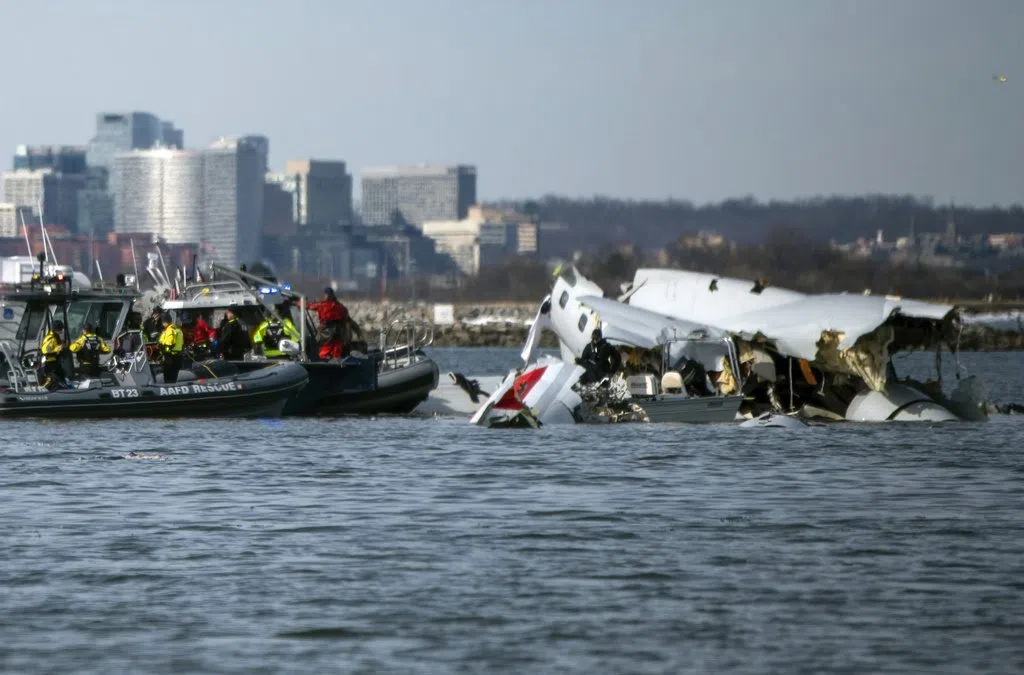
One year after the deadliest aviation disaster in decades unfolded in the skies near Washington, the families of the 67 victims are transforming grief into a sustained and determined movement for aviation safety reform. Their efforts are now shaping national conversations about systemic failures, regulatory oversight, and the urgent need to modernize air traffic control and collision-prevention technologies across the United States.
At a deeply emotional memorial gathering, families honored the lives lost in the tragic collision between a commercial passenger aircraft and a U.S. Army helicopter. Photos and videos of the victims filled the room, underscoring the magnitude of the loss while also reinforcing a shared commitment: ensuring that no other family endures a similar tragedy. That collective resolve has evolved into a coordinated advocacy campaign aimed at accelerating safety reforms, improving oversight, and enforcing accountability at every level of aviation governance.
Families Turn Grief Into a National Safety Movement
In the months following the crash, families began working closely with aviation safety experts, lawmakers, and regulatory agencies to demand meaningful changes. Their advocacy has focused on addressing long-standing vulnerabilities in congested airspace corridors, especially those surrounding major hubs such as Ronald Reagan Washington National Airport. According to safety specialists, the complex air traffic patterns near Washington represent one of the most challenging environments in the national airspace system.
A central pillar of this advocacy involves strengthening the role and authority of the Federal Aviation Administration, whose policies and oversight frameworks govern airspace management, pilot training standards, and air traffic control procedures. Families have emphasized the need for more robust funding, enhanced training programs, and accelerated deployment of advanced surveillance and collision-avoidance systems. They have also called for greater transparency in the decision-making processes that determine how airspace is shared between civilian and military operations.
Their push has gained momentum, leading to permanent restrictions on helicopter traffic in high-risk zones near Washington. While these measures represent an important step forward, families argue that they are only a partial solution. They insist that broader, systemwide reforms are essential to prevent future disasters, including the nationwide deployment of upgraded monitoring technologies and standardized safety protocols across all aviation sectors.
To support these efforts, advocacy groups have increasingly collaborated with institutions such as the Federal Aviation Administration, the National Transportation Safety Board, and the Transportation Security Administration, urging a coordinated approach that addresses both civilian and military aviation risks. Their message is consistent: piecemeal solutions are insufficient in a system as interconnected and complex as modern air travel.
Systemic Failures and the Call for Structural Reform
The yearlong investigation into the collision revealed a series of systemic breakdowns that extended well beyond individual errors. Aviation safety analysts highlighted shortcomings in interagency communication, outdated risk assessment models, and gaps in real-time aircraft tracking. These vulnerabilities, families argue, reflect deeper structural issues within the regulatory framework governing U.S. airspace.
One of the most pressing demands centers on accelerating the implementation of next-generation collision-avoidance systems. These technologies rely on real-time data sharing between aircraft, air traffic control centers, and military operations, significantly reducing the likelihood of midair incidents. Experts believe that full integration of such systems could transform air safety, particularly in congested corridors where civilian and military traffic intersect.
Additionally, families are pushing for mandatory data transparency across agencies. They argue that comprehensive sharing of flight data, operational risk assessments, and near-miss reports could enable regulators to identify emerging threats before they escalate into catastrophic events. This approach would represent a fundamental shift toward proactive, rather than reactive, aviation safety management.
The advocacy movement has also emphasized the importance of sustained congressional oversight. Lawmakers have been urged to prioritize long-term funding for infrastructure upgrades, including modern radar systems, artificial intelligence-driven monitoring tools, and expanded training for air traffic controllers. These investments, families say, are essential to restoring public confidence in air travel safety while adapting to rapidly growing flight volumes.
A Long Road Ahead for Aviation Safety Innovation
Despite recent regulatory actions, aviation safety advocates acknowledge that meaningful transformation will require years of sustained effort. Structural reforms in a system as vast as U.S. aviation demand careful coordination, political commitment, and significant financial investment. However, families remain resolute, viewing their advocacy as a lasting tribute to those they lost.
Beyond policy reform, their campaign also seeks to elevate public awareness about the complexities of airspace management. By engaging with communities, educational institutions, and industry stakeholders, they aim to foster a culture of safety that extends far beyond regulatory mandates. This broader perspective recognizes that technological solutions must be complemented by organizational accountability, continuous training, and a shared commitment to risk prevention.
As aviation traffic continues to rebound and expand, the lessons drawn from this tragedy carry heightened urgency. The families’ unwavering determination underscores a critical reality: progress in aviation safety is not merely a technical challenge but a moral imperative. Their ongoing efforts are shaping a national dialogue that prioritizes human lives over operational convenience, pushing the industry toward a safer and more resilient future.
Through persistence and unity, these families are transforming loss into lasting change, ensuring that the skies above Washington and across the nation become safer for generations to come.