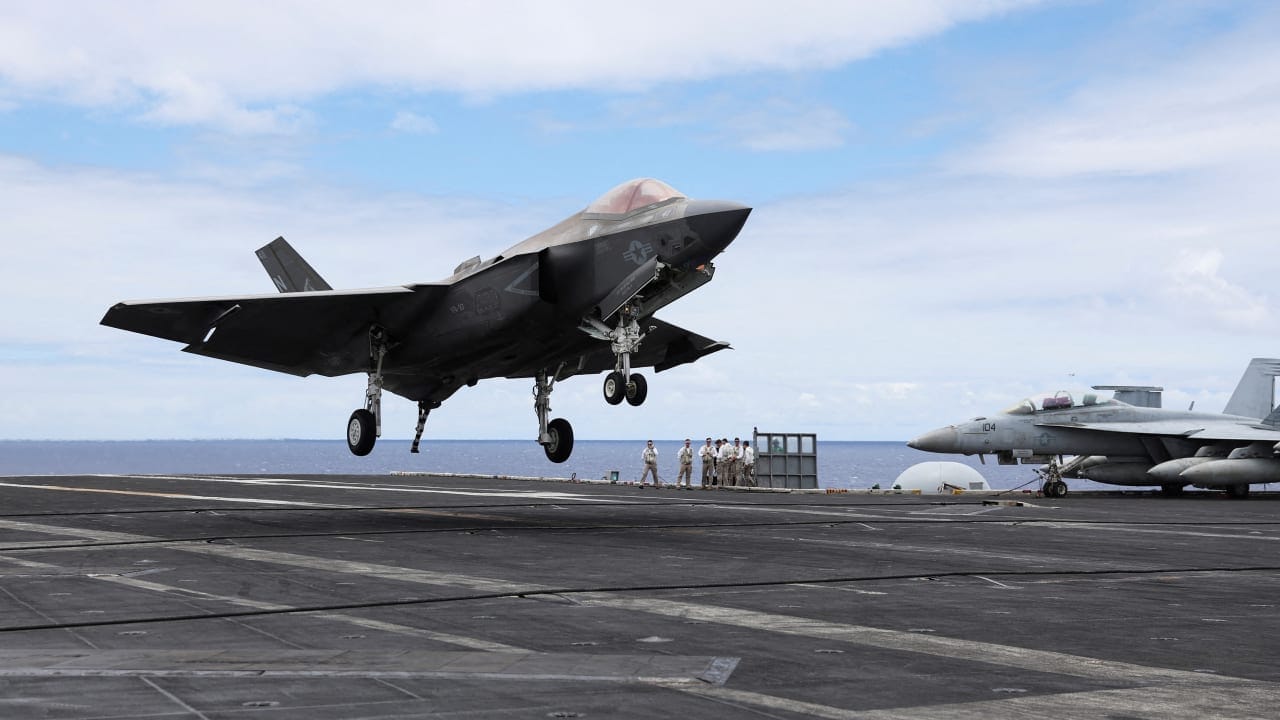
Growing International Pressure as the US Moves Forward With F-35 Sales
The United States has formally moved ahead with approving the sale of the F-35, the nation’s most advanced fifth-generation fighter jet, to Saudi Arabia. The decision comes at a time when concerns continue over potential exposure of sensitive technology, given that China remains one of Saudi Arabia’s largest trading partners. Saudi Crown Prince Mohammed bin Salman’s recent visit to Washington reaffirmed the kingdom’s request for the aircraft, highlighting Riyadh’s interest in matching the air capabilities already acquired by several global powers.
The renewed agreement places the F-35 program at the center of a broader geopolitical landscape. Countries looking to understand its impact have studied related defense technologies through institutions such as the U.S. Department of Defense and the global manufacturing footprint described by Lockheed Martin (https://www.lockheedmartin.com/). With more than 1,200 aircraft built since its first production in Fort Worth nearly two decades ago, the F-35 has evolved from an ambitious concept to a central element of American and allied air strategy. Delivery of hundreds of aircraft to the U.S. Air Force, Navy and Marine Corps has made the program indispensable for future combat planning.
Operational Capabilities and the Aircraft’s Growing Global Demand
The F-35 has accumulated a long operational history, ranging from U.S. Marine deployments in Afghanistan to Italian air patrols supporting NATO missions during encounters with Russian aircraft. As more nations seek advanced multirole fighters, the demand for the F-35 has significantly expanded, which has also increased the program’s visibility for both supporters and critics. Israel’s integration of the jet into its military operations, alongside its concerns over regional balance, underscores how influential the aircraft has become in Middle Eastern security dynamics.
The fighter jet’s value remains tied to its stealth coatings, integrated sensors and advanced combat systems. These features allow pilots to shift between precision strikes and air-to-air engagements during the same mission, shaping how military planners prepare for modern warfare. Analysts highlight that its reduced radar signature remains one of its most defining advantages. Platforms such as the Air Force Technology page (https://www.airforce.com/) provide technical insights that underscore its relevance for next-generation operations. The F-35’s ability to share targeting and situational data with nearby aircraft and ground forces continues to redefine coordinated combat missions for U.S. partners worldwide.
Program Costs, Performance Concerns and Long-Term Challenges
Despite its strengths, the F-35 remains the most expensive defense program in Pentagon history. The price of each aircraft reached up to $77 million in 2023, while long-term maintenance and modernization costs across its planned 77-year life cycle are projected to exceed $2 trillion. Reports highlight delays in aircraft delivery, challenges with parts production, and ongoing efforts to improve mission-readiness rates. The aircraft achieved an approximate 55% mission-capable rate in 2023, well below expectations, due in part to supply chain issues and the slow development of global maintenance hubs.
Critics warn that the aircraft’s stealth coating requires extensive upkeep, and that early versions of its situational awareness systems have faced performance issues. Others argue that while the aircraft excels in versatility, it may not outperform specialized models in certain roles. Meanwhile, supporters emphasize the platform’s successful combat hours, the rapid modernization pipeline managed by Lockheed Martin, and the F-35’s expanding presence in more than 20 allied countries. Its strategic importance is showcased through technological evolution, which is detailed by research institutions such as the Congressional Research Service and complemented by global intelligence insights from NATO (https://www.nato.int/).
As the agreement with Saudi Arabia advances, the debate over the F-35’s future becomes increasingly relevant. For Washington, the decision represents a strategic calculation balancing economic benefits, technological leadership and regional stability. For Riyadh, the acquisition offers a path toward strengthening its military capabilities in an increasingly competitive regional landscape.