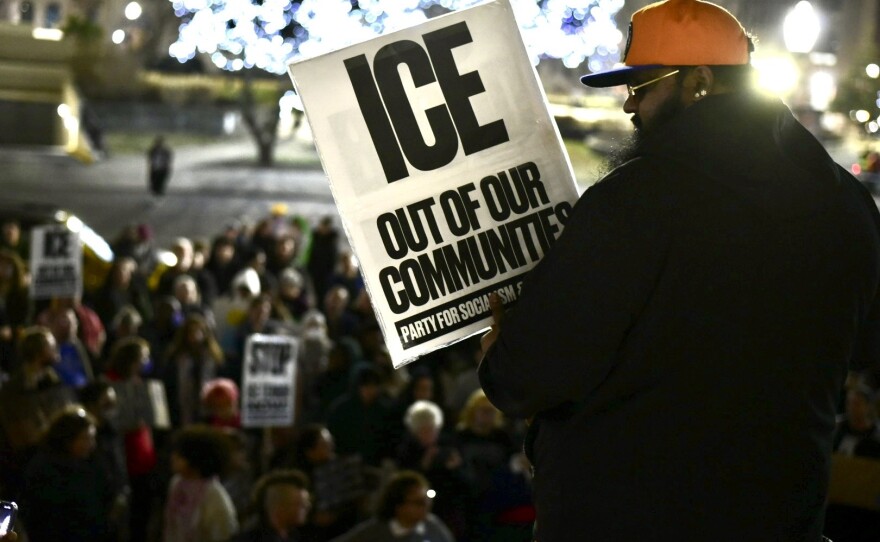
The debate surrounding whether to abolish U.S. Immigration and Customs Enforcement (ICE) is once again at the forefront of national politics, emerging as a defining issue for Democrats heading into the 2026 midterm elections. The renewed controversy follows intense public scrutiny of federal immigration enforcement tactics, particularly after two high-profile fatal shootings in Minneapolis involving U.S. citizens and federal officers. These events have intensified internal divisions within the Democratic Party, reopening questions about the effectiveness, morality, and political viability of advocating for the complete dismantling of the agency.
Immigration remains one of the most polarizing issues in American political discourse, and the strategy Democrats adopt could significantly influence electoral outcomes in battleground states. While progressive factions argue that abolishing ICE reflects the moral urgency of protecting immigrant communities and civil liberties, more centrist leaders fear the slogan risks alienating moderate and swing voters. As the party seeks to regain political momentum following challenges in the 2024 election cycle, immigration messaging has become a central battlefield.
Organizations such as the American Civil Liberties Union (https://www.aclu.org) have long criticized ICE’s operational practices, highlighting concerns over civil rights, due process, and excessive force. Their advocacy has contributed to broader public awareness and grassroots mobilization, especially among younger voters and progressive activists who now demand structural changes rather than incremental reform.
A Divided Democratic Strategy on Immigration Enforcement
Within Democratic ranks, there is no unified consensus on how to approach immigration enforcement reform. Progressive lawmakers and first-time congressional candidates increasingly view abolishing ICE as both a symbolic and substantive step toward reshaping immigration policy. They argue that the agency’s structure is inherently flawed and that dismantling it would allow for the creation of more humane, accountable systems under the Department of Homeland Security.
In contrast, many incumbents and party strategists advocate for comprehensive reform rather than abolition. They argue that voters broadly support immigration enforcement, even while condemning aggressive tactics. For these Democrats, calls to “overhaul” ICE — focusing on accountability, transparency, and civil rights protections — present a more electorally viable message.
Think tanks such as Third Way (https://www.thirdway.org) emphasize that while emotional appeals resonate with core Democratic voters, winning competitive districts requires broader coalition-building. Political analysts warn that slogans perceived as extreme may replicate past messaging missteps, particularly comparisons to the 2020 “defund the police” movement, which became a potent Republican talking point in swing districts.
Meanwhile, public discourse continues to evolve as new incidents and legal challenges shape perceptions of federal enforcement authority. Advocacy groups including the National Immigration Law Center (https://www.nilc.org) have amplified calls for oversight reforms, framing the debate around constitutional protections and human rights rather than purely ideological divisions.
Youth-Led Political Momentum and Primary Challenges
The most vocal support for abolishing ICE is emerging from younger Democratic candidates, particularly members of Generation Z and millennials, who are challenging long-standing incumbents in urban districts. Their campaigns reflect a broader generational shift in political priorities, emphasizing systemic reform, social justice, and institutional accountability.
These candidates are increasingly shaping Democratic primary races in states like New York, Minnesota, Illinois, and California, where immigration enforcement actions have drawn heightened public attention. Social media platforms, grassroots organizing, and community engagement have amplified these voices, creating a political environment where abolition is no longer a fringe proposal but a central campaign platform.
Political mobilization efforts supported by organizations such as MoveOn (https://front.moveon.org) have further energized these campaigns, connecting digital activism with on-the-ground organizing. The result is a rapidly shifting political landscape in which immigration policy is no longer confined to policy papers but is central to voter identity and turnout strategies.
As Democrats navigate the complexities of immigration messaging ahead of 2026, the debate over abolishing ICE represents a broader ideological struggle over the party’s future direction. Whether abolition becomes a unifying rallying cry or a divisive electoral liability may ultimately shape the balance of power in Congress.