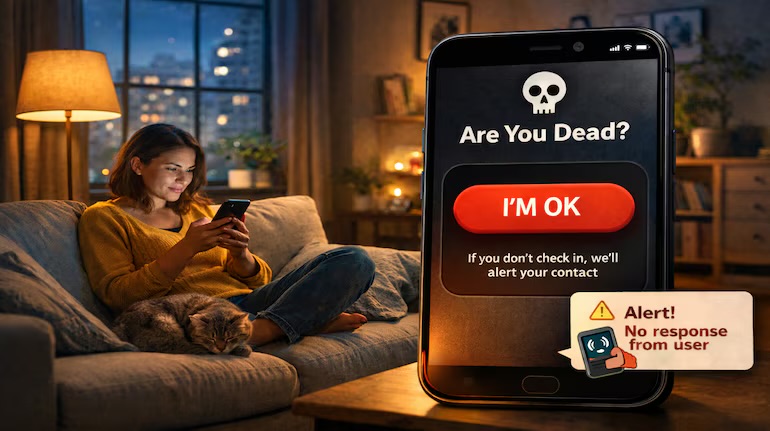
The rapid rise of safety-focused mobile applications such as “Are You Dead?” — now known internationally as Demumu — reflects a profound shift in how people navigate independence, solitude, and emotional security in modern society. Designed to offer daily check-ins and automatic emergency alerts, these platforms are increasingly becoming indispensable tools for individuals who live alone, work remotely, or face long periods of isolation.
Originally developed in China, the app quickly gained viral attention due to its stark yet oddly comforting concept: users must confirm each day that they are still alive. Failure to do so triggers notifications to emergency contacts, ensuring that someone is alerted in case of an emergency. This simple mechanism has resonated with millions worldwide, especially in countries experiencing rising rates of solo living.
The growing popularity of such platforms mirrors broader demographic and social trends. In the United States, over 25% of households now consist of a single individual, more than double the proportion recorded in 1960. This surge in independent living is not limited to North America; similar patterns have emerged across Europe and parts of Asia, reshaping the way people connect and support one another.
The Rise of Digital Safety Nets in an Era of Isolation
As physical distance increasingly replaces traditional social interaction, digital platforms are stepping in to fill the gap. Safety apps like Demumu and Snug Safety provide a structured form of daily human connection, reinforcing emotional reassurance while serving a practical purpose.
In an era dominated by remote work and digital communication, these platforms offer consistency and accountability. Users develop daily habits around check-ins, creating a routine that reinforces self-awareness and wellbeing. Many individuals report that the simple act of confirming their status each day fosters a sense of belonging and emotional grounding.
This digital transformation parallels the expansion of online communication tools. Platforms such as and have already reshaped how people interact professionally and socially, but safety-focused applications add an entirely new layer: peace of mind. These tools address the psychological vulnerability associated with prolonged isolation, particularly for individuals without immediate family or close neighbors.
Emotional Security and Mental Wellbeing Benefits
Beyond emergency preparedness, these applications serve as subtle mental health safeguards. The simple notification reminding users to check in acts as a gentle prompt to pause, reflect, and engage in self-care. This function becomes especially meaningful for individuals experiencing anxiety, depression, or emotional exhaustion.
Mental health awareness has surged globally, driven by increased recognition of loneliness as a public health concern. Research institutions such as the emphasize the importance of routine, connection, and monitoring in maintaining emotional stability. Safety apps align seamlessly with these principles, providing structured daily engagement without invasive monitoring.
Users frequently describe a calming effect from knowing that someone will be notified if something goes wrong. This emotional safety net reduces anxiety and empowers people to live independently with greater confidence. For pet owners, in particular, the reassurance that emergency contacts will be alerted in case of incapacitation provides an additional layer of comfort, ensuring their animals receive care without delay.
Technology Meets Human Vulnerability
The widespread adoption of safety apps also reflects deeper cultural transformations. Urbanization, economic mobility, and shifting family structures have reduced traditional support systems. In response, digital ecosystems have evolved to restore forms of connection and care.
Innovative solutions such as and wearable devices now integrate health monitoring, emergency alerts, and activity tracking. Safety check-in apps complement these technologies by focusing on psychological reassurance rather than purely physical metrics. Together, they create holistic systems of personal wellbeing management.
As societies continue to embrace independence, technology-driven solutions will likely play a central role in preserving emotional stability. Safety apps exemplify how innovation can adapt to human vulnerability, transforming solitude into a manageable, even empowering, lifestyle choice.