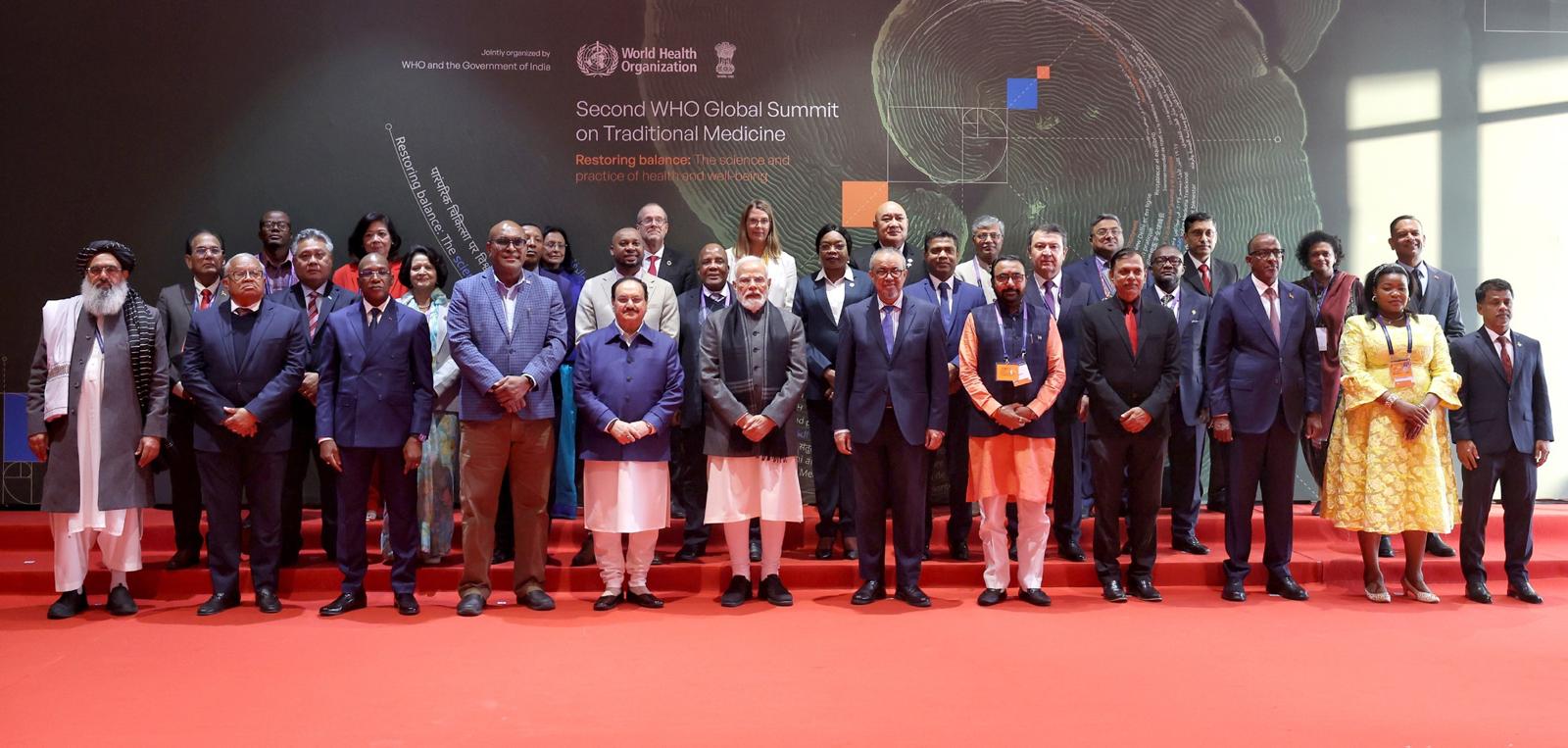
The global health landscape is undergoing a structural transformation. Traditional medicine moves from the margins into formal health systems, supported by data, regulation, and technological innovation. This shift gained unprecedented momentum during the second WHO Global Summit on Traditional Medicine in New Delhi. Governments, scientists, Indigenous leaders, and health innovators converged around a shared objective. They focused on redefining how traditional medicine contributes to universal health coverage, affordability, and resilience in modern care models.
Traditional medicine already represents a massive, though often informal, component of global health spending, estimated at more than $400,000,000,000 annually worldwide. In many low- and middle-income countries, it remains the primary source of care for large segments of the population. What is changing now is not its cultural relevance, but the global governance framework surrounding it. Through coordinated action, the World Health Organization is positioning traditional medicine as a regulated, research-driven pillar of future health systems. It aims not to be a parallel alternative but a central part.
Building a Global Knowledge Infrastructure for Traditional Medicine
A cornerstone of this transformation is the launch of the Traditional Medicine Global Library, a digital platform consolidating more than 1,600,000 resources. These range from peer-reviewed studies to validated Indigenous knowledge systems. The platform aims to reduce fragmentation and accelerate safe adoption across countries with vastly different health infrastructures. It centralizes evidence, clinical data, and regulatory references in one unified place.
The initiative aligns with the broader digital health agenda promoted by the World Health Organization (https://www.who.int), which increasingly emphasizes interoperable data systems and AI-supported decision-making. Features such as evidence gap mapping and an AI-powered research assistant are designed to help policymakers, researchers, and clinicians distinguish between proven therapies. Practices that still require validation are separated for further review.
This infrastructure is particularly significant as governments face rising costs associated with chronic diseases. Noncommunicable conditions now account for more than $9,000,000,000,000 in global economic losses each year. These high costs push health systems to explore complementary, preventive, and community-based care models. The goal is to reduce long-term spending without compromising safety for patients.
Innovation, Investment, and the Future of Integrated Care
Beyond knowledge consolidation, the summit highlighted a strategic push to connect traditional medicine with advanced technologies. The Health & Heritage Innovations initiative reflects this direction. It supports projects that merge traditional practices with tools such as genomics, artificial intelligence, and digital therapeutics. These efforts signal a move away from static preservation. Instead, they focus on adaptive innovation capable of meeting modern regulatory and clinical standards.
This approach mirrors broader investment trends across global health innovation ecosystems. Institutions like the World Bank (https://www.worldbank.org) support culturally grounded health solutions as part of sustainable development strategies. By integrating traditional medicine into formal innovation pipelines, countries aim to unlock new economic value. Furthermore, they aim to safeguard intellectual property and Indigenous knowledge rights.
The involvement of policy-makers and investors in these initiatives also suggests that traditional medicine is being reframed as a sector with scalable economic potential. Global wellness and integrative health markets already exceed $5,000,000,000,000 in combined value. Formal recognition by international health authorities could further accelerate cross-border research funding and commercialization.
Governance, Regulation, and Global Health Equity
To ensure credibility and consistency, the establishment of a new Strategic and Technical Advisory Group on Traditional, Complementary and Integrative Medicine marks a critical governance milestone. This body is tasked with setting research priorities, developing international standards, and advising governments on safe integration into national health systems.
Regulatory harmonization remains a central challenge. This is particularly true as products and services increasingly cross borders. Coordination with agencies such as the United Nations (https://www.un.org) and alignment with global health policy frameworks are intended to prevent uneven quality standards. They also aim to protect patients from unsafe or unverified treatments.
The political commitments made by multiple countries reflect growing recognition. Equity in health access cannot be achieved through conventional biomedical models alone. In regions where shortages of doctors, hospitals, and pharmaceuticals persist, well-regulated traditional medicine offers a scalable complement to overstretched systems. When evidence-based, it aligns closely with universal health coverage goals outlined by international development partners such as the OECD (https://www.oecd.org). They highlight the importance of inclusive, cost-effective care delivery models.
As the Global Traditional Medicine Strategy 2025–2034 moves from policy to implementation, its success will depend on whether governments can balance respect for cultural heritage with scientific rigor, innovation, and accountability. What emerged clearly from the summit is that traditional medicine is no longer being treated as an informal fallback. Instead, it is being positioned as a strategic asset. This asset addresses affordability, chronic disease burdens, and the resilience of health systems. This comes in the context of an increasingly complex global environment.