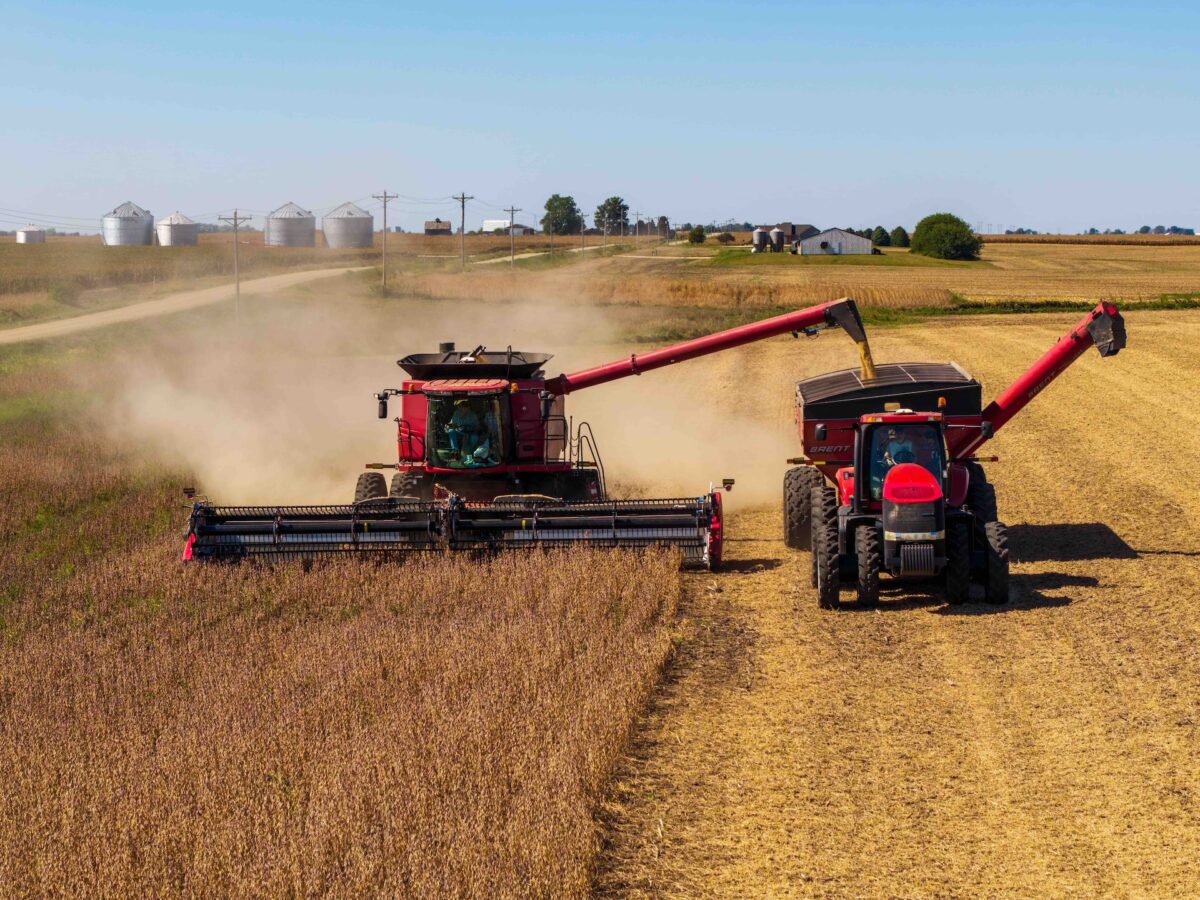
American soybean farmers across the Midwest are approaching 2026 under increasing financial strain, as consecutive unprofitable harvests collide with elevated production costs, trade uncertainty and mounting debt obligations. In states like South Dakota, Iowa and Minnesota, producers report that rising prices for equipment, fertilizer, fuel and land rent have eroded margins to the point where survival from one season to the next has become the primary objective.
Soybeans remain one of the most important US agricultural exports, yet global market volatility and shifting trade relationships have left farmers exposed. According to data tracked by the United States Department of Agriculture, input costs have remained historically high while commodity prices have failed to recover at a pace that would restore profitability. As a result, many producers have turned to extended storage strategies, hoping to delay sales until market conditions improve, even as storage itself generates additional costs and risks.
Debt pressure and generational farms at risk
For multigenerational farms, the financial pressure is particularly acute. Many operations rely on long-term credit structures supported by land values that may no longer reflect current earning capacity. Agricultural lenders increasingly require higher levels of collateral, while interest expenses continue to rise. Institutions that monitor rural credit conditions, including the Federal Reserve Bank of Kansas City, have warned that farm loan delinquencies are trending upward across the Plains.
The burden of debt is significantly heavier than in previous downturns. Modern farming requires large-scale investment in machinery, technology and storage infrastructure, often financed through loans reaching hundreds of thousands or even millions of dollars. This level of leverage leaves little room for error during extended periods of low prices. Analysts at Farmer Mac have projected that more than half of US farmers may struggle to achieve profitability in the coming year, raising concerns about consolidation and forced exits from the sector.
Trade uncertainty and stalled soybean demand
Trade policy remains a central factor influencing farmer sentiment. China has historically been the largest buyer of US soybeans, and disruptions in that relationship have reshaped global supply chains. While expectations of renewed purchases offer some optimism, the absence of long-term agreements has made planning difficult. Export market volatility continues to affect pricing signals at local elevators, reinforcing hesitation among producers to commit to forward contracts.
Organizations such as the American Soybean Association emphasize that rebuilding export trust requires consistency and predictability. Farmers argue that temporary policy shifts or short-term purchase commitments do not provide sufficient confidence to support long-term investment decisions. As the industry navigates these uncertainties, global competitors in Brazil and Argentina continue expanding production capacity, adding further pressure on US producers.
Rural economic ripple effects intensify
The financial stress on soybean farms extends well beyond individual operations. Rural communities depend on agricultural income to sustain local businesses, schools and healthcare facilities. Prolonged losses threaten employment across equipment dealerships, grain handlers and service providers. The National Rural Health Association has highlighted the link between farm income declines and the closure of rural hospitals, compounding challenges for already underserved regions.
As 2026 approaches, farmers face difficult decisions about land use, asset sales and succession planning. For many, the challenge is no longer about growth or expansion, but about preserving the ability to continue farming at all. Without sustained improvements in market access, cost structures and financial stability, the outlook for large segments of the US soybean sector remains uncertain.