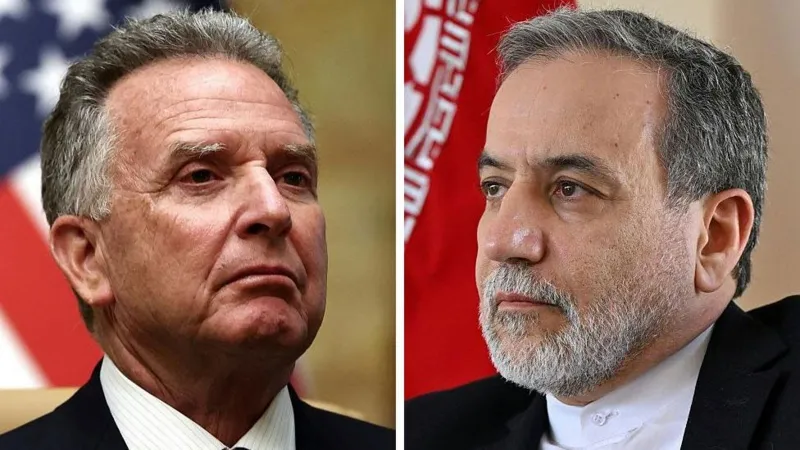
Senior officials from the United States and Iran have convened in Oman for high-stakes discussions against a backdrop of mounting fears that tensions between the two long-standing adversaries could tip into direct military confrontation. The talks follow a visible US military buildup in the Middle East and weeks of sharply escalated rhetoric, raising regional and global concerns about the consequences of further miscalculation.
While the meetings are widely understood to be indirect, their very occurrence marks a rare diplomatic opening at a moment when trust between Washington and Tehran is extremely thin. According to Omani mediators, the aim is not yet a comprehensive agreement but the creation of conditions that could allow more structured negotiations to resume.
Diplomatic Channels Reopen Amid Rising Tensions
The discussions come after a period of deep unrest inside Iran and renewed US warnings that failure to reach an understanding could invite military action. Washington has emphasized that any progress would require limits on Iran’s nuclear activities, alongside broader security concerns. The US position has been articulated through its diplomatic apparatus, including the US Department of State which has signaled that engagement is preferable to confrontation but only if substantive issues are addressed.
Iranian officials, for their part, have insisted that the scope of the talks remain narrowly focused on nuclear matters. Tehran maintains that its enrichment activities are lawful and intended for civilian use, a stance repeatedly echoed by the Iranian Foreign Ministry. The gap between these positions underscores how fragile the process remains, even as both sides acknowledge that dialogue may be the last viable alternative to escalation.
Nuclear Dispute Returns to the Forefront
At the center of the renewed engagement is Iran’s nuclear program, an issue that has shaped relations with the West for decades. Iran continues to reject demands that it relinquish its enriched uranium stockpile or permanently curb its right to enrichment on its own soil. US officials argue that without meaningful constraints and verification, the risk of proliferation remains unacceptably high.
International oversight bodies have long played a role in monitoring Iran’s nuclear activities, and any future framework would likely involve mechanisms associated with the International Atomic Energy Agency. Iranian leaders have hinted that limited concessions could be possible under the right conditions, including creative arrangements that preserve national sovereignty while offering reassurance to the international community.
Regional Stakes and the Role of Mediation
The choice of Oman as the venue reflects its established role as a discreet intermediary capable of hosting sensitive exchanges. Muscat has previously facilitated quiet diplomacy between rivals, leveraging its neutral standing and channels maintained through the Omani Ministry of Foreign Affairs. Regional governments are watching closely, wary that a US strike or Iranian retaliation could ignite a wider conflict with lasting consequences.
For Tehran, sanctions relief is expected to be a central demand in any future talks, as economic pressure continues to weigh heavily on the country. For Washington, even a limited understanding could offer a path away from military threats that carry unpredictable risks. Whether the current discussions can bridge deep-seated mistrust remains uncertain, but their outcome may shape the security landscape of the Middle East in the months ahead.