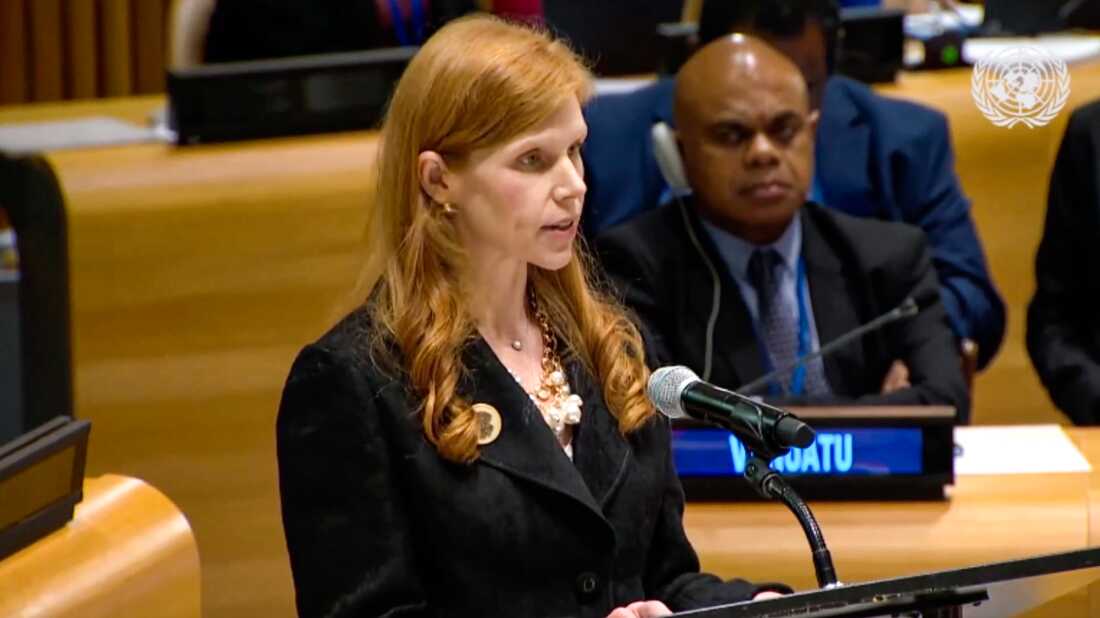
The appointment of Bethany Kozma as head of the Department of Health and Human Services Office of Global Affairs represents a consequential moment for US global health engagement. This change marks a significant US global health policy shift. While the office operates largely outside the public spotlight, it plays a decisive role. Specifically, it shapes how American health priorities are communicated and enforced abroad. Under Kozma’s leadership, the United States is expected to pursue a more values-driven approach to global health diplomacy. This approach places ideological alignment alongside traditional public health objectives.
The Office of Global Affairs serves as the international interface for HHS. It coordinates bilateral health agreements, technical cooperation and policy frameworks with foreign governments. As the US recalibrates its role following changes to multilateral engagement, including its evolving relationship with global institutions, the influence of this office has grown substantially. Resources administered through HHS-supported programs can exceed tens of billions of dollars annually. This gives the director significant leverage in negotiations that affect health systems worldwide.
A Redefined Vision for Global Health Engagement
Kozma’s leadership signals a departure from technocratic public health diplomacy. Instead, it moves toward a model grounded in political and cultural priorities. Rather than focusing exclusively on disease surveillance, vaccination coordination and health infrastructure, the Office of Global Affairs is expected to embed positions on reproductive health, gender policy and family structures into international agreements.
This shift is occurring as the US moves away from reliance on multilateral platforms and toward bilateral health arrangements. Frameworks similar to those outlined by the US Department of Health and Human Services (https://www.hhs.gov) increasingly emphasize conditional aid. Consequently, they link funding to policy alignment rather than purely epidemiological outcomes. For countries dependent on external health financing, these conditions can shape domestic policy far beyond the health sector.
The implications extend to global data sharing, workforce training and emergency preparedness. Nations negotiating health cooperation with Washington may face new expectations that go beyond clinical standards. These redefine what partnership with the US entails in the coming decade.
Reproductive Health, Gender Policy and Aid Conditionality
Central to the debate surrounding Kozma’s appointment is the potential redirection of US-funded health initiatives related to reproductive services and gender-affirming care. Historically, American foreign health assistance has represented billions of dollars annually. This supports maternal health, HIV prevention and child health programs across regions like Africa, Asia and Latin America.
Policy interpretations linked to statutes, such as the Helms Amendment, could take on expanded scope. This affects how funds are allocated and which organizations remain eligible for support. Advocacy groups tracking international development trends through organizations like the Council on Global Equality (https://www.globalequality.org) warn of potential disproportionate impacts. These shifts may disproportionately affect vulnerable populations already facing limited access to care.
From a policy standpoint, aid conditionality reshapes incentives for recipient governments. Health ministries operating under constrained budgets may accept restrictive terms to secure funding. They may do so even when such conditions complicate service delivery or public trust. Analysts following global health financing through platforms like Kaiser Family Foundation (https://www.kff.org) note that funding uncertainty can undermine long-term disease prevention efforts. This is particularly true in HIV and maternal health programs.
Strategic Consequences for US Health Diplomacy
Beyond immediate policy debates, Kozma’s appointment highlights a broader transformation. This transformation affects how the US projects influence through health diplomacy. By prioritizing ideological consistency, the Office of Global Affairs may redefine alliances and partnerships built over decades. This approach could resonate with governments seeking closer political alignment. However, it might strain relationships with others emphasizing rights-based public health models.
Global health experts tracking multilateral trends through institutions such as the World Health Organization (https://www.who.int) caution that fragmentation of standards can weaken coordinated responses to pandemics and cross-border health threats. Bilateralism offers flexibility, but it also increases complexity when rapid, collective action is required.
As the US repositions itself, the long-term impact of these changes will unfold across funding pipelines, health outcomes and diplomatic relationships. Kozma’s tenure places the Office of Global Affairs at the center of this transformation. Thus, it becomes a key driver of how American health policy influences the global stage in the years ahead.