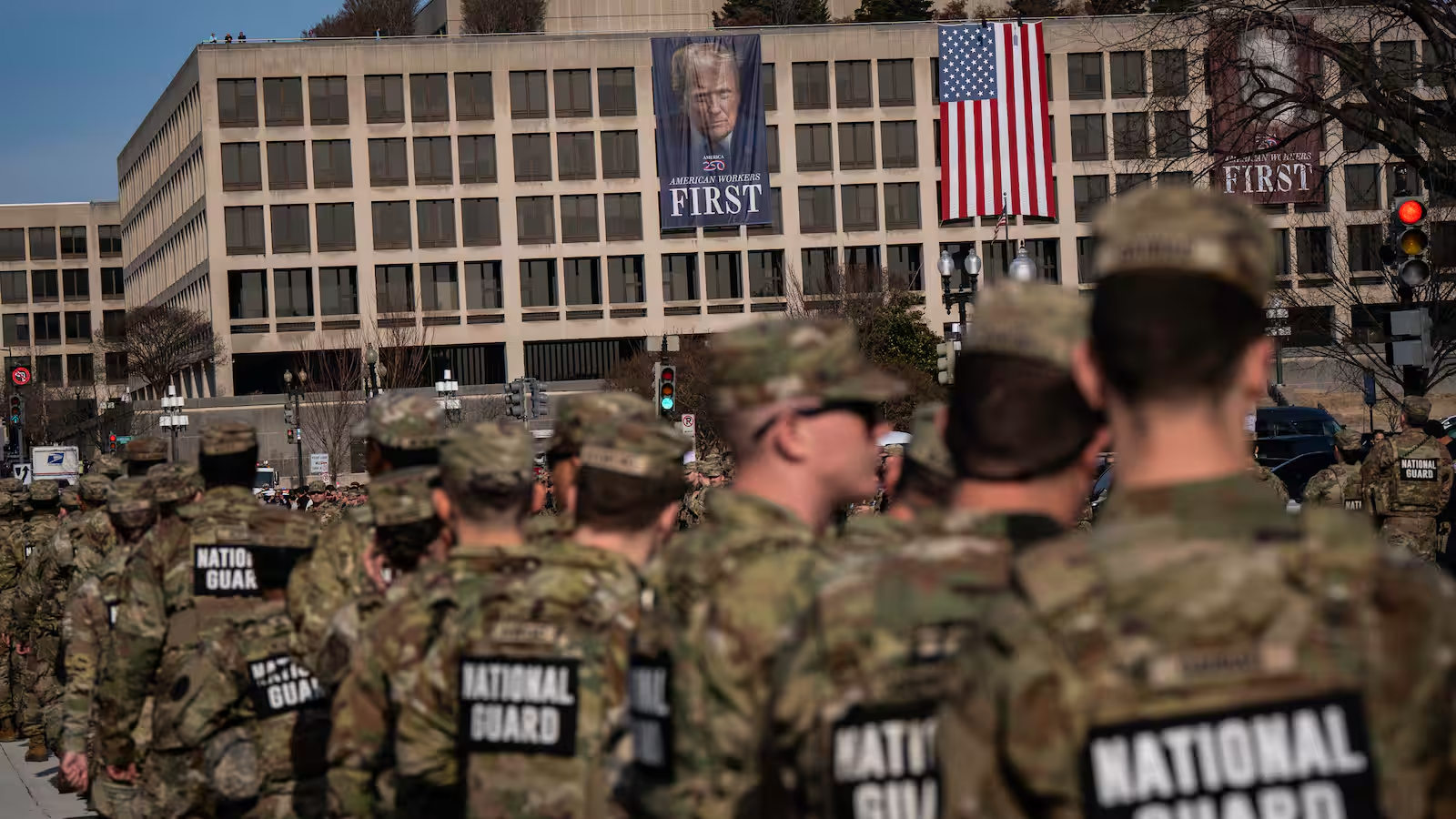
Trump’s expanded domestic use of the National Guard is shaping up to be one of the most expensive federal security strategies of his second term. Current budget projections indicate that continued deployments across multiple U.S. cities could push annual costs beyond $1 billion, a figure that places growing pressure on federal defense and domestic spending priorities. The scale, duration, and geographic spread of these operations represent a sharp departure from traditional short-term Guard mobilizations used primarily for natural disasters or limited emergencies.
Since mid-year, Guard units have been stationed in several metropolitan areas under federal authority, with missions ranging from infrastructure protection to visible security patrols near government facilities. While some deployments have concluded, others remain active, and additional units are on standby, creating a sustained financial commitment that accumulates month by month.
Rising monthly costs and long-term fiscal impact
At current force levels, National Guard operations are costing the federal government approximately $93 million per month. If these deployments continue through the end of the year, total spending could reach roughly $1.1 billion. The largest share of this cost comes from Washington, D.C., where more than 2,600 Guard members remain on active duty. If maintained through December, the capital’s operation alone is projected to cost close to $660 million.
These expenses include daily pay, healthcare coverage, housing, food, transportation, and logistical support. On a per-service-member basis, the daily cost ranges between $311 and $607, depending on rank, location, and operational requirements. As deployments stretch from weeks into months, cumulative expenses grow rapidly, particularly in high-cost urban areas.
The broader budgetary context amplifies these concerns. The overall U.S. defense budget is on track to exceed $1 trillion for the first time, driven by expanded military funding and domestic security initiatives under the current administration. Details of broader defense allocations can be found through official budget data published by the U.S. Department of Defense at https://www.defense.gov, where ongoing funding increases reflect a shift toward sustained readiness both abroad and at home.
Cities affected and the cost breakdown
Domestic Guard deployments have taken place across a range of cities, each contributing to the overall price tag. Earlier operations in Los Angeles accounted for approximately $193 million, while Washington, D.C. has already surpassed $223 million and continues to accumulate costs. Memphis saw expenditures of around $33 million, with additional deployments in Portland and Chicago costing $26 million and $21 million respectively before being halted.
More recently, Guard units were dispatched to New Orleans following a request for federal assistance tied to public safety concerns. Although smaller in scale, these deployments add to the cumulative total and highlight how quickly costs escalate when multiple operations run simultaneously.
Federal authority over these deployments is rooted in statutes governing the National Guard, which allow the president to activate units under specific circumstances. Background on the legal framework and the Guard’s dual state-federal role is outlined by the National Guard Bureau at https://www.nationalguard.mil, which details how missions and funding responsibilities shift once troops are federalized.
Legal challenges and policy debates
Trump’s aggressive use of the National Guard has not gone unchallenged. Several deployments have faced legal scrutiny, particularly in cases where Guard units were assigned to roles adjacent to law enforcement without clear arrest or search authority. Court decisions limiting certain operations have forced withdrawals in some states, underscoring the legal complexity of sustained domestic military presence.
Critics argue that deploying federalized Guard members to address crime is inefficient, given their restricted authority compared to local police. From a cost perspective, opponents contend that investing the same funds in local law enforcement, social services, or community-based safety programs would yield more durable results. Information on federal support for local policing initiatives is available through the U.S. Department of Justice at https://www.justice.gov, which administers grants and programs aimed at long-term crime reduction.
Supporters of the deployments counter that the Guard’s presence has contributed to improved security around federal buildings and has acted as a deterrent during periods of unrest. The administration maintains that visible military support reassures the public and stabilizes volatile situations, particularly when local resources are strained.
Future deployments and potential escalation
Looking ahead, the financial implications could grow even larger. Analysts estimate that each additional deployment of 1,000 Guard members could add up to $21 million in costs, depending on duration and location. With the president continuing to signal openness to further domestic activations, including potential use of the Insurrection Act, the ceiling on Guard-related spending remains uncertain.
Public finance experts warn that sustained reliance on the Guard for domestic security risks normalizing a costly approach that blurs the line between military and civilian roles. Budget transparency and congressional oversight are expected to play a central role as lawmakers weigh the trade-offs between immediate security objectives and long-term fiscal responsibility. Additional context on federal budget oversight can be found through the Congressional Budget Office’s general resources at https://www.cbo.gov, which outline how cost projections influence legislative decision-making.
As deployments continue and debates intensify, the true cost of this strategy extends beyond dollars alone, shaping national conversations about governance, civil-military relations, and the appropriate use of federal power within U.S. cities.