Trump Says U.S. Will Blockade Strait of Hormuz After Iran Nuclear Talks Collapse
Peace negotiations between the United States and Iran ended without agreement after more than 20 hours of high-level discussions in Islamabad, triggering immediate geopolitical tensions. President Donald Trump responded by announcing that the U.S. would move to blockade the Strait of Hormuz, escalating concerns about energy markets and regional security.
The talks, led on the American side by Vice President J.D. Vance, focused primarily on Iran’s nuclear program and maritime security in the Persian Gulf. While both sides reported progress on certain issues, negotiations ultimately broke down over Tehran’s unwillingness to commit to permanently abandoning nuclear weapons development capabilities.
Nuclear Dispute at the Center of Failed Negotiations
According to U.S. officials, the core disagreement centered on securing an explicit and verifiable commitment from Iran that it would not pursue a nuclear weapon or retain the capacity to quickly develop one. Iran has consistently maintained that its nuclear program is civilian in nature and within its sovereign rights.
Background on nuclear oversight and nonproliferation agreements can be found through the International Atomic Energy Agency at https://www.iaea.org and the U.S. Department of State at https://www.state.gov, which detail frameworks governing uranium enrichment and international inspections.
The diplomatic engagement marked the highest-level direct talks between the two nations since the 2015 nuclear agreement negotiated during the Obama administration. That agreement was later withdrawn by Trump, reshaping the diplomatic landscape in the region.
Despite the collapse of the latest talks, U.S. officials indicated that diplomatic channels remain open, describing the American proposal as a “final and best offer” should Tehran reconsider its position.
Strait of Hormuz Blockade Raises Global Energy Concerns
Following the breakdown in negotiations, President Trump stated that the United States Navy would begin the process of blockading vessels entering or leaving the Strait of Hormuz. The waterway is one of the world’s most critical maritime chokepoints, with a significant percentage of global oil shipments passing through it daily.
According to the U.S. Energy Information Administration at https://www.eia.gov, roughly 20% of the world’s petroleum liquids consumption moves through the Strait of Hormuz, making any disruption a potential shock to international energy markets.
Maritime security operations in the region are typically coordinated through U.S. Central Command, which oversees American military activity across the Middle East. Operational details and regional posture updates are published via https://www.centcom.mil.
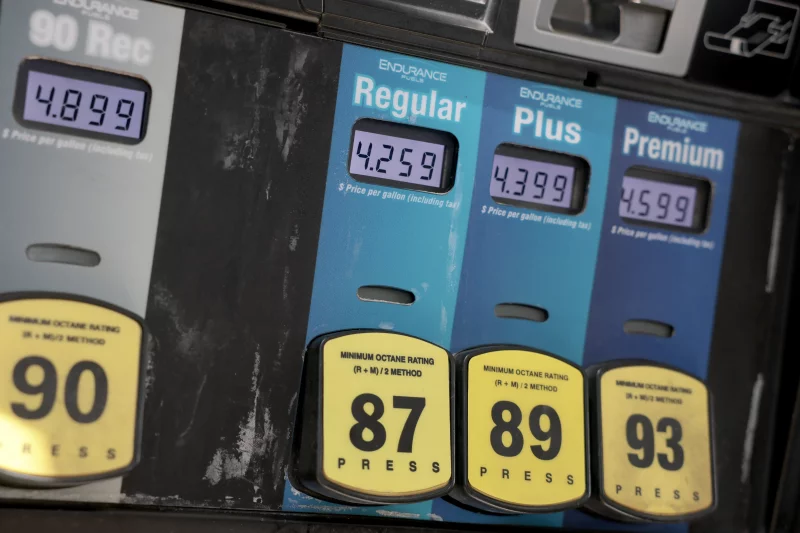
Any sustained blockade could have immediate economic consequences, including volatility in oil prices, supply chain disruptions, and increased insurance costs for commercial shipping.
Regional Mediation and Ceasefire Uncertainty
Pakistan, which hosted the negotiations in Islamabad, signaled that it would continue mediation efforts despite the setback. Officials urged both parties to uphold the fragile two-week ceasefire that had temporarily reduced hostilities.
Regional diplomacy and strategic assessments are frequently analyzed by institutions such as the Council on Foreign Relations at https://www.cfr.org, which notes that sustained instability in the Persian Gulf could have ripple effects across global markets and security alliances.
Iranian officials characterized the U.S. demands as excessive, particularly regarding maritime control and nuclear restrictions. Tehran emphasized that complex geopolitical disputes cannot be resolved in a single round of talks.
With the ceasefire’s future uncertain and rhetoric intensifying, global attention now turns to whether diplomatic engagement can resume or whether tensions in the Strait of Hormuz will escalate further. The outcome will carry significant implications not only for U.S.-Iran relations but also for global energy stability and broader Middle East security dynamics.