Trump Declares Victory Amid Conflicting Claims
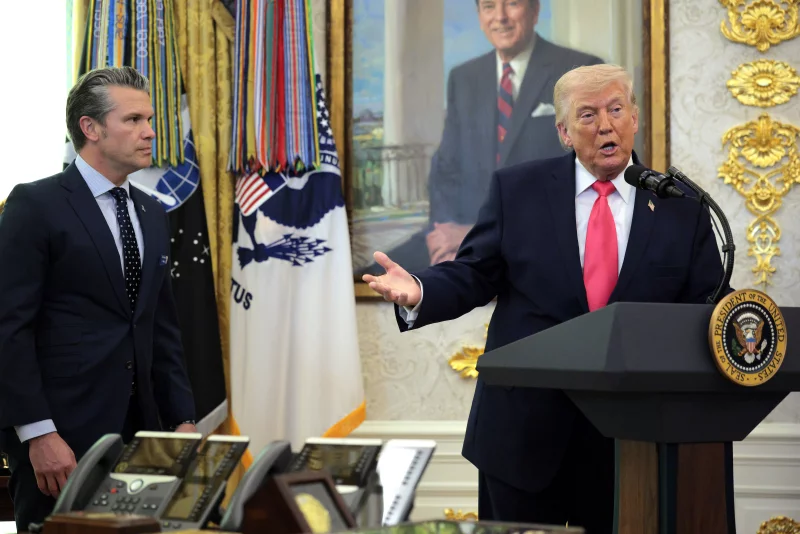
President Donald Trump asserted that the United States has effectively secured a major win in its confrontation with Iran, claiming that Tehran has presented a valuable offer to initiate a deal. Speaking from the Oval Office, he described the proposal as a “very significant prize,” linking it to the strategic importance of the Strait of Hormuz. However, he declined to provide details, leaving analysts to interpret the implications.
Iranian officials have firmly rejected the existence of such negotiations, dismissing the claims as misleading and politically motivated. The contradiction has created uncertainty in diplomatic circles, with observers tracking developments through institutions like the U.S. Department of State, where shifts in tone often signal deeper strategic intentions.
Trump’s declaration that “the war has been won” stands in contrast to ongoing military deployments and active conflict zones. His administration has also hinted at a temporary pause in targeting Iran’s energy infrastructure, suggesting that diplomatic considerations may be influencing operational decisions.
Military Escalation Continues Despite Diplomatic Signals
Even as talk of negotiations circulates, military activity across the region shows no signs of slowing. Thousands of U.S. Marines, along with senior leadership from the 82nd Airborne Division, are being positioned in the Middle East, reinforcing America’s readiness for sustained operations.
Israel, meanwhile, is reportedly preparing to extend its campaign against Iran for several more weeks, aiming to achieve broader strategic goals. Defense developments are being closely followed by global security analysts and organizations such as the Departamento de Defensa de EE. UU., which monitors troop deployments and operational strategy.
On the ground, the conflict continues to intensify. Iranian authorities reported strikes on energy infrastructure, including a gas pipeline supplying a power station in the southwest. In response, missile attacks have reached major Israeli cities, including Tel Aviv, where impacts caused injuries and structural damage in residential areas. The scale and precision of these attacks underscore the ongoing volatility of the situation.
Backchannel Diplomacy and Regional Mediation Efforts
Amid public denials, indirect diplomatic efforts appear to be underway. Several regional actors have emerged as intermediaries, facilitating communication between Washington and Tehran. Countries such as Pakistan, Egypt, and Turkey are reportedly playing key roles in relaying messages and exploring potential pathways toward de-escalation.
Pakistan, in particular, has been identified as a possible host for future discussions, leveraging its relationships with both the United States and Iran. These developments are being assessed within broader geopolitical frameworks by institutions like the International Monetary Fund, which evaluates the economic implications of prolonged instability in the region.
At the same time, energy markets remain highly sensitive to the evolving situation, especially given the strategic importance of the Strait of Hormuz. Global supply concerns and pricing volatility are closely monitored by organizations such as the International Energy Agency, reflecting the intersection of geopolitics and energy security.
While official positions remain contradictory, the presence of intermediaries and shifting military tactics suggest that multiple channels of engagement are active beneath the surface.