Trump Reasserts His Identity as a Builder in the Oval Office
President Donald Trump has increasingly emphasized his identity as a builder since returning to the White House, framing construction and design work as both a personal passion and a defining aspect of his leadership style. Long before entering politics, Trump built a career in real estate development, and that background has resurfaced prominently through his hands-on involvement in renovations across iconic federal spaces.
Trump has described construction as a form of relaxation, stating that overseeing design choices and materials provides balance alongside his role as commander in chief. This mindset has translated into an active remodeling agenda within the White House complex, where changes reflect what Trump describes as higher standards of durability, craftsmanship, and aesthetics. Information about the historic structure and its evolving interiors is detailed through official White House archives available at https://www.whitehouse.gov.
Rather than delegating aesthetic decisions entirely to staff, Trump has taken a direct interest in finishes, fixtures, and spatial layout, asserting that attention to detail is essential in both business and governance. His approach reinforces the image of a president who sees physical environments as extensions of leadership philosophy.
Extensive Renovations Across Historic Federal Spaces
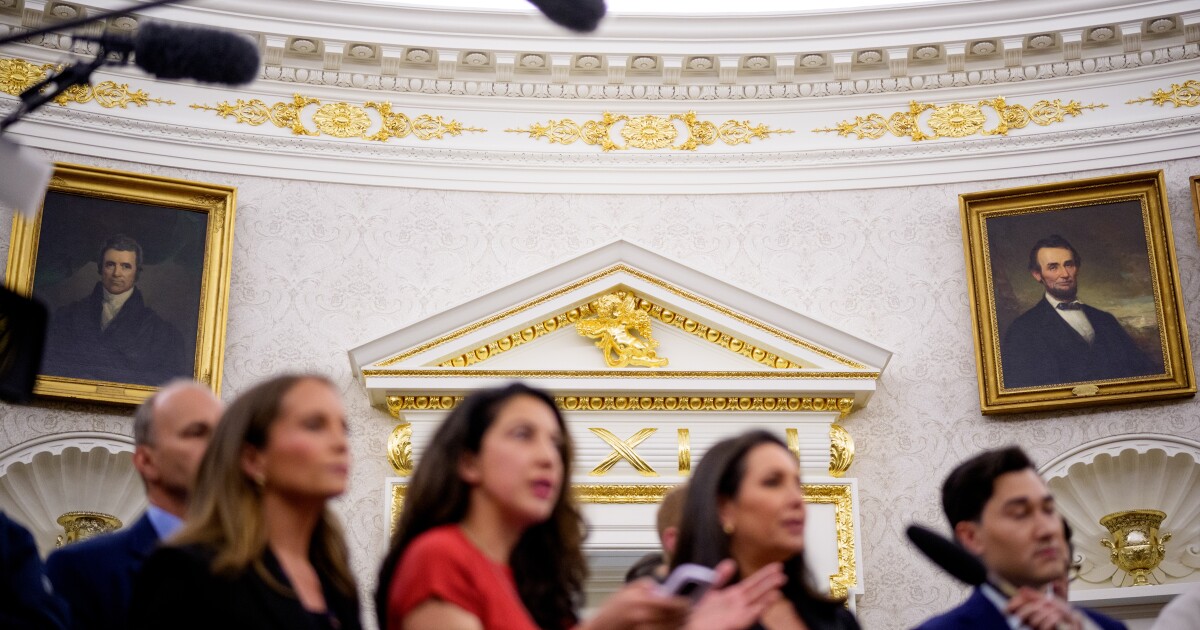
Since resuming office, Trump has overseen a series of visible and costly upgrades. These include the replacement of aging tile with marble in the Lincoln Bathroom, the installation of new chandeliers in areas previously fitted with what he described as outdated lighting, and the transformation of the Oval Office with gold-accented décor. The Rose Garden was paved to improve accessibility and functionality, while large flagpoles were installed on both the north and south lawns.
Beyond the White House, Trump has closely monitored renovation efforts at the Kennedy Center, directing a major overhaul aimed at elevating the venue’s appearance and long-term viability. Federal cultural investment initiatives related to the center are outlined at https://www.kennedy-center.org. Trump has publicly acknowledged that these projects require time and focus but has stated that he does not view them as distractions from governance.
Renovation costs across multiple projects have reached into the hundreds of millions of dollars, with some federal restoration efforts nationwide historically ranging between $2,000,000,000 and $4,000,000,000. Trump has repeatedly argued that upfront investment in quality materials reduces long-term maintenance expenses, a philosophy rooted in his real estate experience.
Design Influence Extends to Military and Global Projects
Trump’s aesthetic involvement has extended beyond domestic landmarks into military and international contexts. He has indicated that he intends to influence the design of new Navy battleships, informally referred to as the “Trump class,” citing his belief that form and function should align in defense assets. Details on naval procurement and modernization programs can be found at https://www.navy.mil.
During international appearances, Trump has also referenced missed opportunities to apply his design standards to global institutions, criticizing past renovation projects for cost overruns and material choices. His comments highlight a consistent narrative that blends fiscal discipline with visual impact, particularly regarding the use of stone, layout efficiency, and architectural longevity.
Trump’s engagement with infrastructure and design aligns with broader federal construction oversight, including projects monitored by the General Services Administration at https://www.gsa.gov. By positioning himself as both policymaker and builder, Trump continues to blur the line between executive leadership and hands-on development, reinforcing his claim that construction is not merely a past career but an ongoing vocation intertwined with his presidency.