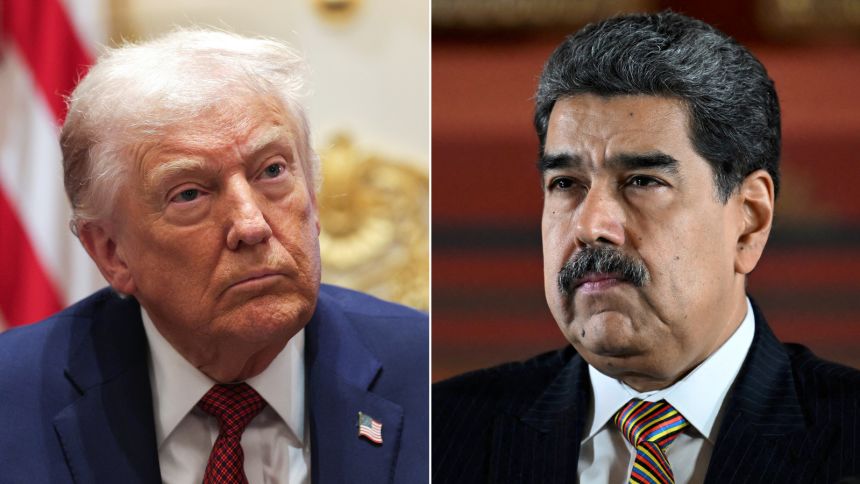
President Donald Trump confirmed that a United States-led operation resulted in the removal of Venezuelan President Nicolás Maduro from power, describing the mission as highly complex and strategically coordinated. Speaking publicly ahead of a formal address from Florida, Trump stated that the operation led to injuries among U.S. personnel but resulted in no fatalities, which he described as an unexpected outcome given the scale and difficulty of the mission.
According to Trump, Maduro and his wife, Cilia Flores, were taken into U.S. custody and transferred by sea to New York, where they are expected to face judicial proceedings. The administration framed the operation as part of a broader national security effort linked to drug interdiction, regional stability, and long-standing concerns over governance in Venezuela.
A Military Operation Described as Precise and Controlled
Trump emphasized that the United States had prepared contingency plans, including additional troop deployments, but said these were ultimately unnecessary. He portrayed the execution as carefully managed, noting that he monitored developments in real time from the United States. The operation, he suggested, reflected years of planning and intelligence coordination across multiple agencies.
Officials within the federal government have previously outlined the role of interagency collaboration in overseas operations, including coordination between defense, justice, and diplomatic institutions. Information on the structure and responsibilities of the executive branch can be found through official government channels such as https://www.whitehouse.gov, which outlines presidential authority in matters of national security.
Oil Interests and Strategic Involvement in Venezuela
When asked about Venezuela’s vast oil reserves, Trump made clear that the United States intends to be “very strongly involved” in future developments related to the country’s energy sector. Venezuela holds some of the world’s largest proven crude oil reserves, and any political transition is expected to have significant implications for global energy markets.
The administration has repeatedly linked energy security to broader economic and geopolitical priorities. Oversight of U.S. energy policy and international energy engagement is coordinated through agencies such as the Department of Energy, whose mandate is detailed at https://www.energy.gov. Trump suggested that U.S. involvement would aim to prevent instability or rival powers from gaining unilateral control over Venezuelan resources.
Warnings to Maduro Loyalists and the Question of Governance
Although Trump did not outline a detailed roadmap for Venezuela’s political future, he noted that the country still has constitutional offices in place, including a sitting vice president. He issued a warning to individuals and institutions that might continue supporting Maduro, stating that continued loyalty would carry severe consequences, while cooperation with a new political framework could offer alternatives.
Legal proceedings involving foreign leaders fall under the jurisdiction of the U.S. justice system, which is administered through institutions such as the Department of Justice, accessible at https://www.justice.gov. Trump’s remarks suggested that accountability would be a central element of the post-operation phase.
Diplomatic engagement and recognition of future leadership in Venezuela are expected to involve the State Department, which manages U.S. foreign relations and policy implementation worldwide, as outlined at https://www.state.gov.