Trump Administration Moves to Reshape the Census Framework
The Trump administration has unveiled a proposal that could significantly reshape the future of the United States census by introducing a question on citizenship status during the 2026 field test for the 2030 national count. The initiative, disclosed through a regulatory filing, represents a renewed effort to alter how population data is collected and used in determining political representation, federal funding, and public policy priorities.
The census plays a foundational role in American democracy, influencing the distribution of billions of dollars in federal funding and shaping congressional representation across all 50 states. According to the official framework outlined by the ****, census data directly informs public investment decisions, infrastructure development, and essential services including education, healthcare, and transportation.
The proposal emerges amid a broader political strategy aimed at recalibrating congressional district maps in ways that could preserve Republican control of the U.S. House of Representatives. By seeking to differentiate between citizens and non-citizens, the administration is attempting to influence the constitutional mechanisms used for legislative apportionment, an effort that has already triggered multiple legal challenges and constitutional debates.
Legal Battles, Constitutional Limits, and Political Stakes
Under the 14th Amendment, census apportionment counts must include the “whole number of persons in each state,” regardless of citizenship or immigration status. Despite this constitutional mandate, several Republican-led states have initiated lawsuits to compel the federal government to exclude individuals living in the U.S. without legal status, along with certain visa holders, from official population totals.
Legal scholars note that these efforts place the administration on a collision course with long-established interpretations of constitutional law, as outlined by the ****, which previously blocked similar attempts during Trump’s first term. Although the Court declined to rule on whether a president can exclude undocumented residents from apportionment figures, it halted the inclusion of a citizenship question in the 2020 census, citing procedural and legal deficiencies.
These renewed initiatives now coincide with a redistricting cycle that carries immense political weight. By potentially reshaping congressional maps, the administration’s strategy could influence not only legislative representation but also the balance of power in presidential elections through changes to the Electoral College.
At the same time, lawmakers are advancing legislation to modify how census data is used, reinforcing political divisions around immigration, representation, and electoral fairness. As debates intensify, civil rights organizations warn that undermining census participation risks distorting democratic outcomes and public funding formulas that distribute hundreds of billions of dollars annually.
Concerns Over Data Accuracy and Community Impact
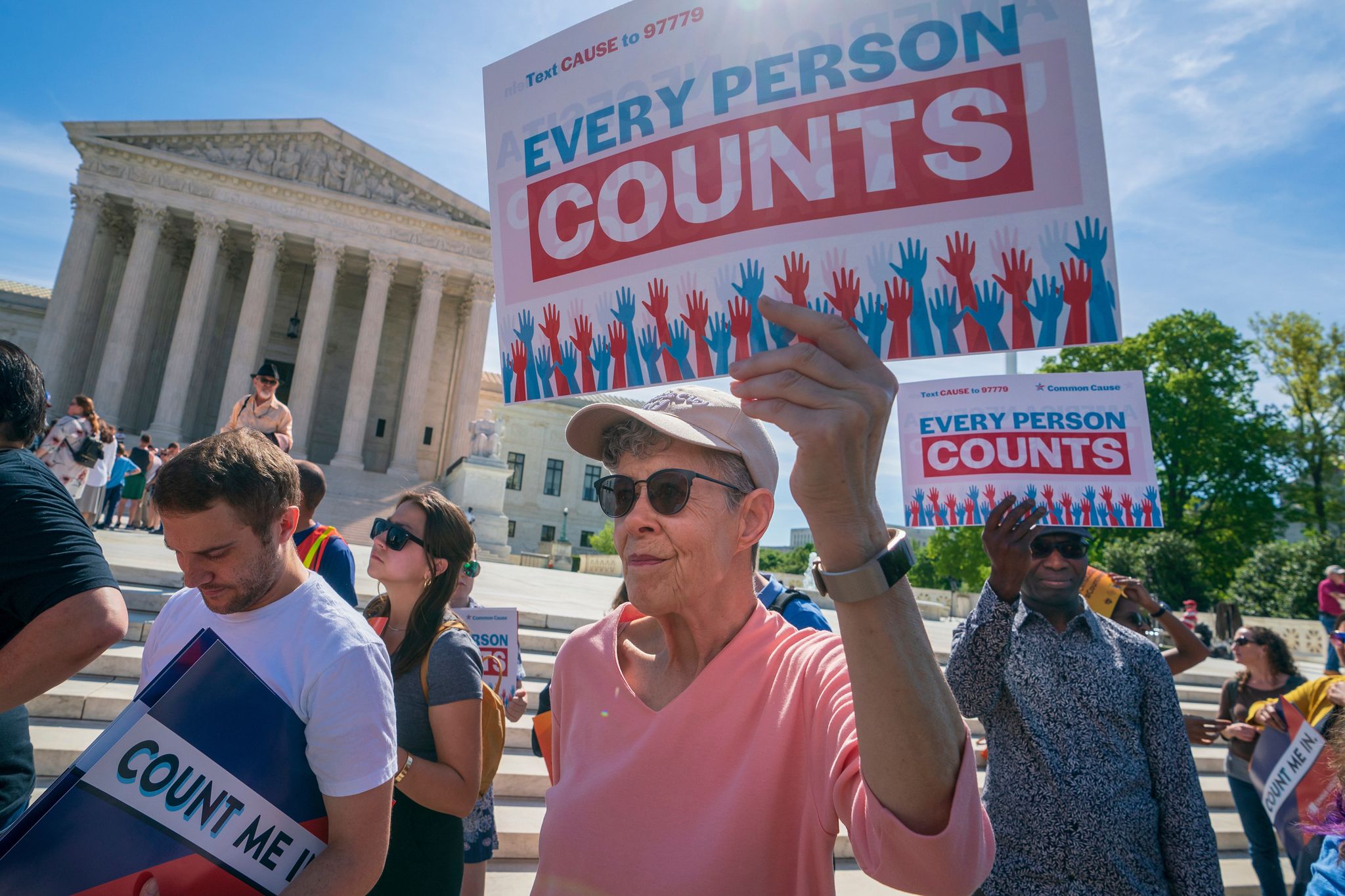
Advocacy groups, demographic researchers, and civil liberties organizations express deep concerns that introducing a citizenship question could deter participation among historically undercounted populations. These include immigrant households, mixed-status families, and marginalized communities that already face barriers to civic engagement.
Previous research conducted by the Census Bureau found that the inclusion of a citizenship question would likely reduce response rates, compromising the accuracy of population data. Such distortions could have cascading consequences for federal resource allocation, healthcare planning, disaster preparedness, and educational funding, which collectively exceed $1,500,000,000,000 annually.
The 2026 field test, scheduled to involve approximately 155,000 households in Alabama and South Carolina, aims to refine survey methodologies ahead of the full 2030 census. However, budget reductions and logistical challenges have raised further questions about the test’s effectiveness, according to policy analysts at the ****, which oversees census operations.
Despite federal confidentiality protections that legally prohibit sharing personal data with law enforcement or immigration agencies, trust deficits persist, particularly in communities with heightened concerns over data privacy. Experts from institutions such as the **** emphasize that perceived risks — even if unfounded — can significantly reduce participation, thereby weakening the census as a cornerstone of democratic governance.
As preparations for the 2030 census accelerate, the administration’s proposal has ignited a nationwide conversation about constitutional principles, political accountability, and the integrity of America’s most important demographic exercise. The outcome of this debate is poised to shape the country’s political and social landscape for the next decade.