Tennessee’s Special Election Becomes a High-Stakes Midterm Preview
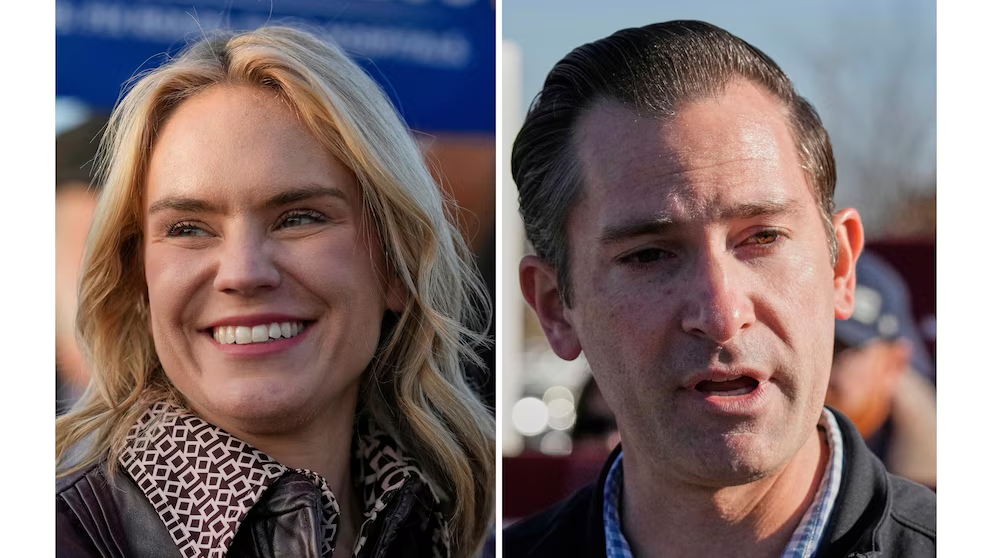
The special election in Tennessee’s 7th Congressional District has rapidly grown into a defining political fight as both Democrats and Republicans attempt to refine their messaging before the 2026 midterms. Even though the district delivered approximately 60% of the vote to Donald Trump in the last presidential election, recent trends in special elections have shown Democrats outperforming expectations by double digits, prompting both parties to treat this contest as a strategic proving ground. The matchup between Republican former Department of General Services Commissioner Matt Van Epps and Democratic state Rep. Aftyn Behn has pulled national attention and major financial backing as campaigns look for evidence of shifting voter sentiment.
Interest in the district has also grown due to recent Democratic gains in similar off-cycle races, raising questions about whether Republican dominance in the region will hold or whether Democrats can sustain their momentum in lower-turnout environments. Political analysts have emphasized that the unique dynamics of a special election make the electorate less predictable, increasing the stakes for both campaigns as early voting accelerates.
Outside Spending Surges as Both Parties Intensify Final Push
According to the most recent reports from federal election regulators, outside organizations have invested more than $6.5 million into the race, with pro-Trump MAGA Inc. contributing over $1.6 million to bolster Van Epps. Much of the total spending has occurred within the closing two weeks, coinciding with a rapid rise in early voting and a growing sense among strategists that the results may come down to razor-thin margins.
An Emerson College survey released days before the election showed Van Epps leading slightly but still within the margin of error, while earlier Democratic-aligned surveys suggested a larger Republican advantage. This uncertainty has pushed campaigns to expand outreach operations, especially as both parties attempt to mobilize voters concerned about inflation, wages, and health care costs.
Campaign events across the district have featured high-profile figures, with Kamala Harris, Ken Martin, Alexandria Ocasio-Cortez, Al Gore, and other Democratic surrogates boosting Behn’s visibility. Meanwhile, House Speaker Mike Johnson and Donald Trump have stepped in to energize Republican turnout. Trump has framed the race as nationally significant and urged supporters to view it as a symbolic test of strength heading into 2026.
To support context for readers, this discussion connects to broader political and economic topics addressed by institutions such as the U.S. Chamber of Commerce (https://www.uschamber.com), as well as policy analyses available through Brookings (https://www.brookings.edu), while campaign finance trends can also be compared with insights from the Pew Research Center (https://www.pewresearch.org). For readers following economic indicators tied to voter sentiment, additional data is available through the Bureau of Labor Statistics (https://www.bls.gov).
Affordability, Jobs, and Health Care Dominate Final Campaign Messaging
In the closing stretch, both campaigns have centered their messaging on affordability, signaling that economic concerns remain the top priority for voters in the district. Van Epps has leaned into Trump’s endorsement while promoting a platform focused on lowering prices, expanding job opportunities, and reducing health care expenses. His advertising has emphasized frustration with what he calls “career politicians” and stressed the need for leadership he argues will deliver tangible financial relief for working families.
Behn has countered with a message aimed at reshaping the economic conversation in Washington. Her final ad promises aggressive action to reduce health care costs, address the rising cost of living, and shield workers and small businesses from what she describes as harmful tariffs that could result in job losses. High-profile supporters at her events have echoed this theme, arguing that affordability must remain central to national policymaking.
Trump, speaking during a phone rally supporting Van Epps, criticized Democrats for focusing on affordability, claiming that their economic messaging was merely a distraction from what he described as his administration’s accomplishments. His remarks intensified partisan disagreement on economic narratives, reinforcing the broader debate over whether voters should prioritize past achievements or immediate financial challenges when heading to the polls.
As turnout continues to climb, the Tennessee special election has become a real-time case study in how national economic concerns and partisan identities are shaping voter behavior. With millions spent, top surrogates deployed, and both parties treating the district as a critical test, the outcome is poised to influence political strategy well beyond Tennessee and into the national landscape of the 2026 midterms.