The financial sector is rapidly mobilizing around a new opportunity after a major legal decision cast doubt over a large portion of tariffs imposed during the previous U.S. administration. When the <a href="/es/”https://www.supremecourt.gov”/">Supreme Court</a> invalidated significant parts of those tariffs, it left importers facing an uncertain path to reclaim roughly $180 billion they had previously paid in duties.
Rather than wait years for clarity on whether those funds will be returned, many companies are turning to a new financial strategy: selling their potential refund claims to hedge funds and institutional investors. The arrangement allows businesses to recover a portion of the money immediately while transferring both the legal risk and potential reward to investors willing to pursue reimbursement.
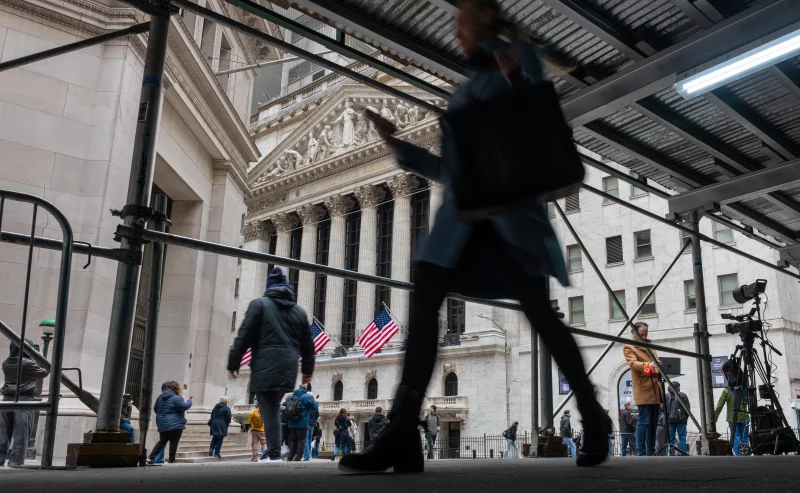
For Wall Street, the ruling opened the door to a potentially massive secondary market built around these disputed payments.
A Growing Market for Tariff Refund Claims
Importers who paid billions in tariffs during recent trade disputes are now exploring ways to convert uncertain future refunds into immediate cash. Financial intermediaries have stepped in to match companies with investors interested in purchasing those claims.
Under these deals, hedge funds buy the rights to potential refunds at a discount. If courts eventually confirm that the tariffs were improperly collected, investors receive the full amount of the claim. If legal challenges fail, they absorb the loss. The structure resembles other financial instruments in which investors purchase legal or settlement claims at reduced prices.
Some market participants say demand for these transactions has increased dramatically since the court ruling. Companies that imported large quantities of goods during the tariff period are reassessing how long they might need to wait for reimbursement. The uncertainty surrounding the refund process has encouraged many to consider selling their claims at prices that currently hover around 45 cents per dollar of potential refunds.
Financial analysts say these valuations fluctuate depending on the size of the claim, the legal strength behind it, and the timeline expected for litigation outcomes. Businesses trying to evaluate these options are often consulting tax and regulatory experts while monitoring developments at the <a href="/es/”https://ustr.gov”/">Office of the United States Trade Representative</a>, which oversees many aspects of the nation’s trade policy framework.
Legal Uncertainty Fuels Investor Interest
A key factor driving this emerging market is the lack of a clear process for issuing refunds. Numerous lawsuits challenging the tariffs have already been filed, and the litigation could take years to resolve. Courts will ultimately determine whether importers are entitled to recover the funds they paid.
Some lawmakers have raised concerns about how the situation is unfolding. Several members of Congress have proposed legislation that would require the government to establish a structured system for reviewing and processing tariff refund claims. Discussions about these proposals are ongoing within the <a href="/es/”https://www.congress.gov”/">United States Congress</a>.
Critics argue that the delay has created an environment where financial institutions can profit from uncertainty, while smaller companies may feel pressured to sell their claims at discounted prices simply to maintain cash flow. Larger corporations, by contrast, may have the financial capacity to wait for the legal process to play out.
The debate has intensified as businesses consider whether to transfer their claims or hold onto them in hopes of recovering the full amount at a later date.
Companies Weigh Immediate Cash Against Future Payouts
For many importers, the decision ultimately comes down to liquidity. Firms facing immediate financial pressure may view selling their claims as a practical solution, even if it means accepting less than the full value of their potential refunds.
Advisory firms specializing in trade and tax compliance say companies are closely examining their financial positions before entering such deals. Businesses that passed tariff costs on to customers may also want to retain the full value of any refunds so they can return the funds appropriately if required.
Trade experts note that companies frequently consult regulatory guidance from agencies such as <a href="/es/”https://www.cbp.gov”/">U.S. Customs and Border Protection</a> while evaluating their options. The agency plays a central role in administering tariff collections and could be involved in any future refund mechanisms.
Despite the legal uncertainties, interest from investors continues to grow. With approximately $180 billion in potential refunds at stake, even a fraction of that total entering secondary markets could translate into tens of billions of dollars in trading opportunities for financial firms willing to take on the risk.