Supreme Court to Review Birthright Citizenship as Constitutional Debate Widens
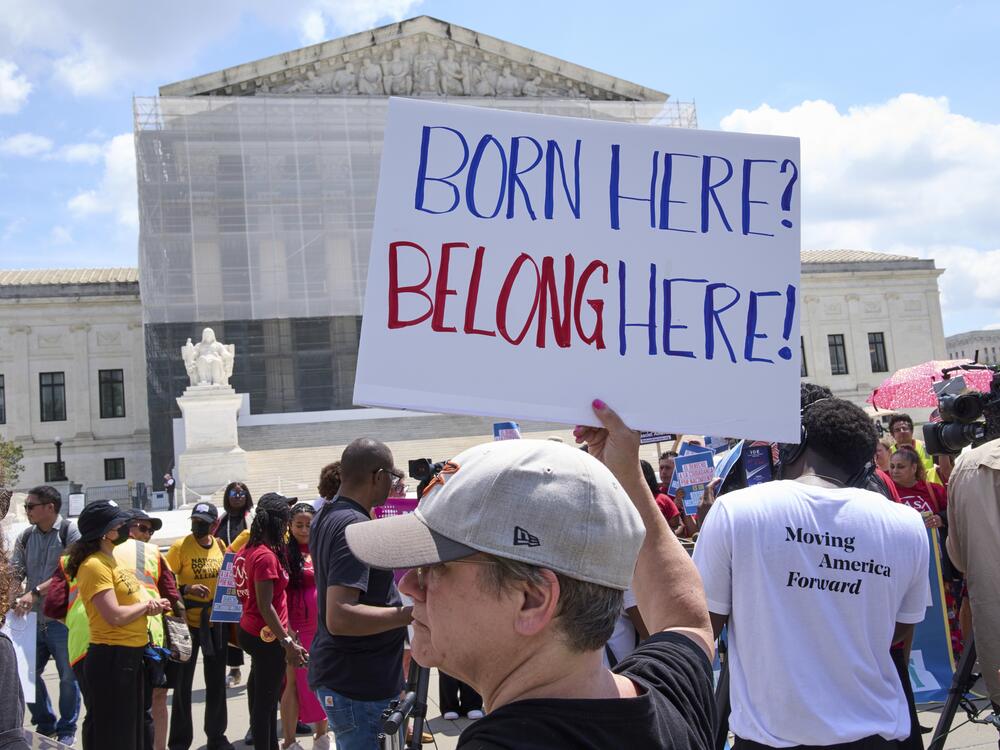
The Supreme Court has agreed to examine a major legal dispute involving birthright citizenship, stepping into a long-standing national debate over who is entitled to U.S. citizenship at birth. The decision centers on the current administration’s executive order signed on January 20, 2025, which withholds automatic citizenship from children born to non-citizens who are either unlawfully present or in the U.S. temporarily under permits such as tourist visas. The policy, set to apply to individuals born 30 days after its issuance, marks one of the most sweeping attempts in decades to reinterpret constitutional guarantees related to citizenship.
The decision to accept the case suggests that the Court may be ready to reassess how the 14th Amendment applies in contemporary immigration contexts. The amendment’s language, granting citizenship to individuals “born or naturalized in the United States, and subject to the jurisdiction thereof,” has long been invoked in protection of birthright citizenship. The order’s critics argue that altering this standard carries significant implications for immigration policy, civil rights protections, and demographic trends across the country.
Legal Disputes and Constitutional Arguments Intensify in Lower Courts
Federal courts across multiple jurisdictions have blocked the executive order, citing the 14th Amendment’s clear protections. Two federal appellate courts have already ruled against the policy, emphasizing that the constitutional language has been upheld for over a century. The Supreme Court’s previous ruling this year, which restricted the ability of lower courts to issue universal injunctions, did not address the constitutionality of the executive order itself. As a result, questions surrounding federal authority, executive limits, and congressional power remain at the forefront of the debate.
Attorneys representing the administration argue that temporary visitors or individuals without authorized status are not fully within U.S. jurisdiction and therefore cannot claim constitutional protections for their children. They highlight concerns about so-called “birth tourism,” which they describe as a growing phenomenon in which parents travel specifically to secure citizenship for newborns. While official government metrics do not track the practice, research from independent organizations suggests the number may exceed 20,000 cases annually. Discussions about patterns of temporary visa use can be explored further on the U.S. Citizenship and Immigration Services website (https://www.uscis.gov).
Historical Precedent and Its Place in Modern Interpretation
The Supreme Court’s review touches on more than a century of jurisprudence. The foundational case, United States v. Wong Kim Ark (1898), affirmed citizenship for a man born in San Francisco to Chinese parents residing in the U.S. at the time of his birth. This ruling has shaped the legal landscape of birthright citizenship and has been widely interpreted as protecting children of foreign nationals, regardless of their parents’ immigration status. Despite this, critics of the precedent argue that its application in today’s globalized mobility context demands reconsideration.
As the administration places significant emphasis on tightening immigration enforcement, the Supreme Court’s new review adds momentum to broader discussions about citizenship law. Individuals seeking deeper context on constitutional interpretation can reference the Legal Information Institute (https://www.law.cornell.edu) for detailed explanations of relevant case law. Similarly, demographic data and immigration trends are available through the Pew Research Center (https://www.pewresearch.org), which provides analysis on evolving migration patterns.
National Implications Ahead of the 2026 Midterm Elections
The Supreme Court’s decision to hear arguments this term underscores the political importance of birthright citizenship as the country approaches the 2026 midterm elections. Advocates for maintaining the current constitutional framework argue that birthright citizenship strengthens social cohesion and reinforces long-standing democratic principles. Supporters of restricting automatic citizenship counter that changes are necessary to prevent misuse of the system and to ensure federal policies align with modern migration realities.
Debates surrounding constitutional rights, presidential authority, and legislative responsibilities are expected to intensify in the months ahead. Those interested in monitoring ongoing legal developments can follow updates on Congress.gov (https://www.congress.gov), which tracks federal legislative activity relevant to immigration and constitutional matters.
As the Supreme Court prepares for oral arguments, the nation faces a pivotal moment that may redefine how citizenship is granted and interpreted in the United States. The outcome may shape not only legal policy but also the broader political landscape for years to come.