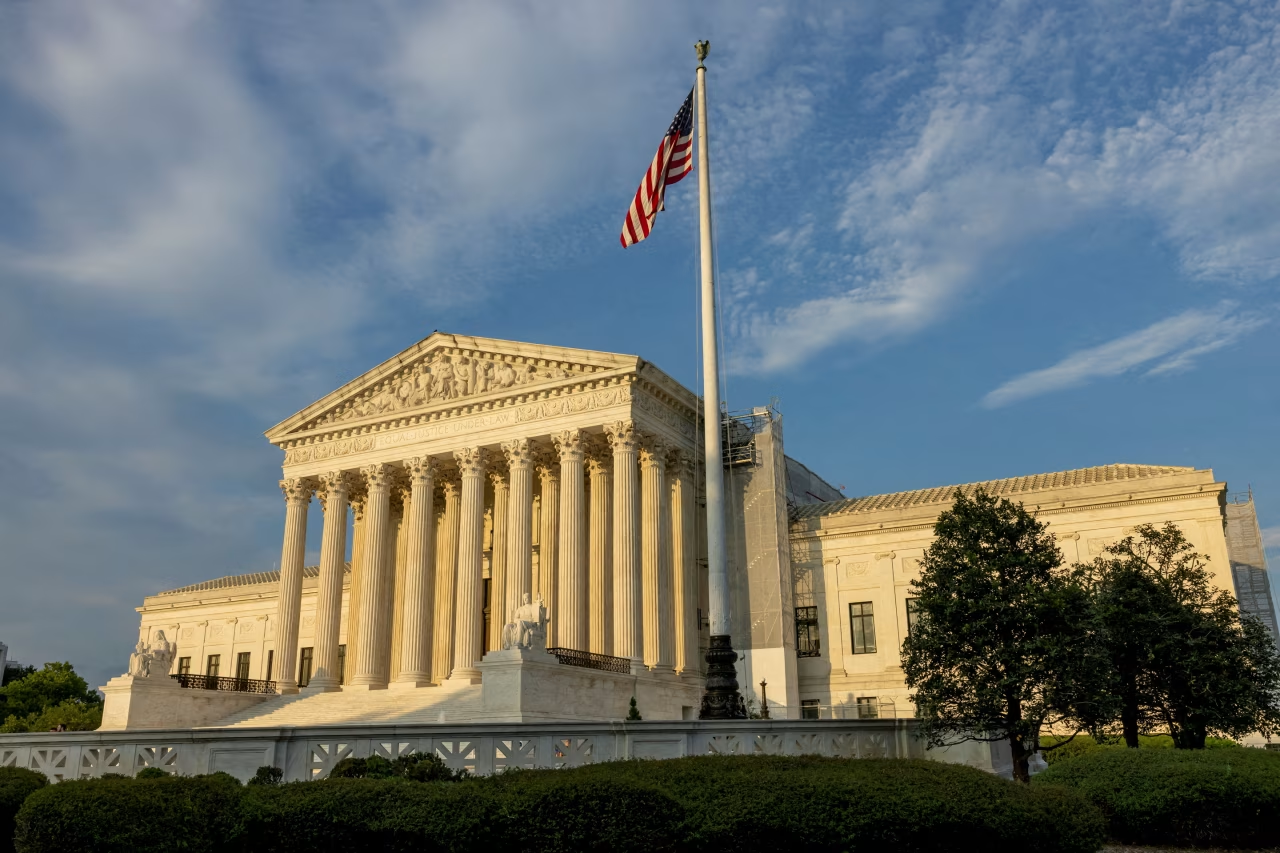
The Supreme Court is examining a high-stakes legal conflict that could redefine how internet providers address copyright violations committed by their customers. The dispute centers on whether Cox Communications, one of the nation’s largest broadband companies, can be held financially responsible for repeated copyright infringements allegedly conducted through its network. The outcome has the potential to reshape digital compliance standards for providers across the country and influence future oversight of online activity.
Music Industry Challenges Cox Over Repeat Infringement Notices
The music labels involved in the lawsuit represent a range of popular artists, and they argue that Cox ignored numerous reports of repeat copyright infringers, allowing the illegal behavior to continue despite explicit warnings. According to the coalition, Cox received a significant number of notifications tied to specific IP addresses accused of repeatedly violating music copyright protections. The labels maintain that Cox’s internal enforcement system did not adequately address these alerts and that the company prioritized subscriber revenue instead of improving compliance measures.
The coalition also highlighted Cox’s internal “13-strike policy,” which determined whether a customer should face suspension based on the number of complaints received. Critics argue that this policy lacked meaningful consequences and allowed consistent violators to avoid serious repercussions. The case has prompted broader discussions about digital copyright enforcement, similar to ongoing efforts from organizations such as the U.S. Copyright Office that aim to strengthen protections in the digital era.
Cox Defends Its Policies and Warns of Broad Consequences
Cox maintains that it should not be held responsible for the independent actions of its customers, emphasizing that its terms of service explicitly prohibit illegal behavior. The company asserts that it did not encourage or benefit financially from any infringing activity and that fewer than 1% of its users are responsible for the violations identified by the music labels. Cox argues that its internal compliance tools were highly effective, citing that approximately 95% of the infringing users halted their activity after receiving notices.
In addition to defending its enforcement efforts, Cox warns that a ruling against the company could force internet providers nationwide to adopt aggressive disconnection practices. This could impact entire households and public institutions such as schools, hospitals, and universities, even when only one individual connected to a shared network is accused of violations. These concerns align with broader conversations about digital policy, similar to those addressed by the Federal Communications Commission in ongoing technology regulatory frameworks.
A Decision That Could Influence National Internet Policies
The Supreme Court’s evaluation of this case may create new expectations for internet providers regarding monitoring, reporting, and disconnecting customers suspected of copyright violations. A ruling in favor of the music industry could lead to stricter compliance systems across major broadband providers, while a ruling for Cox may reinforce existing liability protections under the Digital Millennium Copyright Act.
The music industry contends that stronger enforcement is necessary to protect artists’ rights and revenues, referencing ongoing industry-wide intellectual property protections similar to those tracked by the Recording Industry Association of America. However, internet providers argue that increased liability could force them to over-police customer activity, potentially affecting privacy and access to essential online services. The broader debate mirrors ongoing discussions about digital rights and online accountability, which are also covered extensively by organizations like the Electronic Frontier Foundation.
A final decision from the Supreme Court is anticipated this summer, and whichever direction the ruling takes, it is expected to influence the future balance between intellectual property protection and digital access across the United States.