The conflict involving the United States, Israel, and Iran has entered its third week, with escalating military operations and mounting economic consequences across the Middle East. As hostilities intensify, global markets are closely watching developments in the Strait of Hormuz, a critical maritime passage that plays a central role in international energy supply.
Recent statements from Iran’s leadership suggest that the strategic waterway could remain closed as a form of geopolitical pressure, a move that could dramatically affect global oil shipments. Analysts warn that any prolonged disruption to this route would have major implications for global energy markets, since roughly one-fifth of the world’s oil supply normally passes through the corridor, according to research tracked by the U.S. Energy Information Administration.
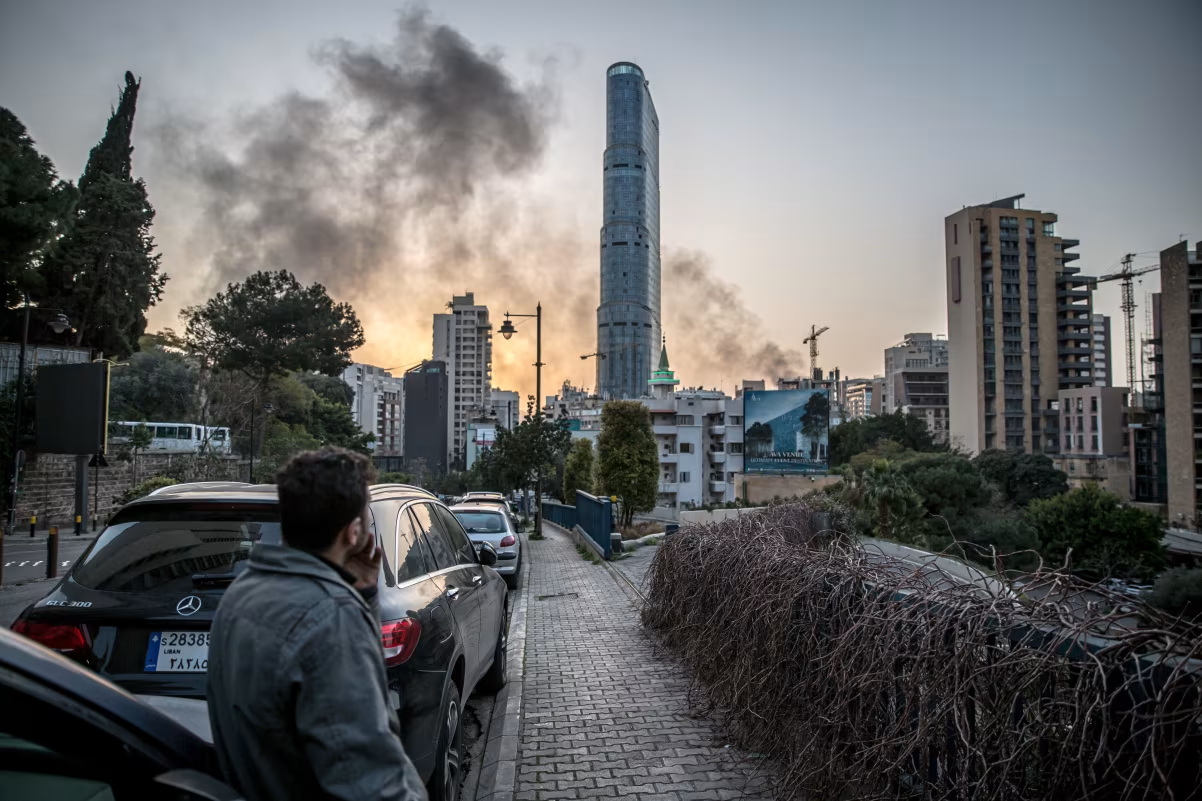
Meanwhile, military activity continues across several countries in the region. Airstrikes, missile launches, and naval incidents have been reported in Iran, Israel, Iraq, Lebanon, and multiple Gulf states as both sides attempt to assert strategic control over critical infrastructure and transportation routes.
Military Escalation and Casualties Increase
The ongoing conflict has led to rising casualties among military personnel and civilians across the region. In one of the latest incidents, six members of a U.S. Air Force crew died after a refueling aircraft crashed in western Iraq during operational activities. Military officials reported that the crash was not caused by hostile action but occurred during coordination with another tanker aircraft.
At the same time, Israel has continued conducting airstrikes targeting Iranian military infrastructure. Government facilities, weapons storage sites, and security checkpoints have reportedly been struck in several areas of Tehran. Iranian forces and allied groups have responded with missile launches and drone attacks aimed at Israeli territory and military positions.
Defense officials in Washington say the combined U.S.–Israeli campaign has significantly weakened Iran’s military capabilities. According to internal assessments, the volume of missiles launched by Iranian forces has dropped sharply as key storage facilities and launch systems were destroyed during air operations.
The conflict has also drawn in non-state armed groups aligned with Iran, including Hezbollah in Lebanon. Military analysts monitoring regional security developments through organizations such as NATO note that the expansion of hostilities across multiple fronts has increased the risk of a wider regional confrontation.
Oil Markets and Shipping Routes Under Pressure
One of the most immediate global consequences of the conflict has been the impact on energy markets. The Strait of Hormuz remains one of the world’s most strategically important shipping lanes, linking oil-producing countries in the Gulf with international markets.
Several commercial vessels have already been attacked or damaged near the strait since the conflict began. Reports indicate that at least 16 oil tankers, cargo ships, and support vessels have faced incidents in surrounding waters, raising concerns among shipping companies and insurers.
Energy markets reacted quickly to the threat of supply disruptions. Fuel prices have climbed as traders factor in the possibility that large volumes of crude oil could be delayed or rerouted. Analysts monitoring global petroleum markets through the Organization of the Petroleum Exporting Countries warn that prolonged instability in the region could tighten supply and increase volatility in global energy pricing.
The potential closure of the Strait of Hormuz would create logistical challenges for oil exporters and importers alike. Countries that rely heavily on Gulf energy shipments could face rising costs for fuel and transportation, while producers would need to explore alternative export routes.
Growing Military Presence Across the Region
As tensions continue to rise, the United States is strengthening its military presence in the Middle East. Plans are underway to deploy a Marine Expeditionary Unit to the region, a rapid-response force typically consisting of approximately 2,500 Marines and naval personnel.
These units are capable of conducting a range of missions, including evacuation operations, amphibious assaults, and humanitarian assistance. Their deployment is often intended to provide operational flexibility during rapidly evolving security situations.
Military planners are also evaluating additional protective measures for commercial shipping. Officials in Washington have discussed the possibility of providing naval escorts for oil tankers traveling through the Strait of Hormuz if threats against vessels continue.
Meanwhile, diplomatic tensions remain high at international institutions. Discussions surrounding the conflict have intensified within the United Nations, where member states are debating potential responses to the expanding crisis and its humanitarian consequences.
Across the region, missile interceptions, drone attacks, and air defense operations continue to shape the daily security environment. Several Gulf states have reported intercepting projectiles aimed at strategic locations, including airports and energy facilities, underscoring the expanding geographic reach of the conflict.