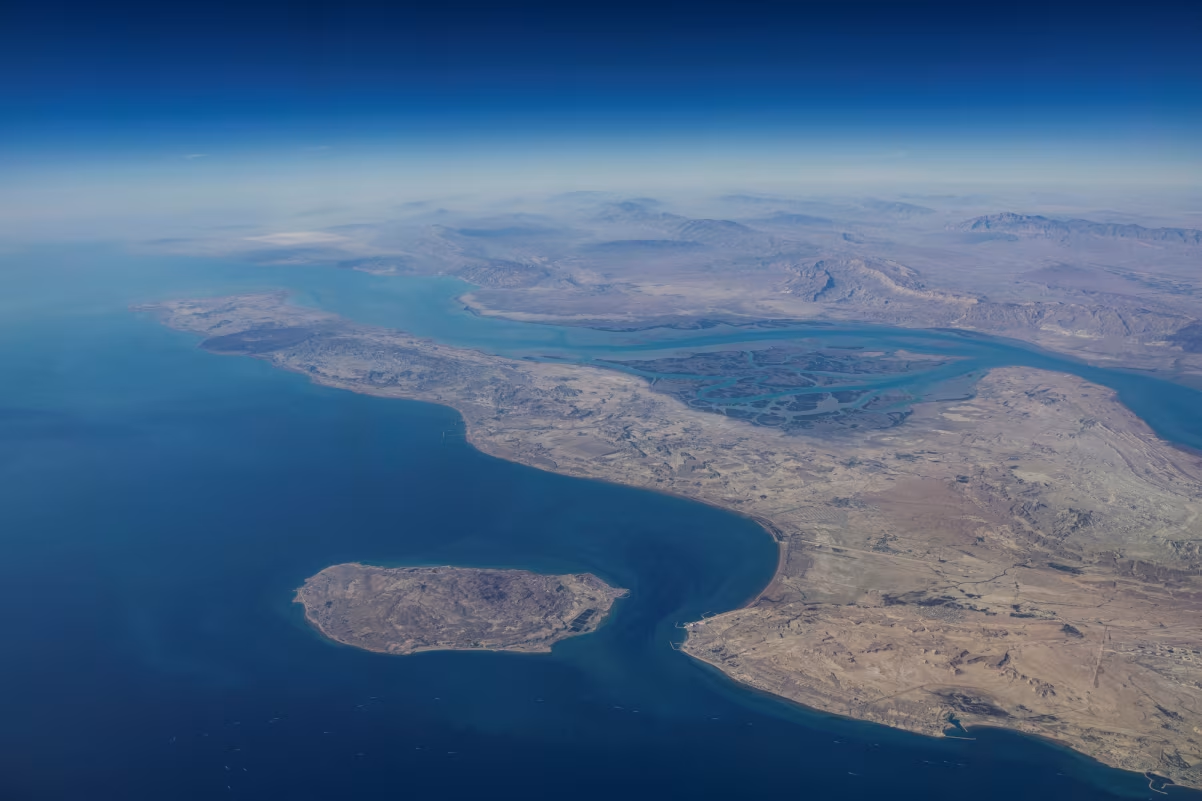
Oil Prices Surge Amid Rising Tensions
The strategic importance of the Strait of Hormuz has returned to the global spotlight as escalating geopolitical tensions continue to disrupt energy markets. Despite earlier claims that the United States has minimal reliance on oil passing through the narrow waterway, recent developments have underscored its broader influence on global pricing and supply chains.
In the days following renewed threats and military posturing, crude oil prices surged past $111 per barrel, marking a sharp increase from previous levels near $100 and significantly higher than the sub-$70 range seen before the conflict began. This dramatic rise highlights how even indirect exposure to disruptions in the strait can ripple across international markets.
Although the United States imports only a fraction of its daily oil consumption through this route, the global nature of energy markets means that any constraint in supply quickly affects pricing worldwide. As outlined by the <a href="/es/”https://www.eia.gov”/">U.S. Energy Information Administration</a>, oil is a globally traded commodity, making regional disruptions a concern for all economies, regardless of their direct import levels.
The Strait of Hormuz typically facilitates the movement of nearly 20% of the world’s oil supply, making it one of the most critical chokepoints in international trade. Any prolonged blockage or restriction can create immediate shortages, driving up costs for industries and consumers alike.
Global Supply Chains and Economic Pressure
While the United States has significantly increased domestic production over the past decade, reaching approximately 22 million barrels per day, the complexity of refining requirements still necessitates imports. Not all crude oil types are interchangeable, and certain industries depend on heavier grades sourced from regions like the Middle East.
This imbalance means that even a country approaching energy independence remains vulnerable to global price fluctuations. According to insights from the <a href="/es/”https://www.iea.org”/">International Energy Agency</a>, disruptions in key transit routes can force countries to compete for limited supplies, pushing prices higher across the board.
Higher oil prices are already translating into increased fuel costs, with gasoline averages climbing above $4 per gallon in some regions. These increases place additional strain on households and businesses, particularly those operating on tight margins.
Beyond fuel, the economic impact extends to transportation, manufacturing, and agriculture. Goods that rely on trucking and shipping become more expensive as diesel prices rise, while materials like aluminum and fertilizers—also transported through the strait—face supply constraints. The broader inflationary effect is expected to erode purchasing power, offsetting recent wage gains.
Economic analysts warn that sustained price increases could slow growth. Data referenced by the <a href="/es/”https://www.imf.org”/">International Monetary Fund</a> suggests that every $10 rise in oil prices can reduce gross domestic product growth by up to 0.4 percentage points. With prices climbing rapidly, the cumulative impact could become significant if the situation persists.
Strategic Uncertainty and Market Volatility
The evolving rhetoric surrounding the Strait of Hormuz has contributed to heightened uncertainty in financial markets. Mixed signals regarding military involvement, trade policy, and diplomatic strategy have made it difficult for investors to anticipate future developments.
At times, calls for reduced reliance on the region have been followed by aggressive statements emphasizing the need to secure access to the waterway. This inconsistency has amplified volatility, with oil prices reacting sharply to each new development.
Meanwhile, contingency measures such as naval escorts and insurance guarantees for tankers have been introduced to maintain some level of flow through the strait. However, these efforts may not fully offset the risks associated with potential escalation.
There are also concerns about additional costs being imposed on shipping, including possible transit fees or security surcharges. Such measures could further restrict supply and increase prices, compounding existing pressures on global markets.
Market participants continue to monitor the situation closely, using tools like the <a href="/es/”https://www.cmegroup.com”/">CME Group</a> to track futures and hedge against volatility. The uncertainty surrounding supply levels, combined with the absence of a clear resolution strategy, suggests that price fluctuations are likely to persist in the near term.