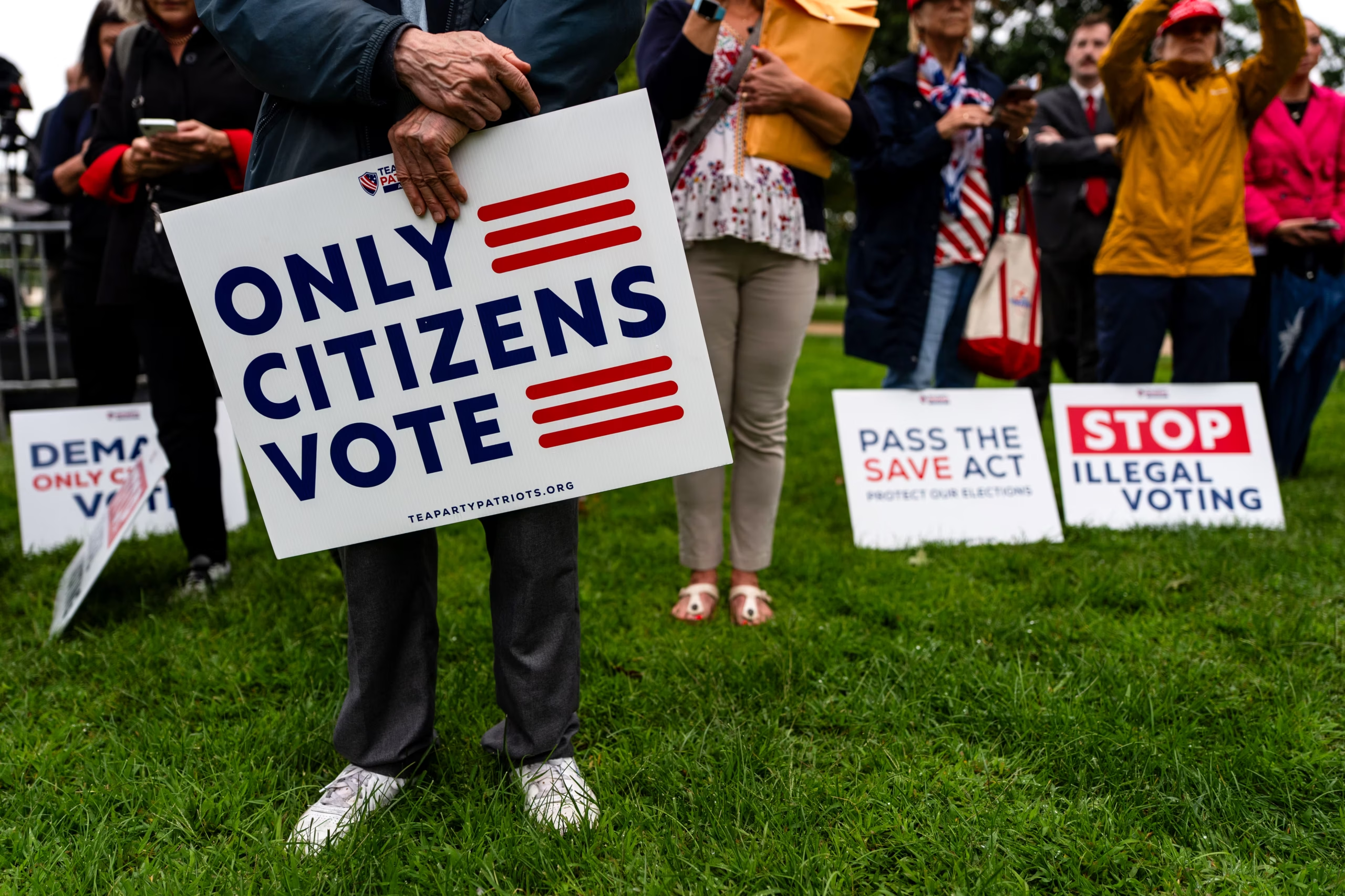
The debate over U.S. election laws has intensified once again as Republicans revive a sweeping voting overhaul known as the SAVE America Act. The legislation, a revised version of an earlier proposal, aims to tighten voter eligibility requirements nationwide and arrives at a politically sensitive moment as the country approaches another major election cycle. Supporters argue the bill would strengthen confidence in elections, while critics warn it could reshape voting access for millions of Americans.
The proposal recently cleared the House with unified Republican support and limited bipartisan backing. However, its future remains uncertain in the Senate, where procedural hurdles and political opposition could prevent it from advancing. The renewed push underscores how voting rules remain a central political battleground, especially in a midterm year with heightened national stakes.
Stricter Identification Requirements Take Center Stage
At the core of the SAVE America Act is a requirement that voters provide documentary proof of U.S. citizenship when registering to vote. Acceptable forms of documentation include passports, birth certificates paired with government-issued photo identification, and certain military or tribal IDs. In addition, the revised bill introduces a new mandate requiring voters to present photo identification when casting ballots, extending requirements beyond registration into the voting process itself.
Supporters of the legislation say these measures are necessary to ensure election integrity and reinforce public trust. They argue that sworn statements of citizenship, currently used in federal voter registration, do not go far enough to prevent potential fraud. Proponents often point to polling suggesting broad public support for voter ID requirements, framing the bill as a response to widespread concerns about election security.
However, critics argue that existing laws already prohibit noncitizen voting and that documented cases of such fraud are extremely rare. They contend that imposing new documentation rules could disproportionately affect voters who lack easy access to passports or official records. According to federal data available on https://www.census.gov, many Americans do not hold passports, raising concerns about the practical implications of stricter identification requirements.
Expanded Enforcement and Immediate Implementation
Another controversial element of the SAVE America Act is its timeline. The legislation would take effect immediately upon enactment, meaning new requirements could be implemented close to upcoming elections. Election officials would be tasked with verifying documentation and updating registration procedures without additional federal funding.
The bill also introduces potential criminal penalties for officials who register voters without proper proof of citizenship. Supporters say enforcement provisions are necessary to ensure compliance and accountability. Opponents argue the penalties could create confusion among local administrators and discourage voter registration efforts due to fear of legal repercussions.
Additionally, the measure requires states to share voter data with a federal verification system managed by the Department of Homeland Security. The system is intended to cross-check citizenship status, but critics have raised concerns about privacy and data accuracy. Some election experts warn that database mismatches could incorrectly flag legitimate voters, potentially complicating voter rolls and administrative processes.
For broader context on federal election oversight, readers can explore resources from https://www.eac.gov, which outlines national election standards and administrative guidance.
Political Stakes and Senate Uncertainty
Despite its passage in the House, the SAVE America Act faces significant obstacles in the Senate. The chamber’s legislative rules require a supermajority to advance most bills, making bipartisan cooperation essential. Early indications suggest that Democratic lawmakers remain strongly opposed, arguing that the proposal would restrict voting access rather than protect election integrity.
The bill’s revival also carries broader political implications. The push reflects ongoing national debates about election security, federal versus state authority, and the legacy of past election disputes. Some political analysts see the legislation as part of a broader effort to reshape the national conversation around voting rules ahead of future elections.
Legal questions may also play a role in determining the bill’s trajectory. Courts have previously weighed in on executive actions related to voting procedures, emphasizing the constitutional balance between federal and state powers. Information on election law and constitutional frameworks can be found through https://www.law.cornell.edu y https://www.usa.gov/election.
As the SAVE America Act moves through Congress, it is likely to remain a focal point in the national political debate. Whether it ultimately becomes law or stalls in the Senate, the proposal underscores how voting legislation continues to shape the broader conversation about democracy, governance, and public trust in U.S. elections.