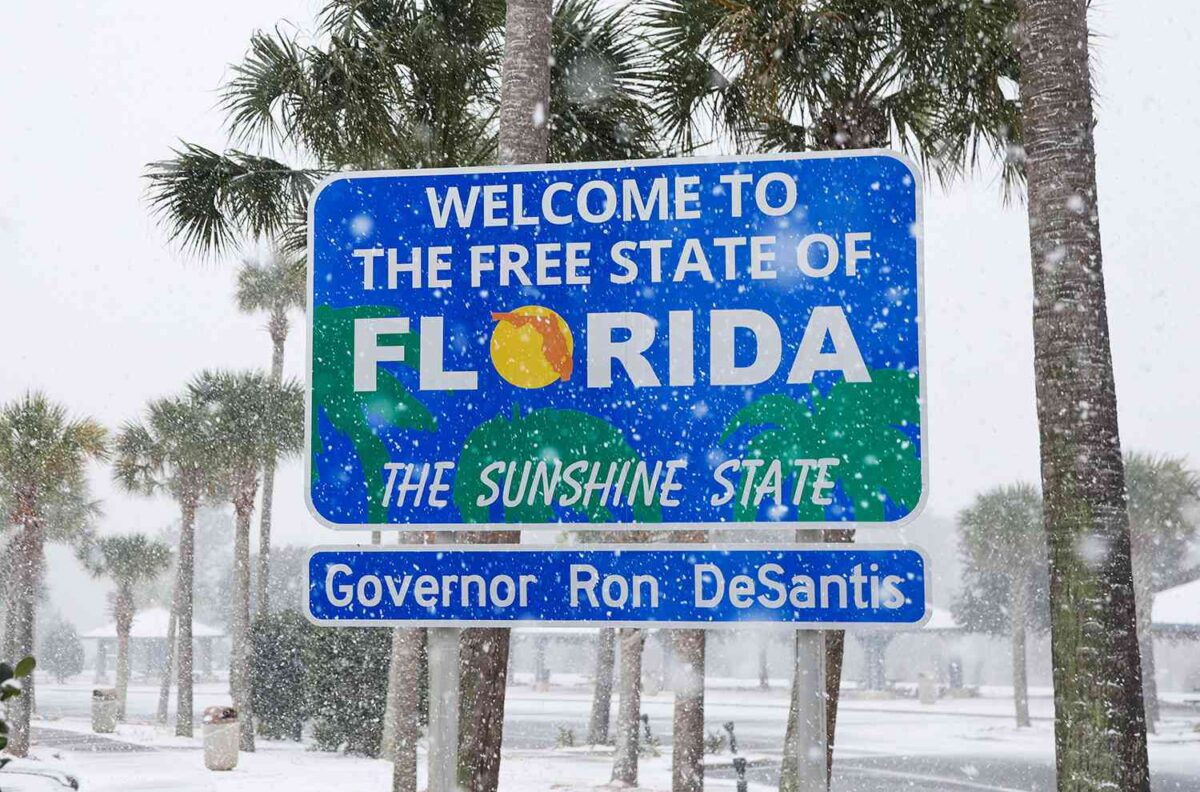
Rare snowfall has once again blanketed parts of Florida, marking an extraordinary weather event for the Sunshine State as freezing temperatures persist into early 2026. Communities in the Florida Panhandle and neighboring southern Alabama woke up to snow-covered streets and rooftops after a powerful winter storm system swept through the region. While Florida is known for its subtropical climate and warm winters, this latest snowfall underscores a growing pattern of extreme weather variability that is challenging long-held assumptions about the state’s seasonal norms.
The storm delivered up to 2 inches of snow to areas including Pensacola, transforming beaches, highways, and residential neighborhoods into scenes more typical of the Midwest than the Gulf Coast. For many residents, it was the second consecutive year witnessing such an unusual event, following a historic snowfall in mid-January 2025 when some locations recorded between 6 and 8 inches. Local businesses, schools, and transportation services were forced to adapt quickly as icy conditions disrupted daily routines and raised concerns about infrastructure not designed for winter weather.
Beyond the visual spectacle, the snowfall arrived alongside a sustained blast of arctic air that has pushed temperatures far below seasonal averages. Meteorologists have emphasized that while the snow itself is rare, the accompanying cold snap poses a more significant risk to public safety, agriculture, and energy demand across the state.
Snowfall in the Panhandle and Regional Impacts
The heaviest snowfall was concentrated in the Florida Panhandle, with Pensacola emerging once again as a focal point of the winter storm. Snow accumulation, though modest by northern standards, was enough to create hazardous driving conditions and prompt local authorities to issue advisories urging residents to stay off the roads. In southern Alabama, similar conditions were reported, highlighting the broad reach of the storm system across the Gulf Coast.
Airports in the region faced minor delays as ground crews worked to clear runways and de-ice aircraft, while some flights were rerouted to avoid weather-related disruptions. The tourism sector, a cornerstone of Florida’s economy, also felt the effects, as travelers adjusted plans and attractions temporarily closed due to safety concerns. Weather data and updates provided by the National Weather Service helped residents track changing conditions and prepare for further temperature drops.
This rare winter episode has drawn national attention, with images of snow-dusted palm trees circulating widely across social media platforms. Climate analysts note that such घटन are consistent with broader patterns of atmospheric instability, where polar air masses occasionally dip farther south than usual, bringing unseasonable cold to regions unaccustomed to it.
Freeze Warnings and Public Safety Concerns
While snowfall has ended, the cold air mass continues to grip much of Florida, prompting freeze warnings and cold weather advisories across central and southern regions. Orlando and surrounding communities are facing overnight lows near $25, with wind chills dipping into the low $20s, conditions that can be dangerous for vulnerable populations, including the elderly and those without adequate heating.
Further south, areas such as Naples are under cold weather advisories, with wind chills expected to reach $29. These temperatures pose a threat not only to human health but also to crops, particularly citrus groves and other temperature-sensitive agricultural operations. Farmers are deploying protective measures such as irrigation and crop covers to minimize potential losses, while energy providers are preparing for increased demand as households rely more heavily on heating systems.
Public safety officials are urging residents to take precautions, including insulating exposed pipes, bringing pets indoors, and checking on neighbors who may need assistance. Local governments are also coordinating with emergency management agencies and sharing guidance through official channels like Florida’s state emergency management portal to ensure communities remain informed and prepared.
Climate Context and Economic Implications
The recurrence of snowfall in Florida for a second consecutive year has reignited discussions about climate variability and its economic implications. While no single event can be attributed solely to long-term climate trends, scientists point to a growing frequency of extreme and unpredictable weather patterns as a defining feature of the current era. Research institutions such as the National Oceanic and Atmospheric Administration continue to study how shifts in jet stream behavior and ocean temperatures may be influencing winter weather anomalies in traditionally warm regions.
From an economic standpoint, the cold snap is creating both challenges and opportunities. On one hand, weather-related disruptions can lead to lost revenue for tourism-dependent businesses and increased costs for infrastructure maintenance. On the other hand, local retailers are seeing spikes in sales of heaters, winter clothing, and emergency supplies, reflecting a short-term boost in consumer demand.
Energy markets are also closely monitoring the situation, as prolonged cold weather can drive up electricity and natural gas consumption. Utility companies are working to ensure grid stability while managing peak loads, and regulators are evaluating whether existing infrastructure is resilient enough to handle more frequent cold extremes in the future.
As temperatures are forecast to gradually moderate by midweek, with lows climbing back into the upper $40s, Florida residents are preparing to transition back to more typical winter conditions. Nevertheless, the back-to-back snowfall events of 2025 and 2026 have left a lasting impression, signaling that even the Sunshine State is not immune to the evolving dynamics of global weather systems.