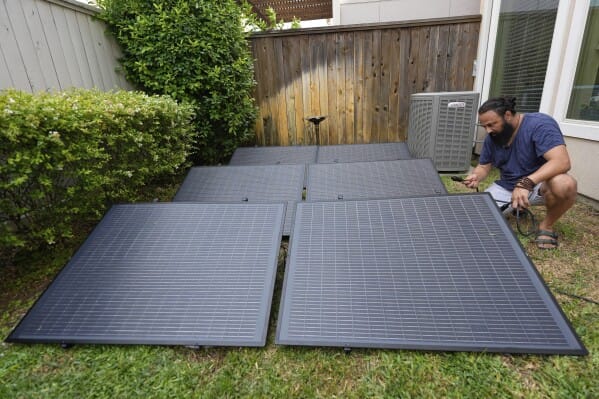
A new type of small, easy-to-install solar panel is attracting attention in the United States as households look for ways to reduce electricity costs. Known as plug-in or “balcony” solar systems, these compact panels can be connected directly to a standard power outlet, allowing homeowners and renters to generate small amounts of electricity without the complexity of traditional rooftop installations.
Advocates say the technology could make solar energy more accessible and affordable. However, electric utilities and some lawmakers are urging caution, raising safety and grid reliability concerns that have delayed legislation in several states.
Simple Solar Systems Designed for Homes and Apartments
Plug-in solar systems are designed to be much simpler than conventional rooftop arrays. Instead of requiring professional installation, permits, and utility interconnection agreements, many models can be mounted on balconies, patios, or small outdoor spaces and connected directly to household outlets.
The systems typically generate modest amounts of electricity—enough to offset part of a household’s power use, such as running appliances or electronics. Supporters say the technology allows people who cannot install full rooftop solar systems, including renters and apartment residents, to participate in renewable energy generation.
The idea has already gained significant traction in Europe. In Germany, more than 1.2 million plug-in solar systems have been registered with the government, making them one of the fastest-growing forms of small-scale renewable energy.
States Consider Laws to Encourage Plug-In Solar
Interest in the technology has led to a wave of legislation across the United States. Lawmakers in multiple states are considering bills that would simplify the rules governing plug-in solar systems.
Traditional rooftop installations often require formal connection agreements with utilities, along with permits and inspections. These requirements can significantly increase installation costs.
Last year, Utah passed the first law explicitly supporting plug-in solar systems, and lawmakers in roughly 30 states have introduced similar proposals.
Advocacy organizations, including groups like Bright Saver, argue that eliminating complicated paperwork would make the technology more accessible to ordinary households.
Utilities Raise Safety and Grid Concerns
Electric utilities have pushed back against some of these legislative efforts, citing safety concerns related to equipment connected directly to home electrical systems.
Utility representatives say that improperly installed devices could pose risks for electrical workers who maintain power lines or create challenges for grid reliability.
For example, representatives of the Georgia Electric Membership Corporation told lawmakers that potential safety risks were a reason to delay action on proposed plug-in solar legislation in the state.
Similar legislative delays have occurred in several states, including Arizona, New Mexico, Washington, and Wyoming.
Advocates Say Technology Is Safe and Beneficial
Supporters of plug-in solar systems argue that modern equipment includes safety features designed to prevent electrical hazards. They also say the technology could play a small but meaningful role in reducing electricity bills and lowering greenhouse gas emissions.
Because most electricity in the United States is still generated from fossil fuels, solar power is often promoted as a way to reduce emissions associated with climate change.
Although plug-in systems generally cannot power an entire home, advocates say they provide a simple entry point into renewable energy and introduce new competition into the electricity market.
As more states debate legislation and utilities evaluate the technology, plug-in solar panels could become an increasingly visible part of the evolving U.S. energy landscape.