The Pentagon has formally launched a six-month evaluation of the effectiveness of women serving in ground combat positions across the U.S. Army and Marine Corps, marking a significant policy reassessment a decade after all combat role restrictions were lifted. The initiative seeks to examine how the integration of women into infantry, armor, and artillery units has affected readiness, operational performance, and combat standards within some of the military’s most demanding occupations.
The review was ordered by the Undersecretary of Defense for Personnel and Readiness, who instructed senior Army and Marine leaders to compile extensive data on the performance and deployment readiness of ground combat units. This effort comes amid renewed emphasis on maintaining uniform, sex-neutral standards for combat roles, a principle repeatedly stressed by senior defense officials in recent months. The Department of Defense has indicated that the purpose of the review is not tied to quotas or representation targets, but to a broader assessment of combat effectiveness and lethality within frontline units. Additional information on force readiness and personnel policy can be found through the U.S. Department of Defense at https://www.defense.gov.
Scope of the Pentagon’s Effectiveness Review
According to internal guidance circulated within the Pentagon, the review will collect data covering physical readiness, medical deployability, training outcomes, combat performance, casualty rates, and command climate. Military branches have been instructed to submit both publicly available and internal studies related to the integration of women in combat roles, including any research conducted since the policy shift that opened these positions more widely. The analysis will be coordinated with the Institute for Defense Analyses, which regularly supports the federal government on national security assessments.
The Pentagon has emphasized that the review will examine individuals and units based on the same metrics used across combat arms, focusing on whether personnel are fully capable of deploying and operating in high-intensity combat environments. This includes evaluations of physical endurance, injury rates, and long-term readiness. Broader context on Army combat roles and standards is available through official Army resources at https://www.army.mil.
Women Currently Serving in Ground Combat Units
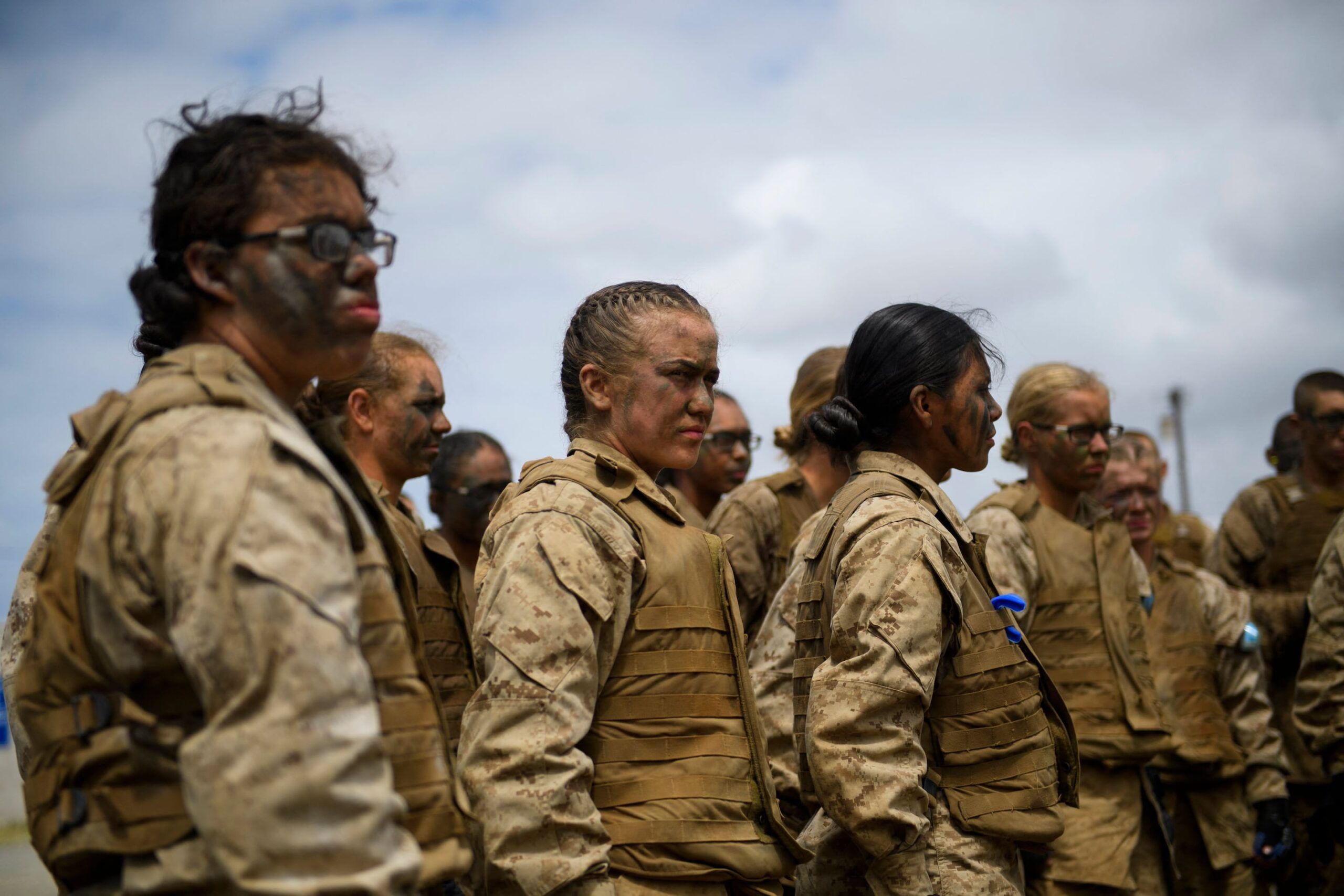
Women remain a relatively small percentage of personnel in ground combat specialties. In the Army, approximately 3,800 women currently serve in infantry, armor, and artillery roles. Among them are more than 150 who have successfully completed Ranger School, one of the most demanding leadership courses in the U.S. military. A smaller number, estimated at around 10, have completed Special Forces qualification training. The Marine Corps reports roughly 700 women serving in comparable ground combat positions.
All service members in these roles, regardless of gender, are required to meet identical physical and professional standards. Military leadership has repeatedly stated that no adjustments to load-bearing requirements, physical fitness benchmarks, or combat performance criteria are permitted based on sex. Information on Marine Corps combat occupational fields and training requirements can be accessed via https://www.marines.mil.
Debate Over Combat Standards and Military Effectiveness
The renewed review has reignited debate within defense policy circles over whether reassessing the integration of women into combat roles is necessary or politically motivated. Some former military leaders and defense researchers argue that existing data already demonstrates that women who meet established standards perform effectively in ground combat units, sometimes matching or exceeding the performance of their male peers. Others maintain that revisiting the data is essential to ensure that combat arms standards have remained uncompromised over time.
Defense officials have underscored that the central objective of the review is to preserve the military’s operational edge by confirming that all combat personnel, regardless of gender, are fully capable of meeting the extreme demands of modern warfare. As the study progresses, its findings are expected to influence future personnel policy, training requirements, and potentially the structure of combat units across the services. Ongoing updates on military personnel policy and readiness initiatives are available through the Office of the Secretary of Defense at https://prhome.defense.gov.